Community Environment
Low tides make for Purdy good marine life viewing at Purdy Spit
Under a cloud-dappled blue sky, families gathered on the shores of the Purdy Spit on Sunday, April 19. The outgoing tide made the perfect first Low Tide Tour of the year in Gig Harbor.
Local marine life and conservation nonprofit Harbor WildWatch leads the tours in different locations around the area. They teach families about the plants, animals, and algaes living just beneath the Sound’s surface.
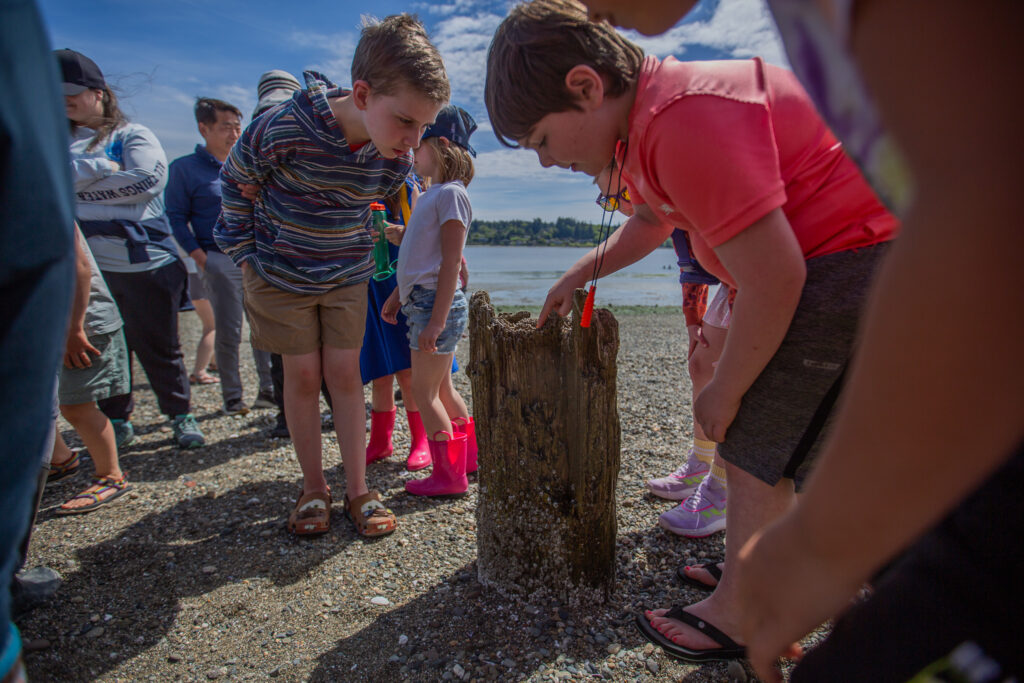
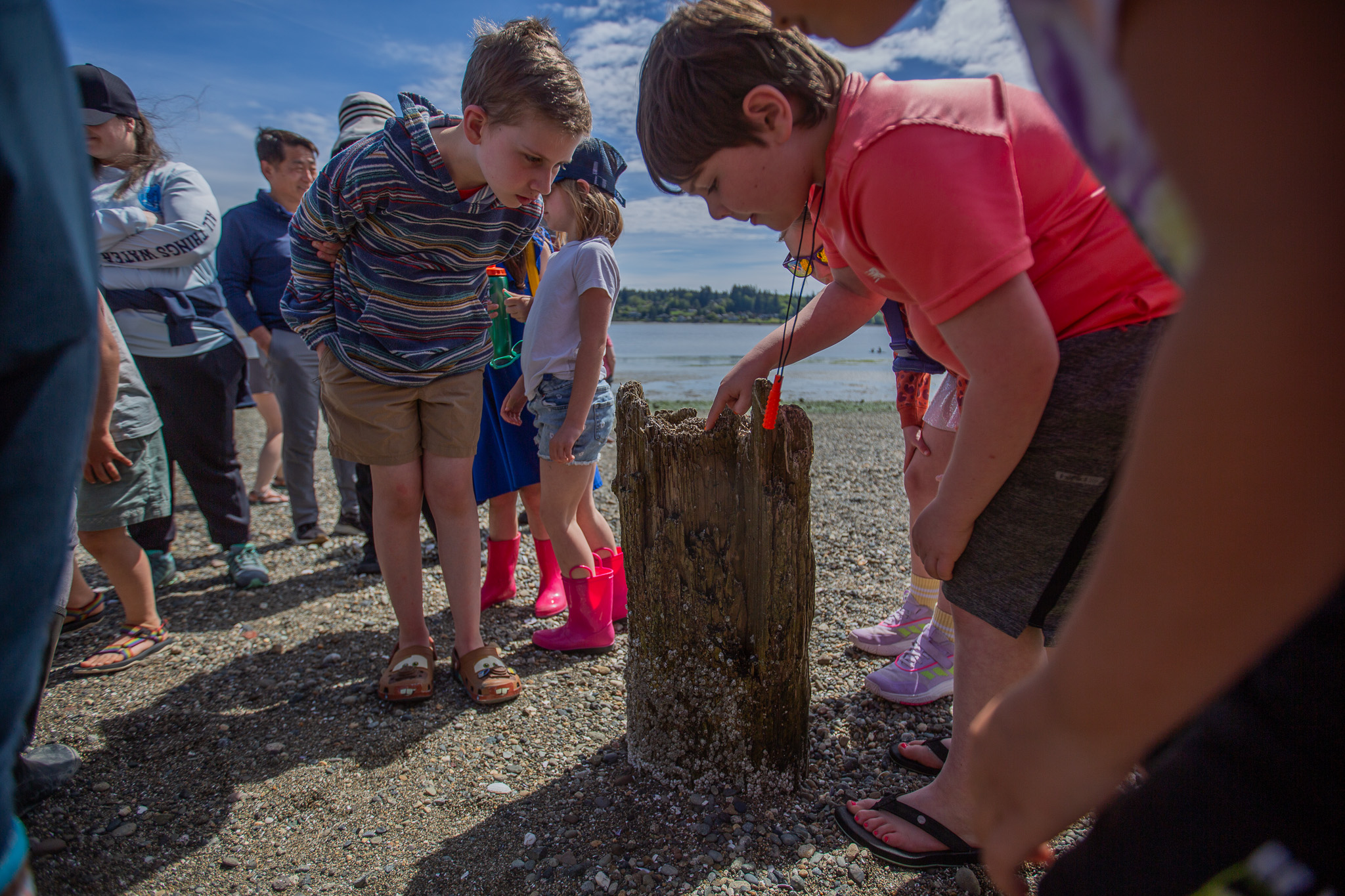
Kids gather around an old wooden post covered in barnacles, during Harbor WildWatch’s Low Tide Tour at the Purdy Spit on April 19, 2026. Photo by Carolyn Bick. © Carolyn Bick
Starfish and eelgrass and crabs, oh my
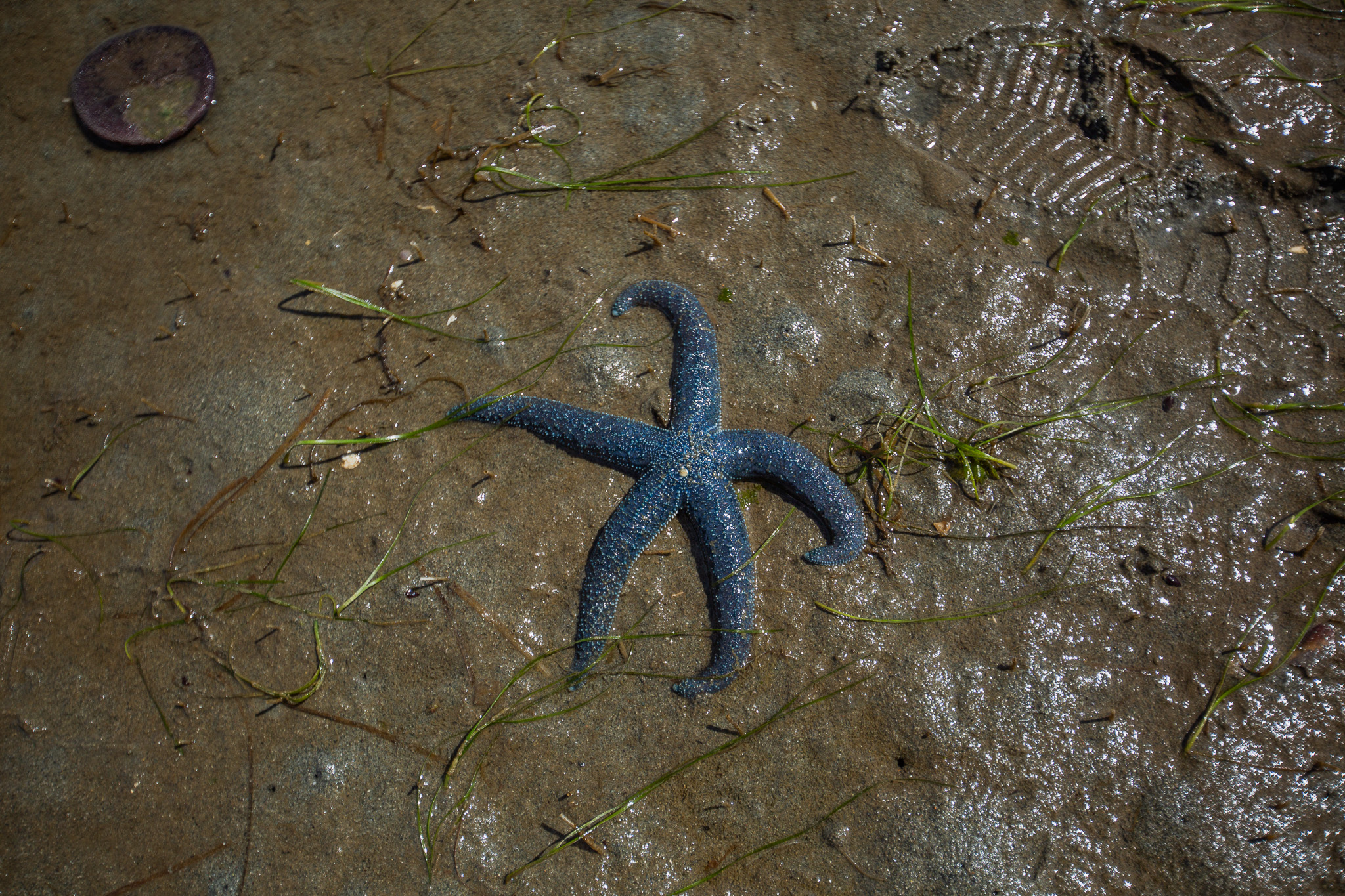
Rachel Easton, Harbor WildWatch’s education director, led this particular tour along with organization volunteer, Bliss. The pair helped the more than 40 people — most of them parents with children — learn about and identify all kinds of animals, including sapphire blue starfish and feisty northern kelp crabs.
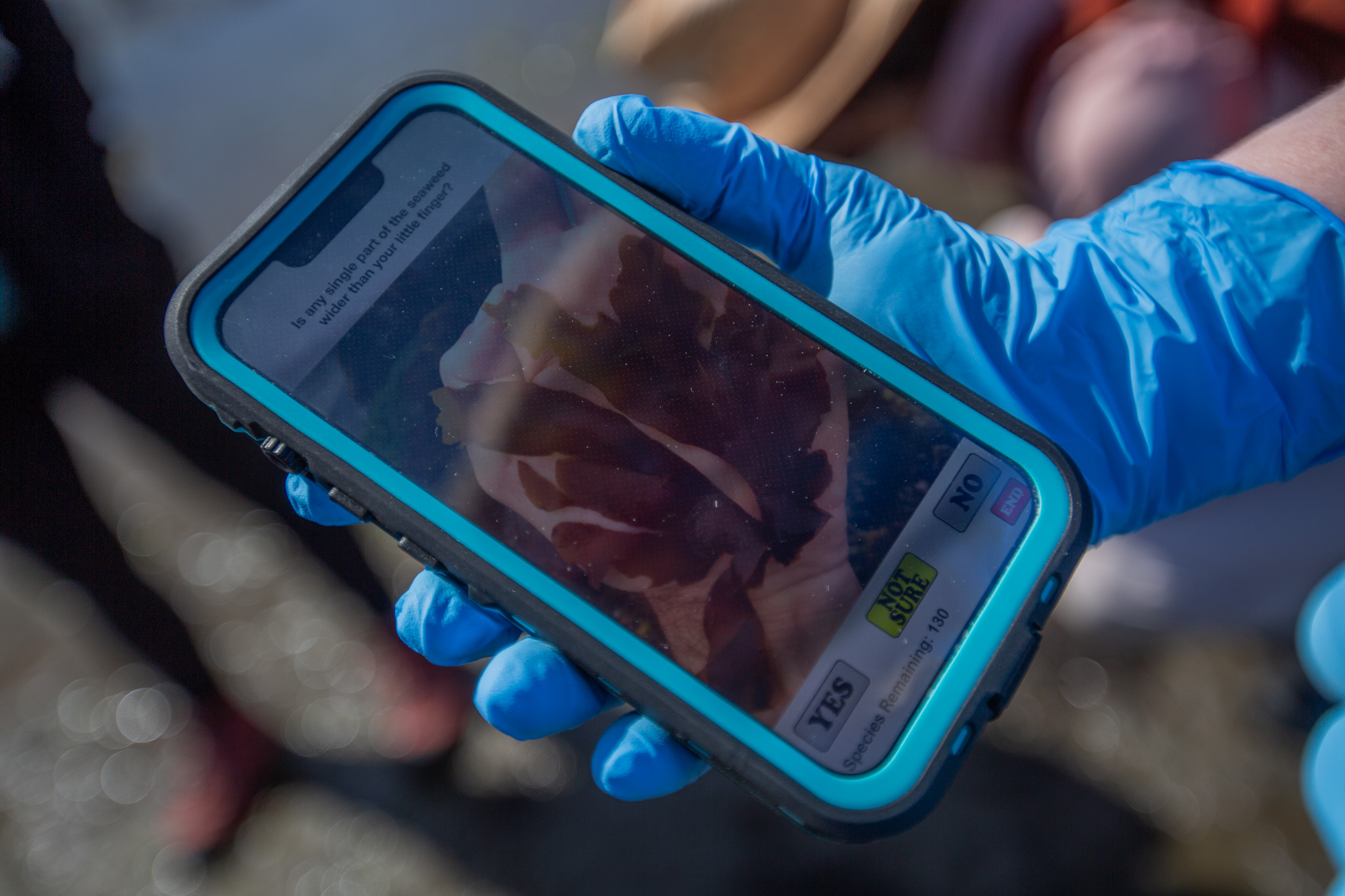
They also showed attendees a variety of different seaweeds and the two kinds of eelgrass (a plant) that provide shelter and nesting spots for marine life.
Easton also explained how the phases of the moon affect tide levels.
“We have a new moon right now, so that means the sun and the moon are pulling in the same direction and giving us what are called ‘spring tides,’” Easton explained. “Nothing to do with the season — it has to do with the ‘springiness’ of the water. When we have a new moon or a full moon, we get higher-than-average high tides and lower-than-average low tides, and today’s low tide is 2.7 vertical feet below the average of all the low tides.”
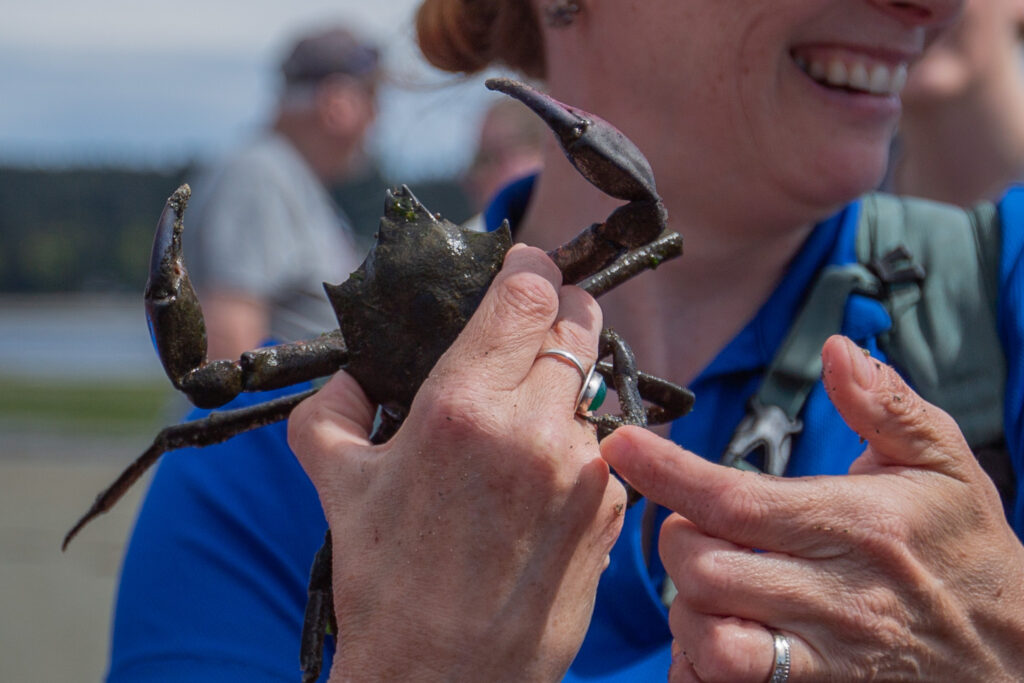
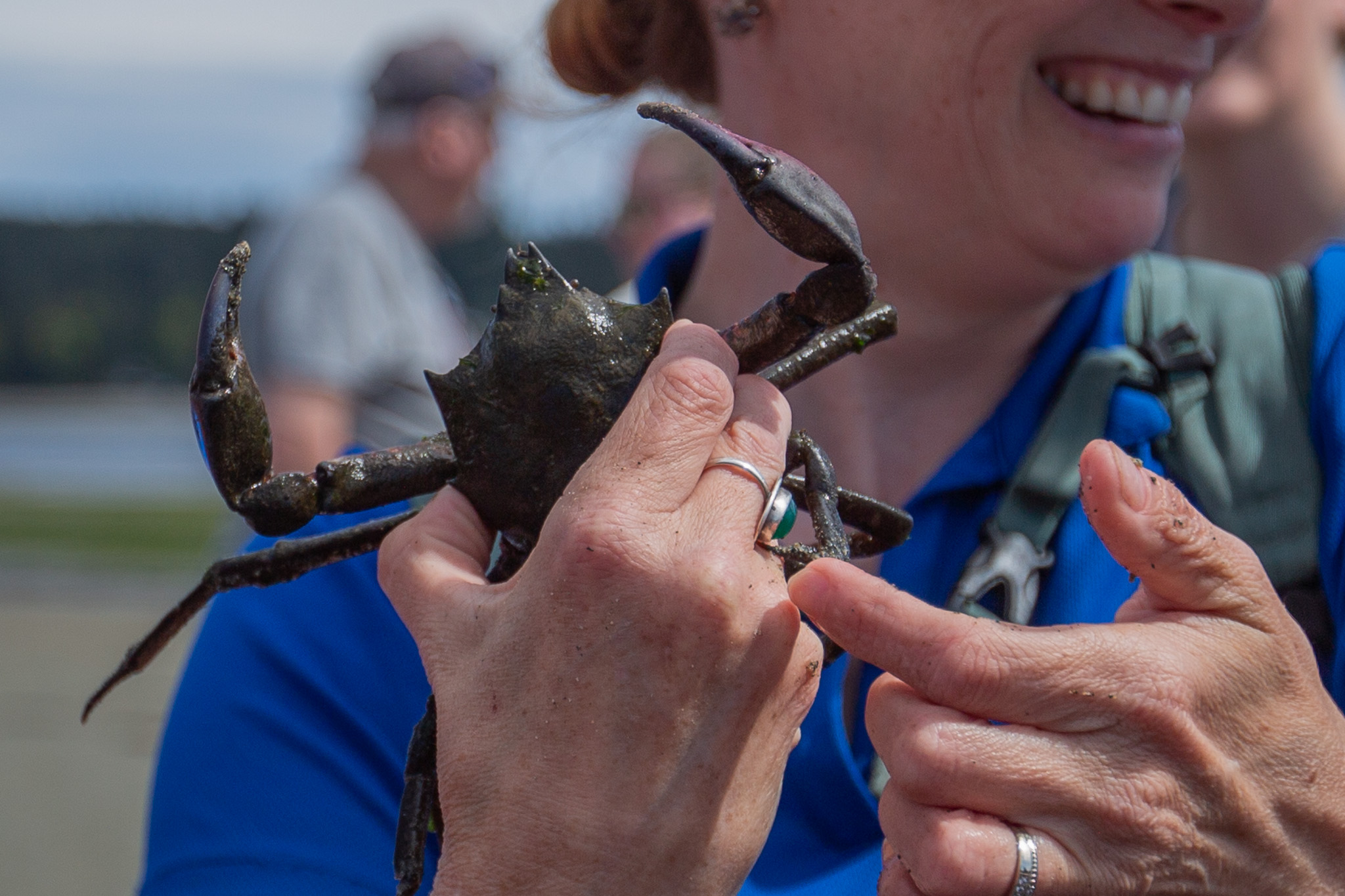
A male northern kelp crab lances Easton with one of his legs, during Harbor WildWatch’s Low Tide Tour at the Purdy Spit on April 19, 2026. “There’s a thing about kelp crabs that makes them a bit dangerous: it’s how sneaky and sharp their toes are,” Easton said, as she showed attendees the crab stabbing her finger. “People hold the kelp crab and they get grabbed by these very sharp claws or pincers. … The pincers are also a threat especially with this species because he can reach behind his head. Most crabs can’t reach back here. … With these crabs, um, the easiest thing to do is just simply not handle them.” Photo by Carolyn Bick. © Carolyn Bick
That means, she continued, “we’re at like zero right now. … This is like an average low tide. It’s not always this low. Sometimes it’s a little higher, sometimes a little lower, but this is average.”
Very low tides will happen in mid-May and in July.
Be a good GUEST
She also slipped in a little reminder that everyone at the beach deserves respect and space. Sure, they look really cool, and they have evolved to survive low tides — but they are still “freaking out,” because low tide is still a stressful time for creatures that are normally underwater and not quite so exposed to heat, air, and predators.
“We are not here to add to their stress. We’re going to do our best to minimize our impact in this environment by being good GUESTs,” Easton said, referring to an acronym Harbor WildWatch uses to guide how to behave towards other living beings — macroalgae, plant, and animal — at the beach.
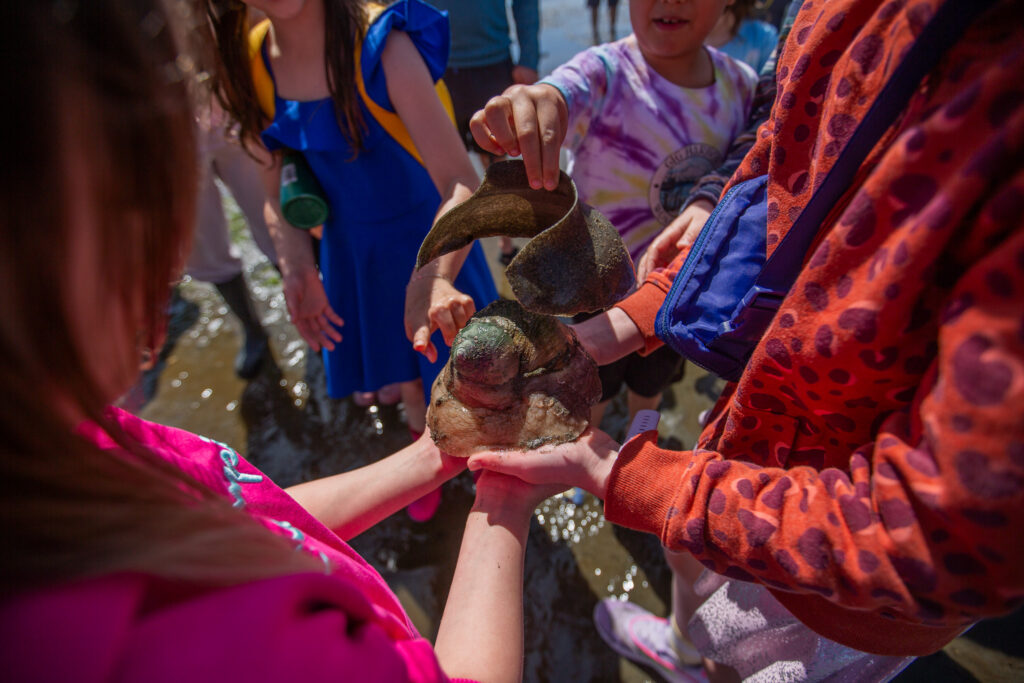
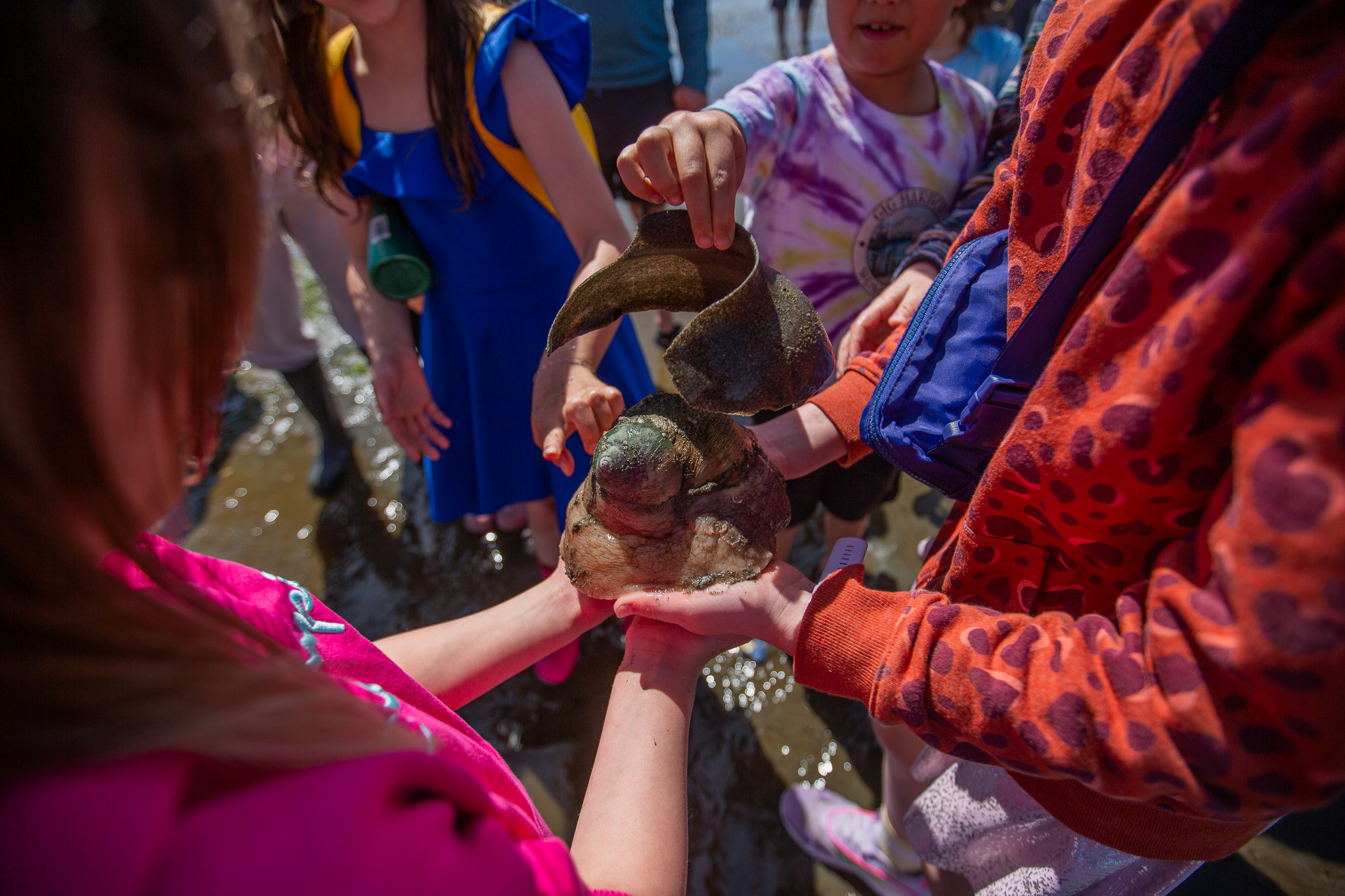
Children hold a moon snail, as another places an egg collar around the snail, during Harbor WildWatch’s Low Tide Tour at the Purdy Spit on April 19, 2026. Photo by Carolyn Bick. © Carolyn Bick
The acronym stands for:
Gentle: Don’t poke anyone too hard.
Use your head: Don’t lift rocks any larger than your head, and put them back down, instead of rolling them back into place.
Everyone stays: Don’t take anyone or anything home, and put them back where you found them.
Step slowly: You never know who’s hiding under a bed of seaweed or in a hole.
Take your belongings home with you: The beach doesn’t need anything you bring along.
For information on upcoming Low Tide Tours, check Harbor WildWatch’s Facebook page or online calendar.
-
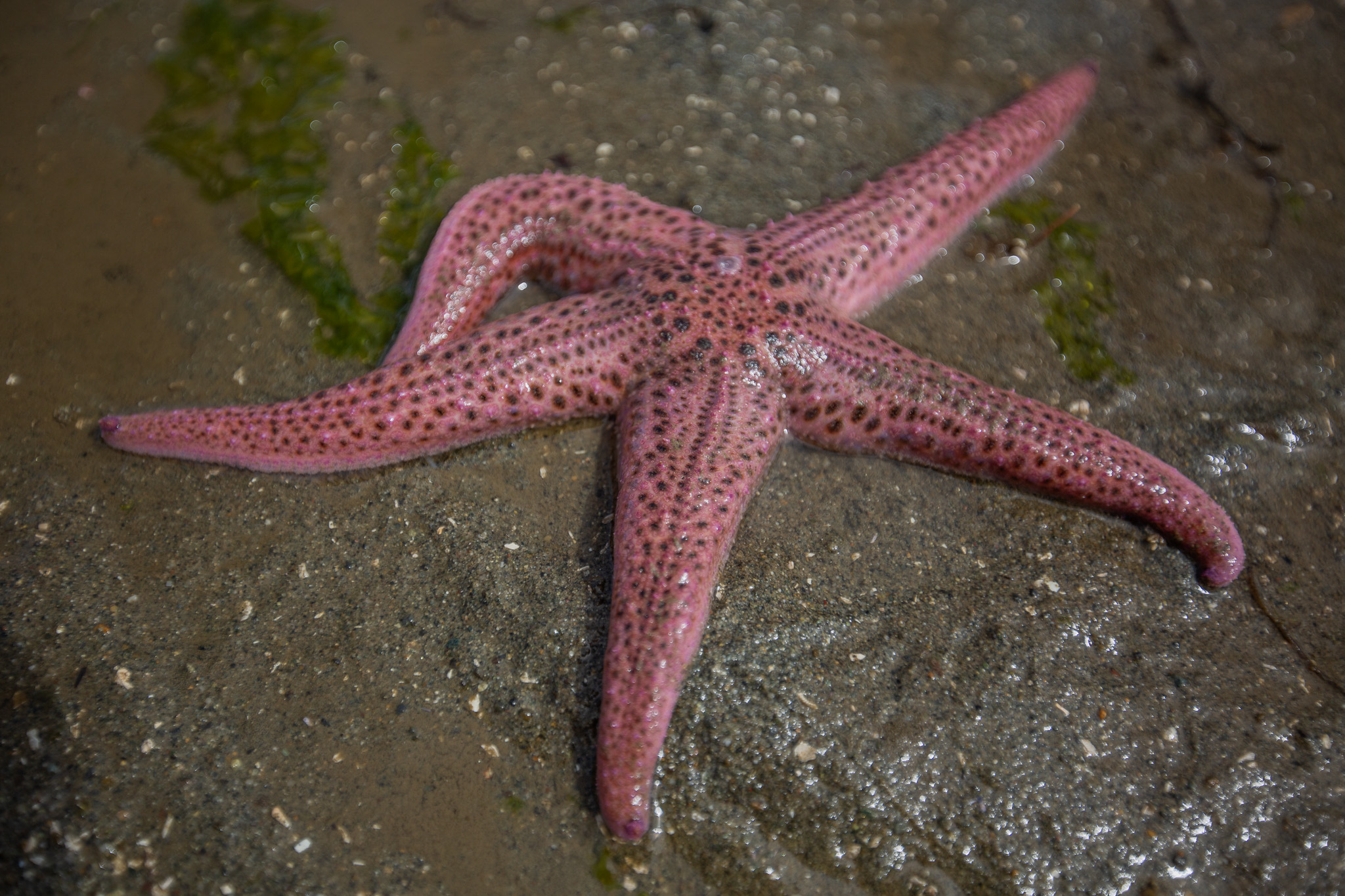
- A sea star lies in the sand at low tide, during Harbor WildWatch’s Low Tide Tour at the Purdy Spit on April 19, 2026. Photo by Carolyn Bick. © Carolyn Bick
-
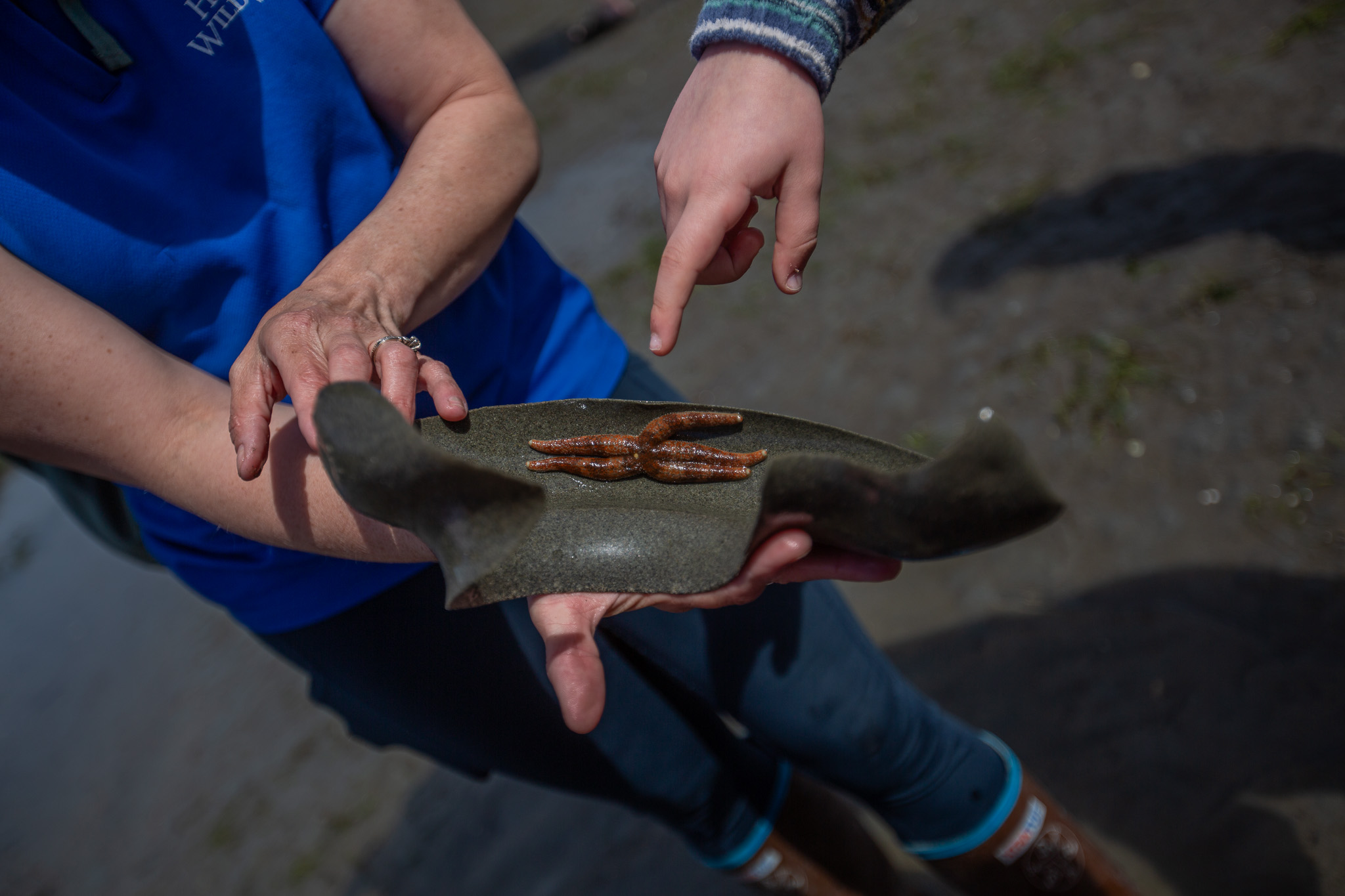
- Easton holds open a moon snail egg collar, inside which a sea star has decided to rest, during Harbor WildWatch’s Low Tide Tour at the Purdy Spit on April 19, 2026. Photo by Carolyn Bick. © Carolyn Bick
-
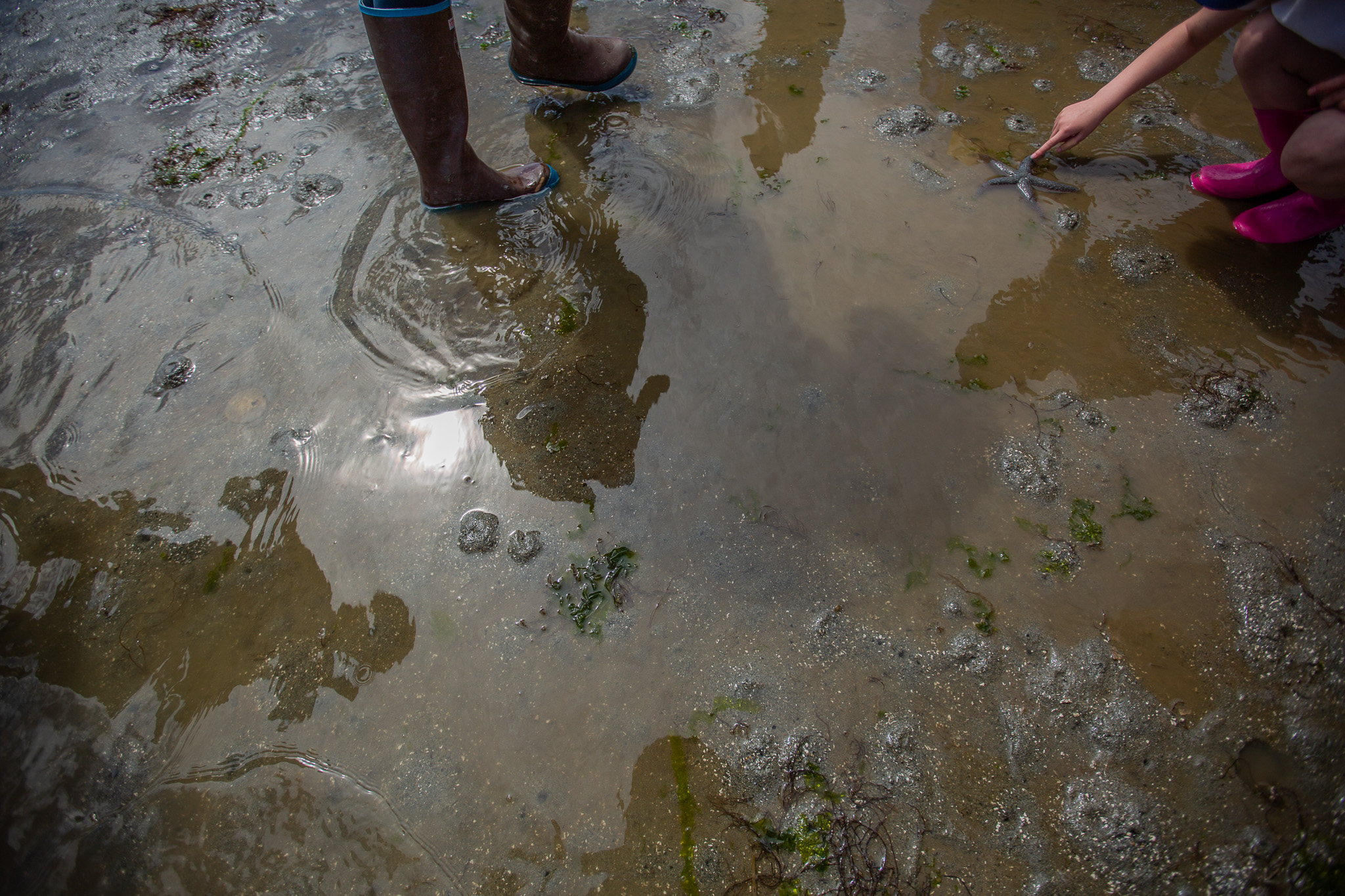
- People’s reflections can be seen in the receding tide, during Harbor WildWatch’s Low Tide Tour at the Purdy Spit on April 19, 2026. Photo by Carolyn Bick. © Carolyn Bick
-
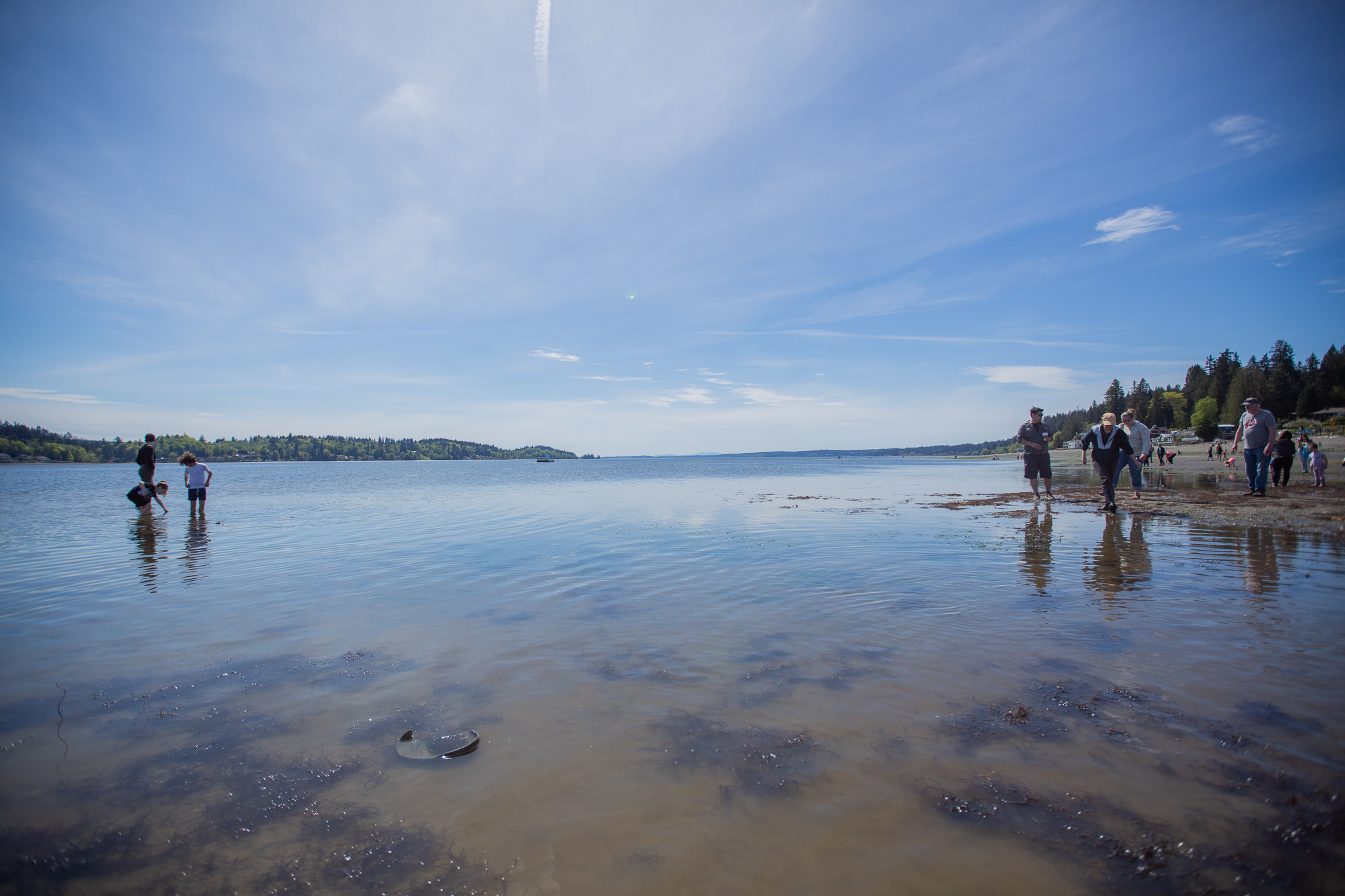
- People explore the beach, during Harbor WildWatch’s Low Tide Tour at the Purdy Spit on April 19, 2026. Photo by Carolyn Bick. © Carolyn Bick
-
- Kids gather around an old wooden post covered in barnacles, during Harbor WildWatch’s Low Tide Tour at the Purdy Spit on April 19, 2026. Photo by Carolyn Bick. © Carolyn Bick
-
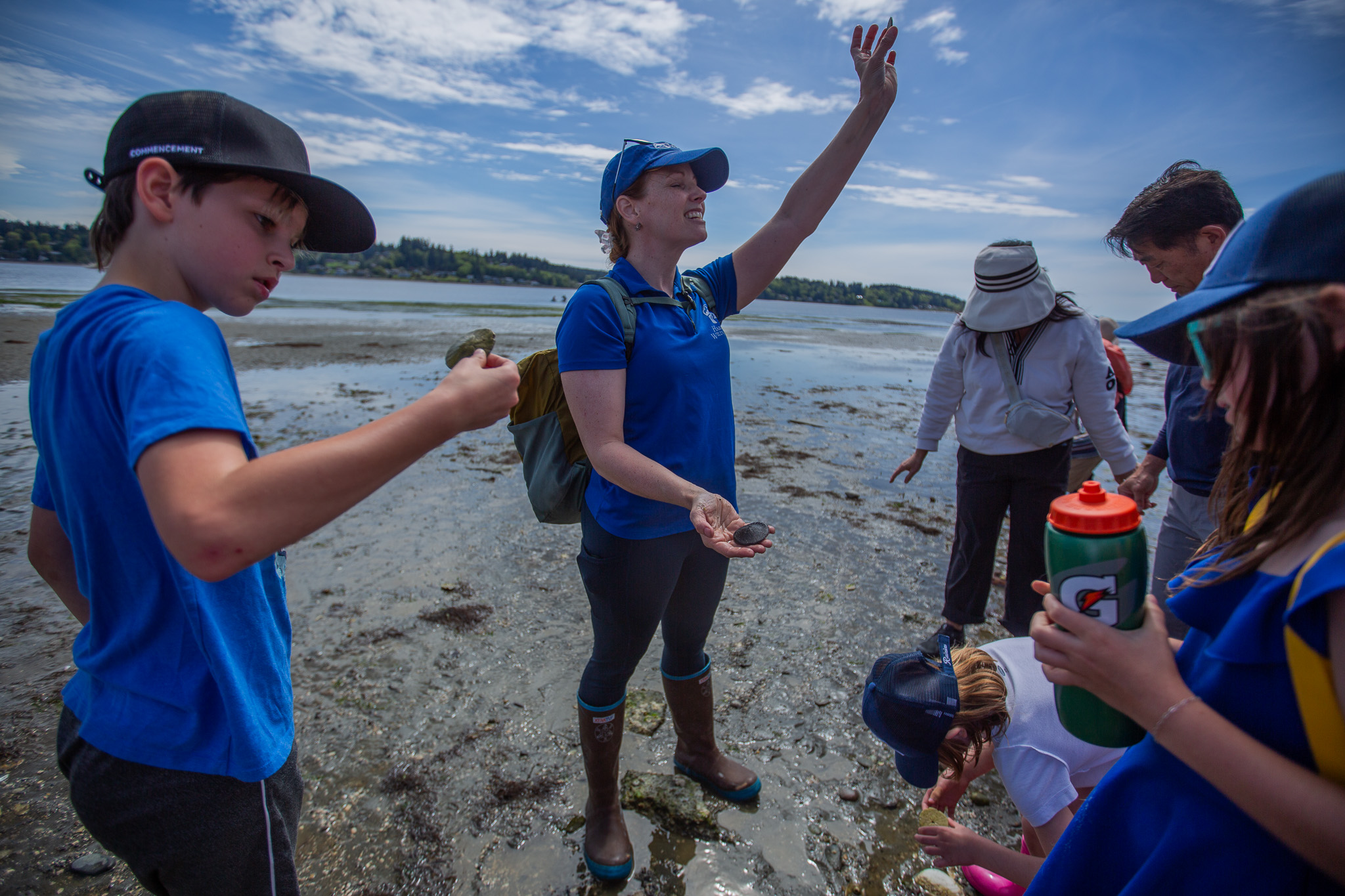
- Harbor Wildwatch’s education director, Rachel Easton, holds up an example of a dead sand dollar, during Harbor WildWatch’s Low Tide Tour at the Purdy Spit on April 19, 2026. Dead sand dollars are white, while live sand dollars are dark purple-brown. Photo by Carolyn Bick. © Carolyn Bick
-
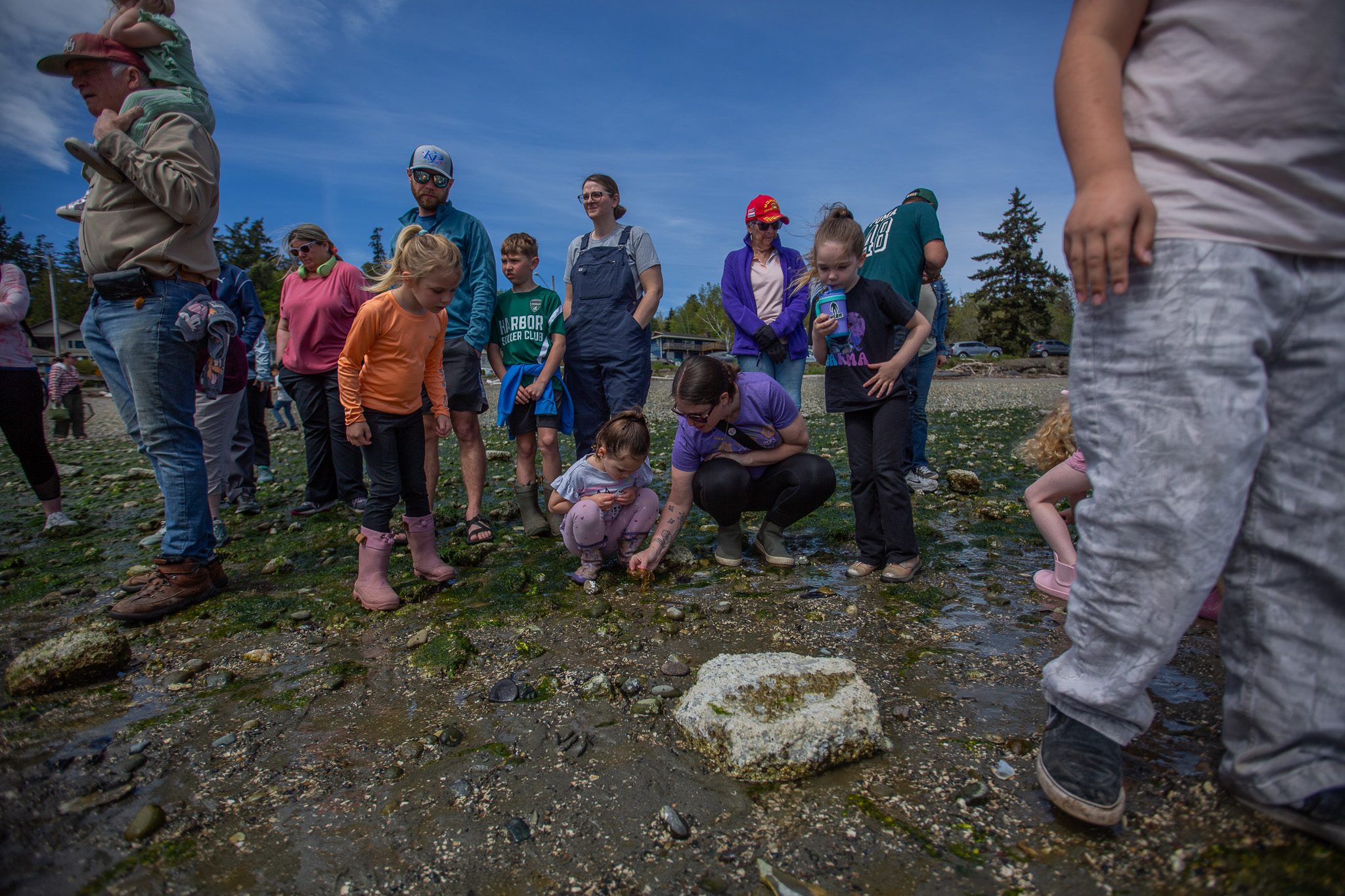
- Attendees examine tiny members of the beach’s aquatic life, during Harbor WildWatch’s Low Tide Tour at the Purdy Spit on April 19, 2026. Photo by Carolyn Bick. © Carolyn Bick
-
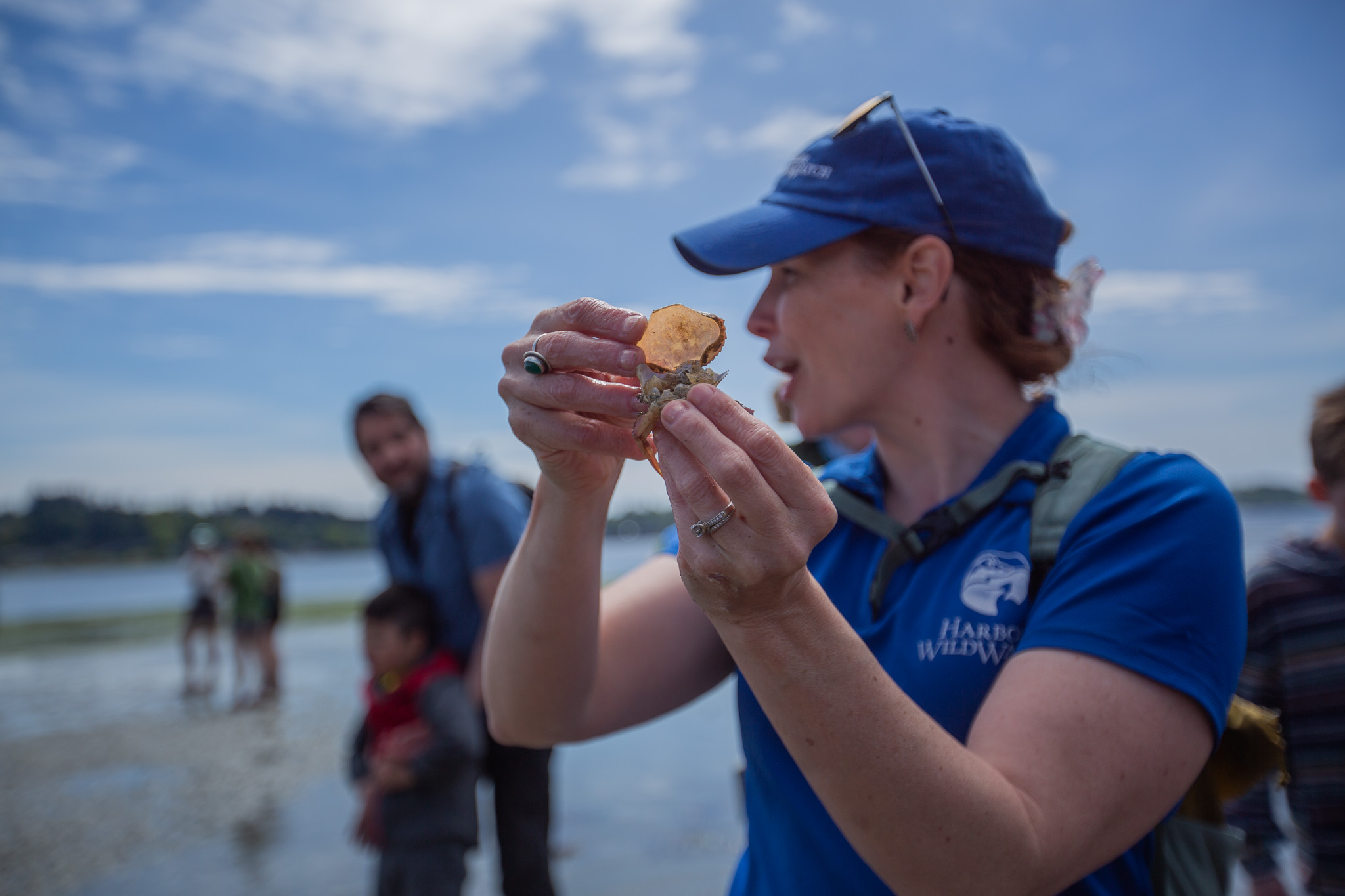
- Easton holds up a crab molt, showing everyone that it’s empty, during Harbor WildWatch’s Low Tide Tour at the Purdy Spit on April 19, 2026. Photo by Carolyn Bick. © Carolyn Bick
-
- A male northern kelp crab lances Easton with one of his legs, during Harbor WildWatch’s Low Tide Tour at the Purdy Spit on April 19, 2026. “There’s a thing about kelp crabs that makes them a bit dangerous: it’s how sneaky and sharp their toes are,” Easton said, as she showed attendees the crab stabbing her finger. “People hold the kelp crab and they get grabbed by these very sharp claws or pincers. … The pincers are also a threat especially with this species because he can reach behind his head. Most crabs can’t reach back here. … With these crabs, um, the easiest thing to do is just simply not handle them.” Photo by Carolyn Bick. © Carolyn Bick
-
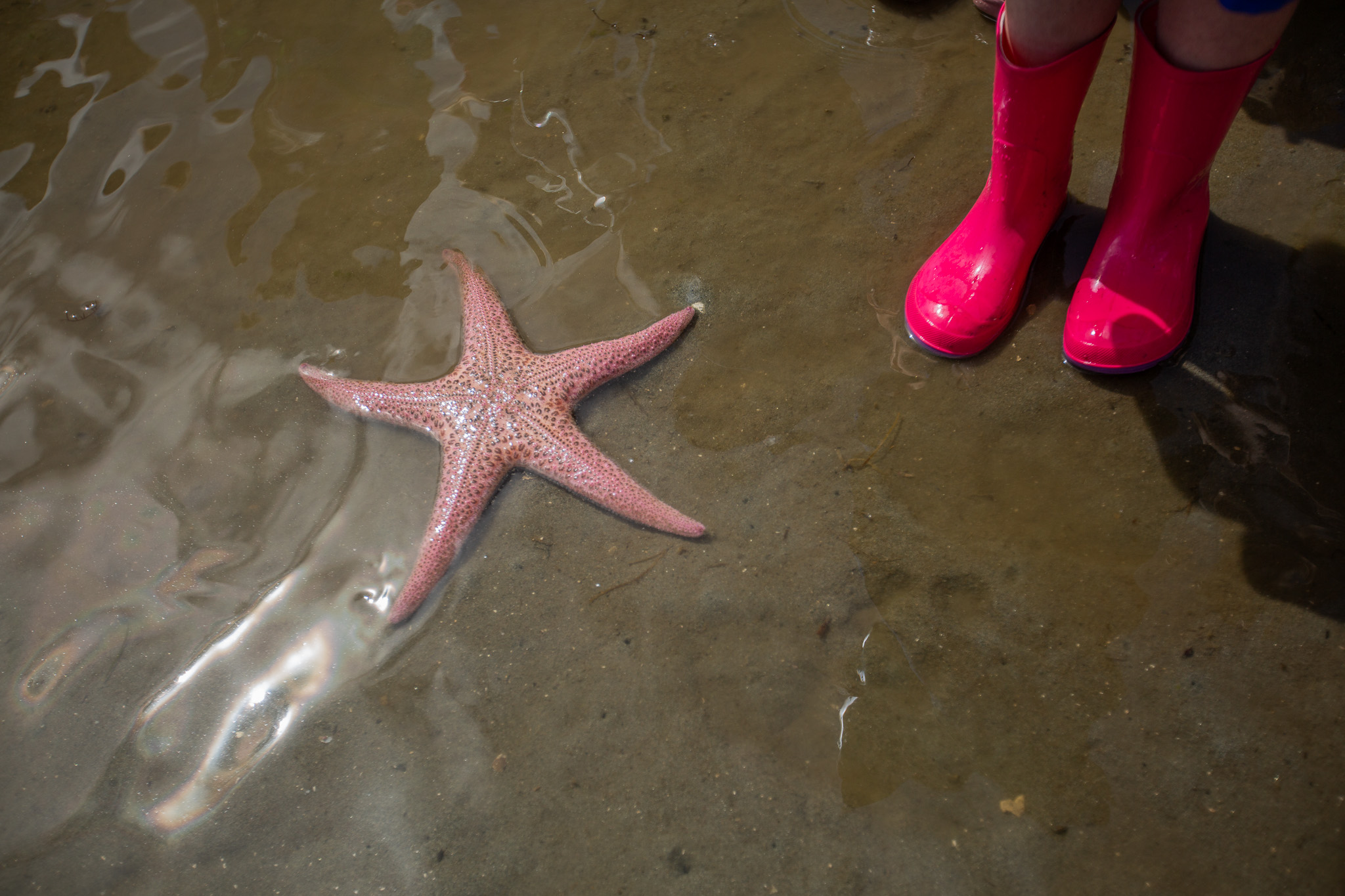
- A girl with pink boots stands next to a pink sea star, during Harbor WildWatch’s Low Tide Tour at the Purdy Spit on April 19, 2026. Photo by Carolyn Bick. © Carolyn Bick
-
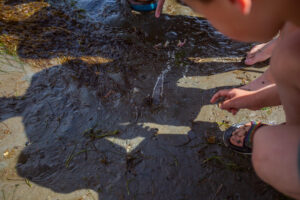
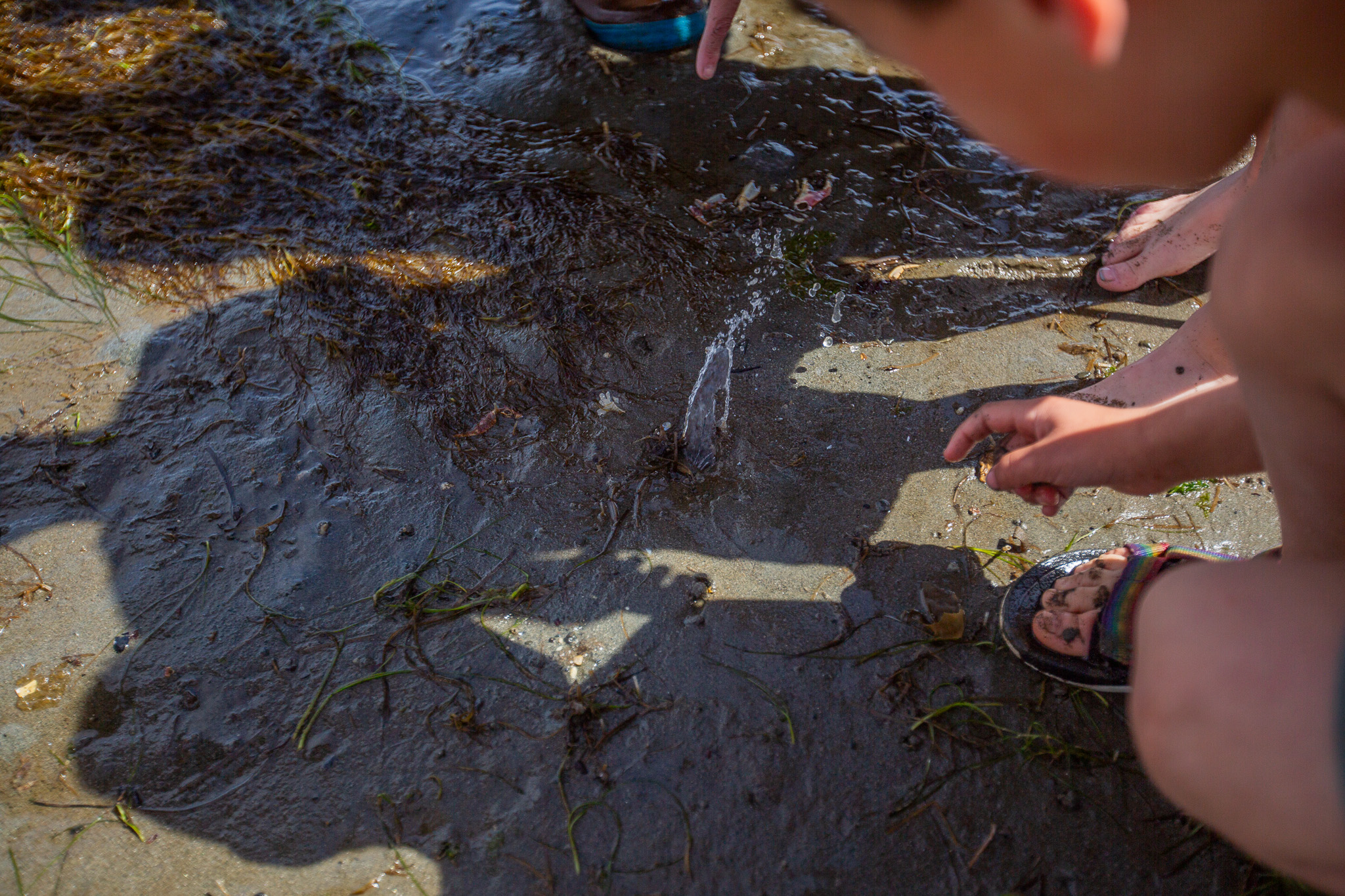
- Kids watch a horse clam spurt water at them, during Harbor WildWatch’s Low Tide Tour at the Purdy Spit on April 19, 2026. Photo by Carolyn Bick. © Carolyn Bick
-
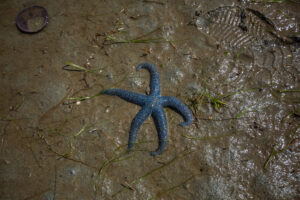
- A blue sea star lies on the sand at low tide, during Harbor WildWatch’s Low Tide Tour at the Purdy Spit on April 19, 2026. Photo by Carolyn Bick. © Carolyn Bick
-
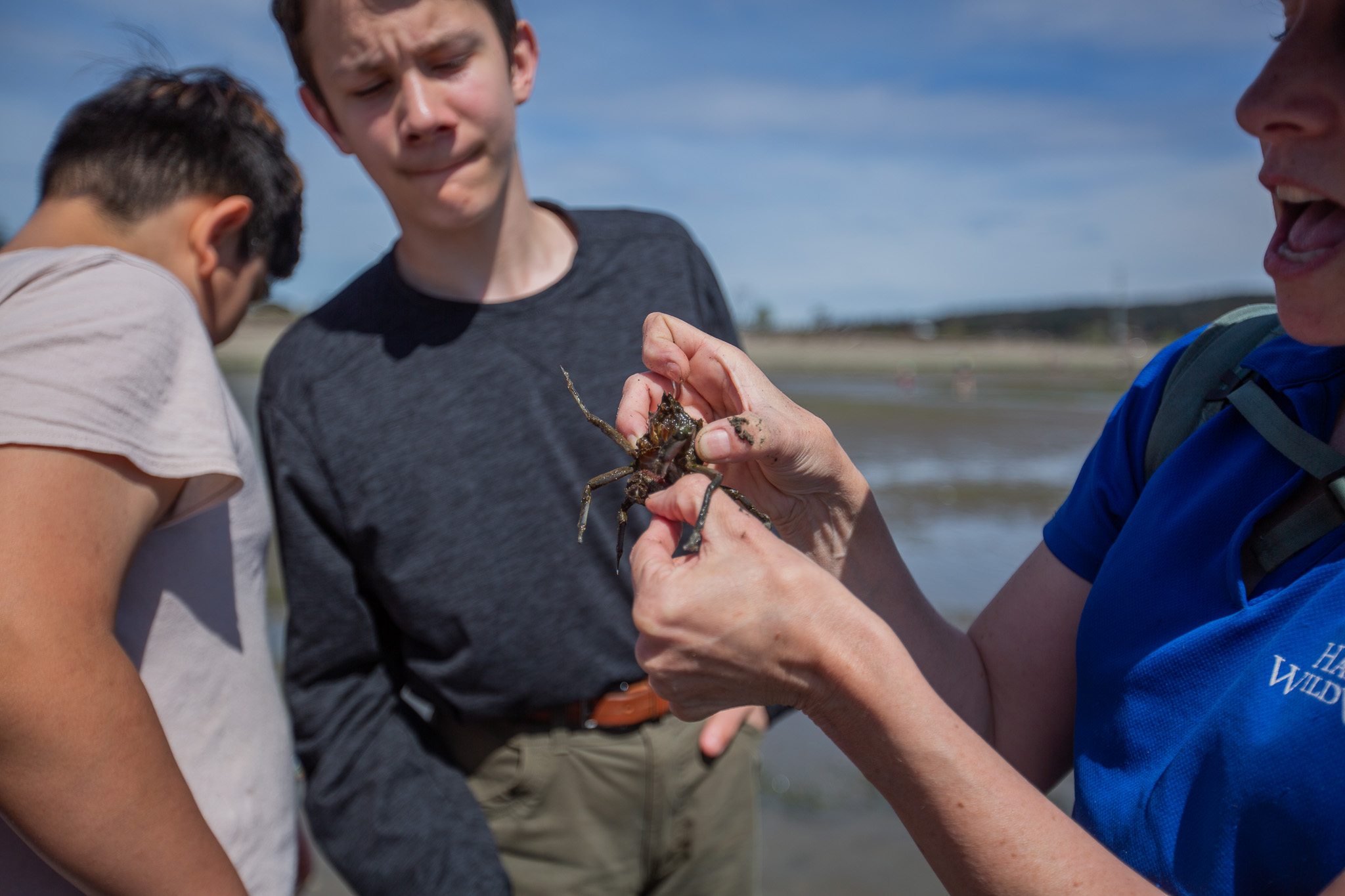
- Easton briefly shows attendees eggs a female northern kelp crab is carrying, during Harbor WildWatch’s Low Tide Tour at the Purdy Spit on April 19, 2026. She did it briefly for educational purposes only, and advises against doing this — it’s an invasion of the crab’s privacy. Photo by Carolyn Bick. © Carolyn Bick
-
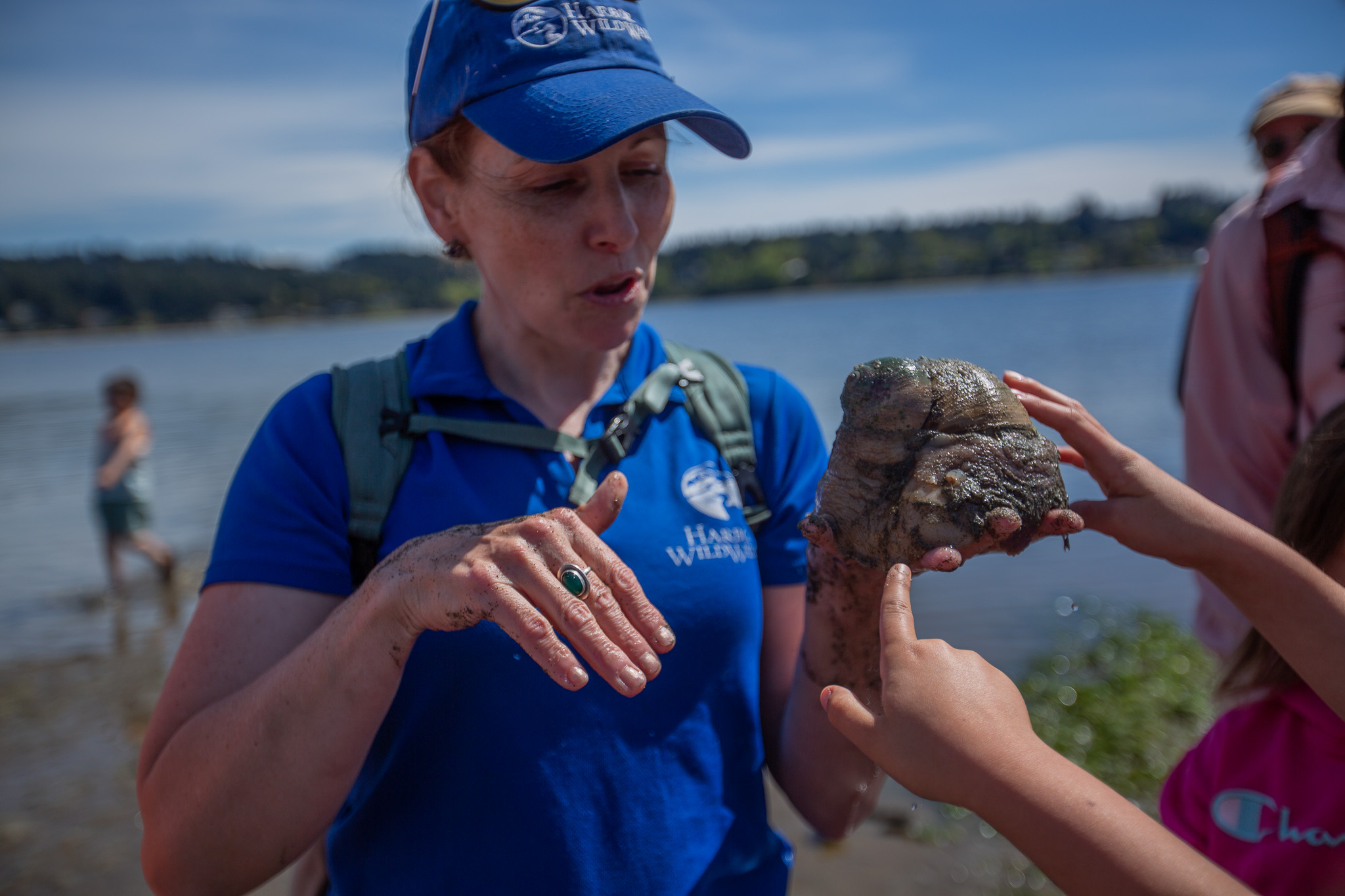
- Kids reach forward to touch a massive moon snail, during Harbor WildWatch’s Low Tide Tour at the Purdy Spit on April 19, 2026. Photo by Carolyn Bick. © Carolyn Bick
-
- Children hold a moon snail, as another places an egg collar around the snail, during Harbor WildWatch’s Low Tide Tour at the Purdy Spit on April 19, 2026. Photo by Carolyn Bick. © Carolyn Bick
-
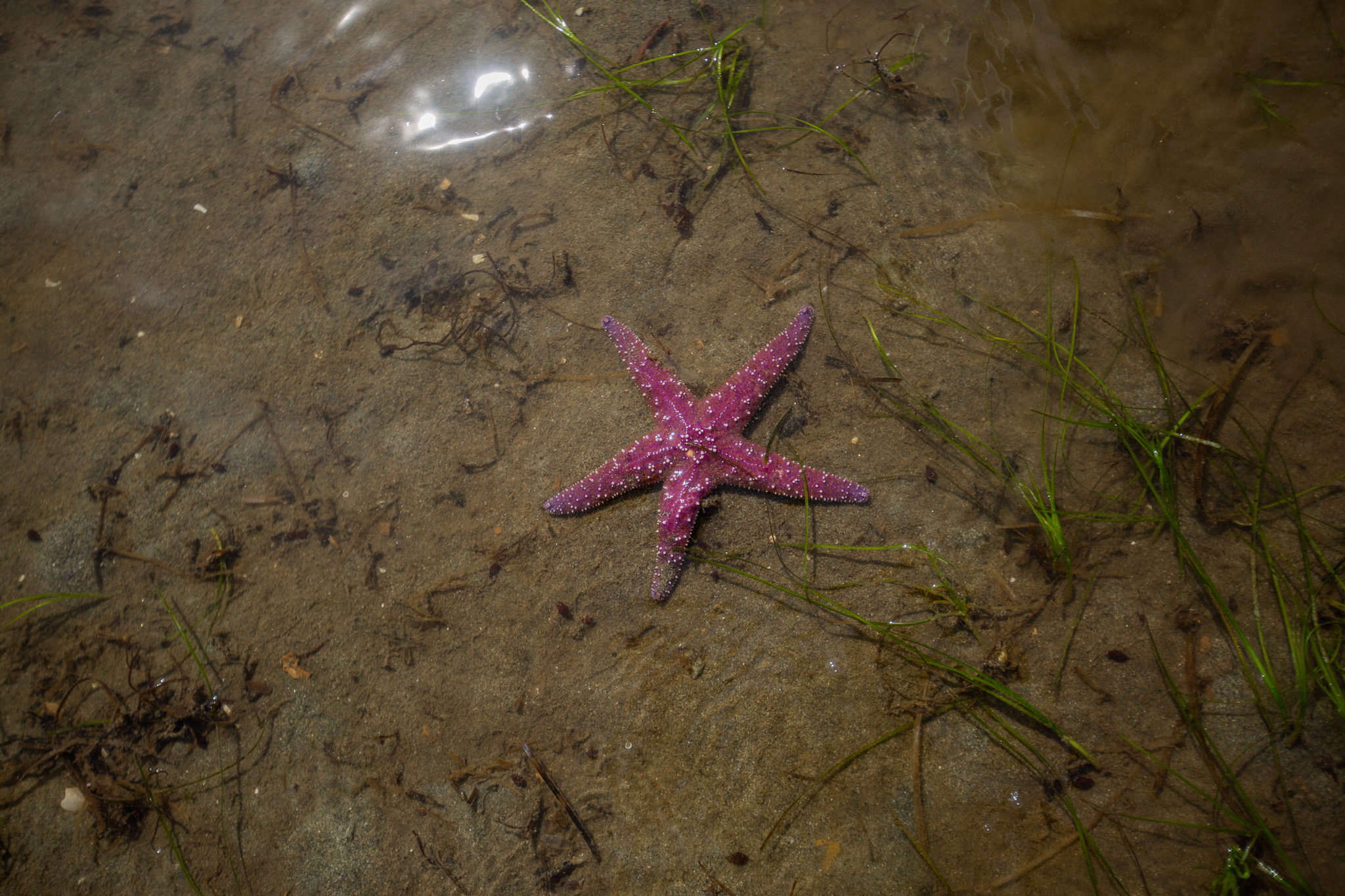
- A purple sea star rests beneath the water at low tide, during Harbor WildWatch’s Low Tide Tour at the Purdy Spit on April 19, 2026. Photo by Carolyn Bick. © Carolyn Bick
-
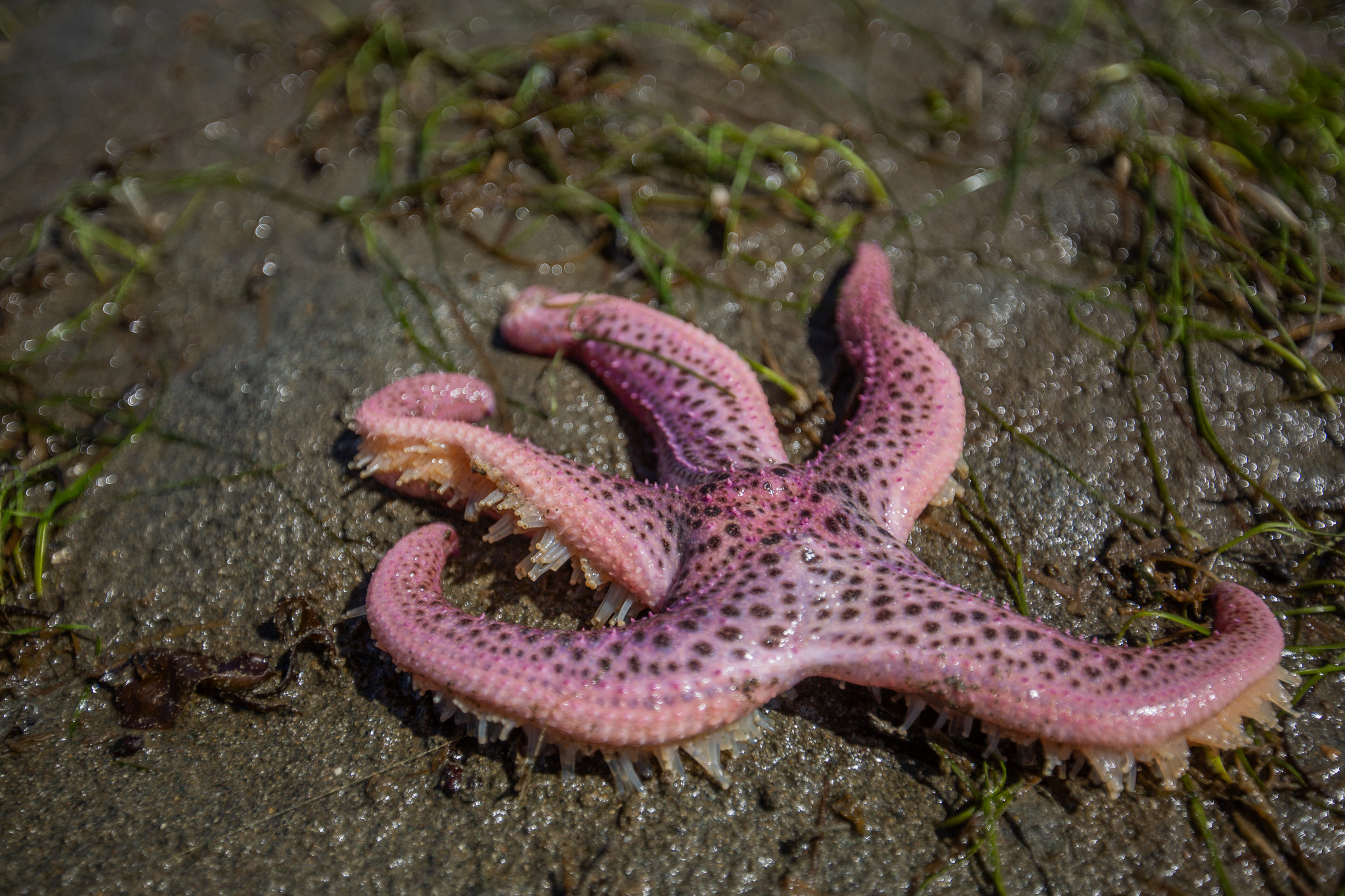
- A pink sea star shows off his little feet, during Harbor WildWatch’s Low Tide Tour at the Purdy Spit on April 19, 2026. Photo by Carolyn Bick. © Carolyn Bick
-
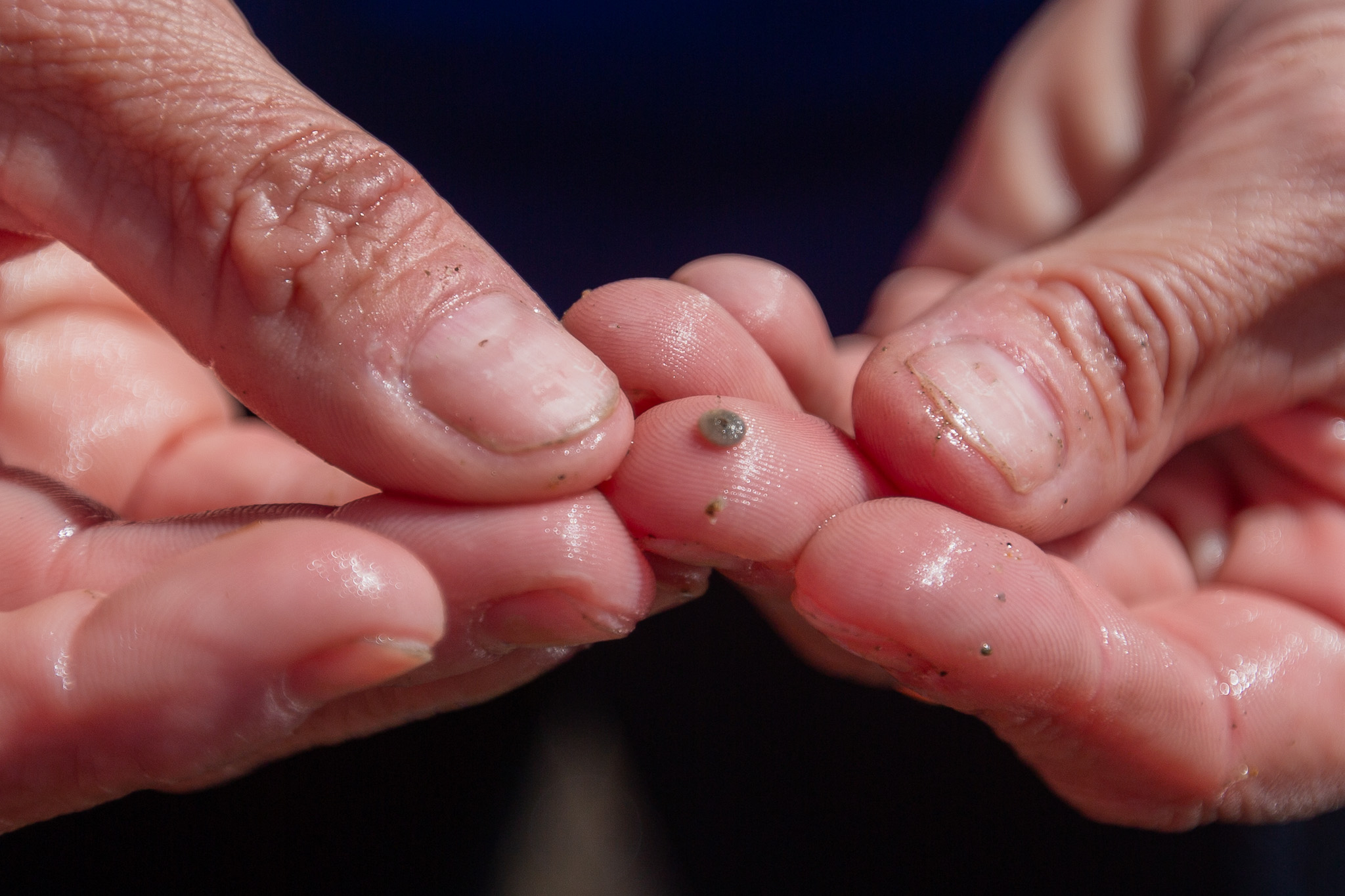
- Easton holds a baby sand dollar, during Harbor WildWatch’s Low Tide Tour at the Purdy Spit on April 19, 2026. Photo by Carolyn Bick. © Carolyn Bick
-
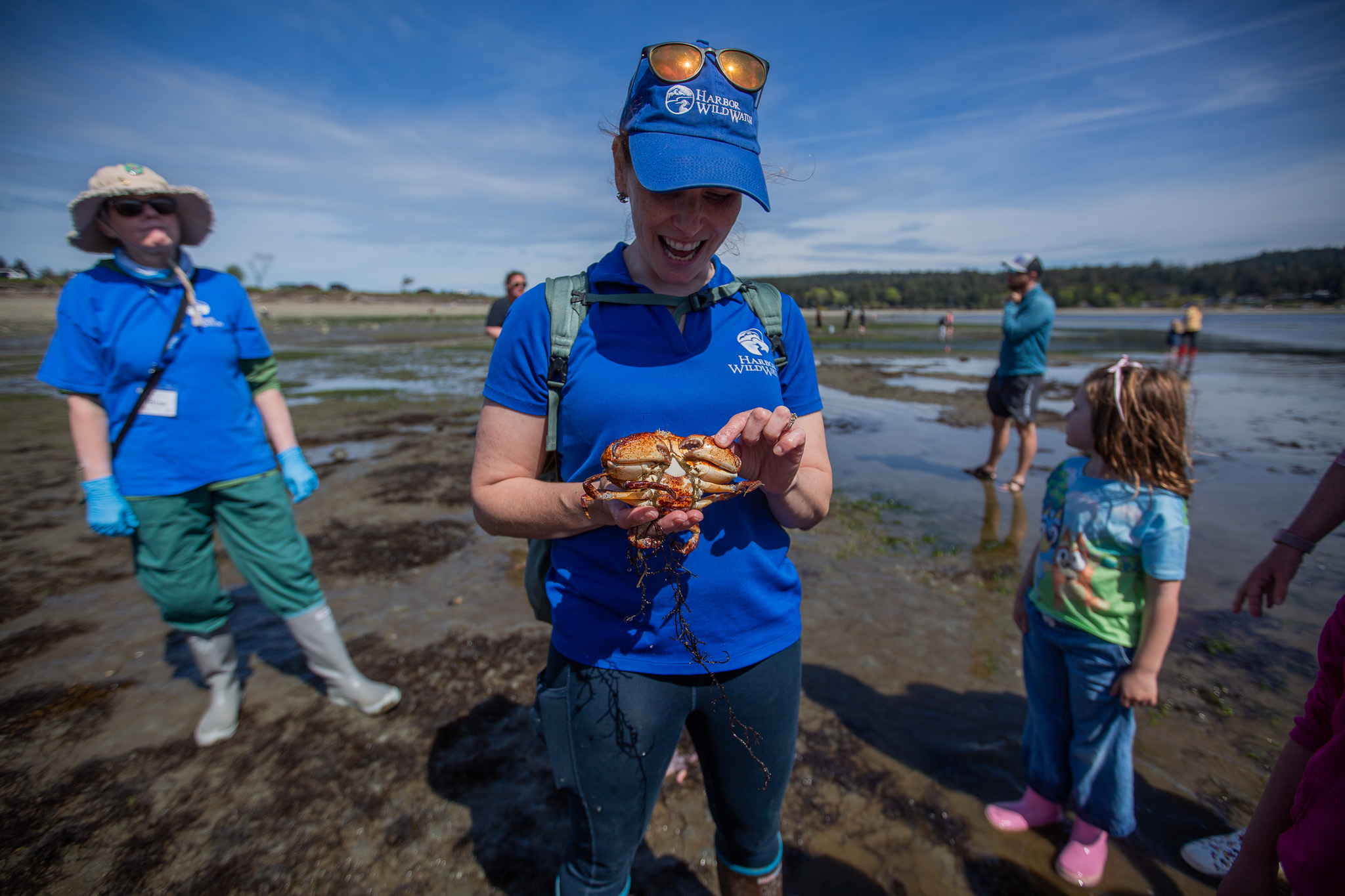
- Easton holds a female red rock crab, whose shell is still fairly soft, during Harbor WildWatch’s Low Tide Tour at the Purdy Spit on April 19, 2026. Photo by Carolyn Bick. © Carolyn Bick
-
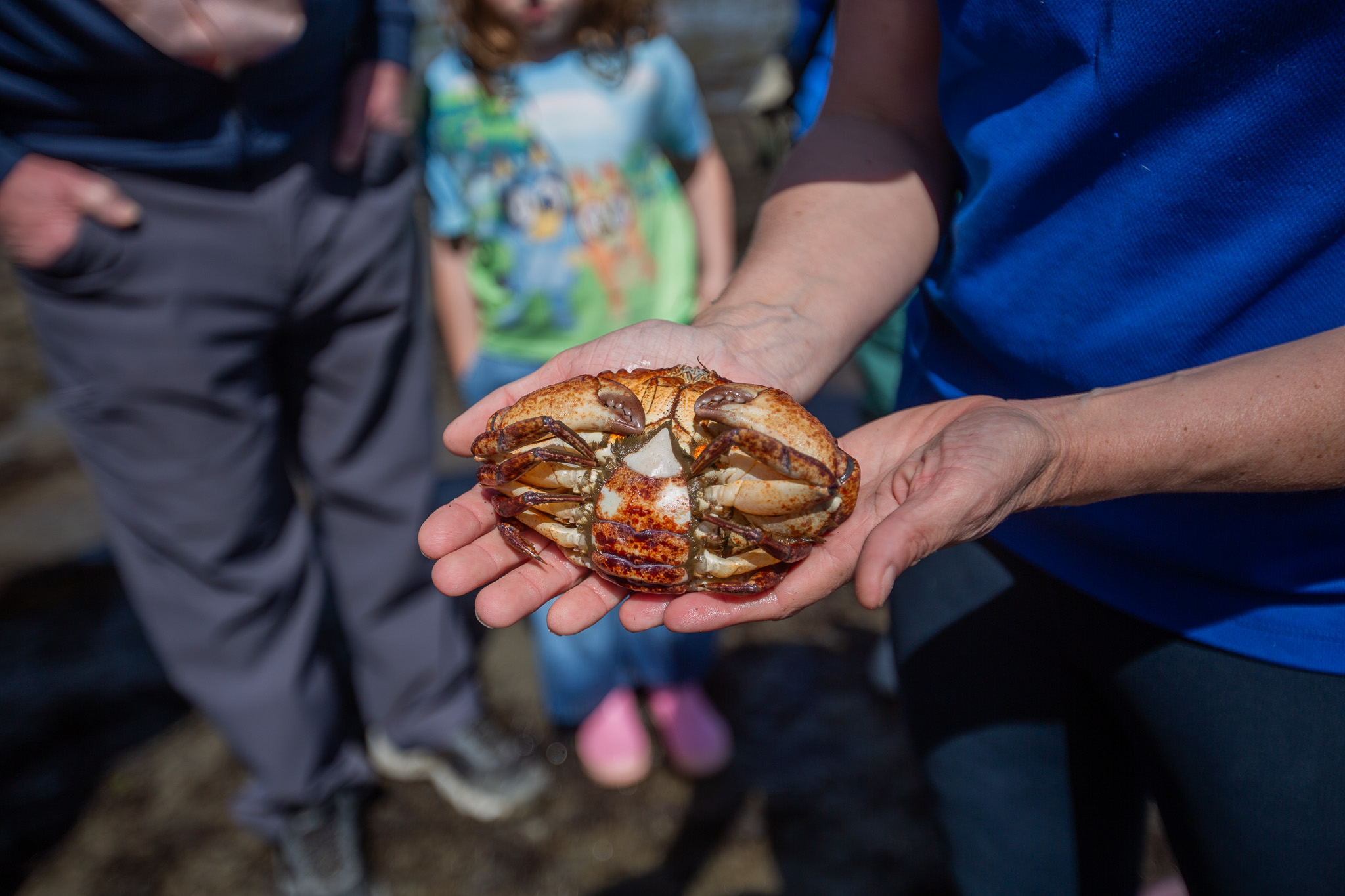
- Easton holds a female red rock crab, whose shell is still fairly soft, during Harbor WildWatch’s Low Tide Tour at the Purdy Spit on April 19, 2026. “This is the crabbiest crab species,” Easton said. “This is the one I don’t like to handle much because they’re dangerous. … They’re the only thing that can eat a full-grown moonsail. They snap the shell to get behind the operculum and then eat the animal’s flesh.” Photo by Carolyn Bick. © Carolyn Bick
-
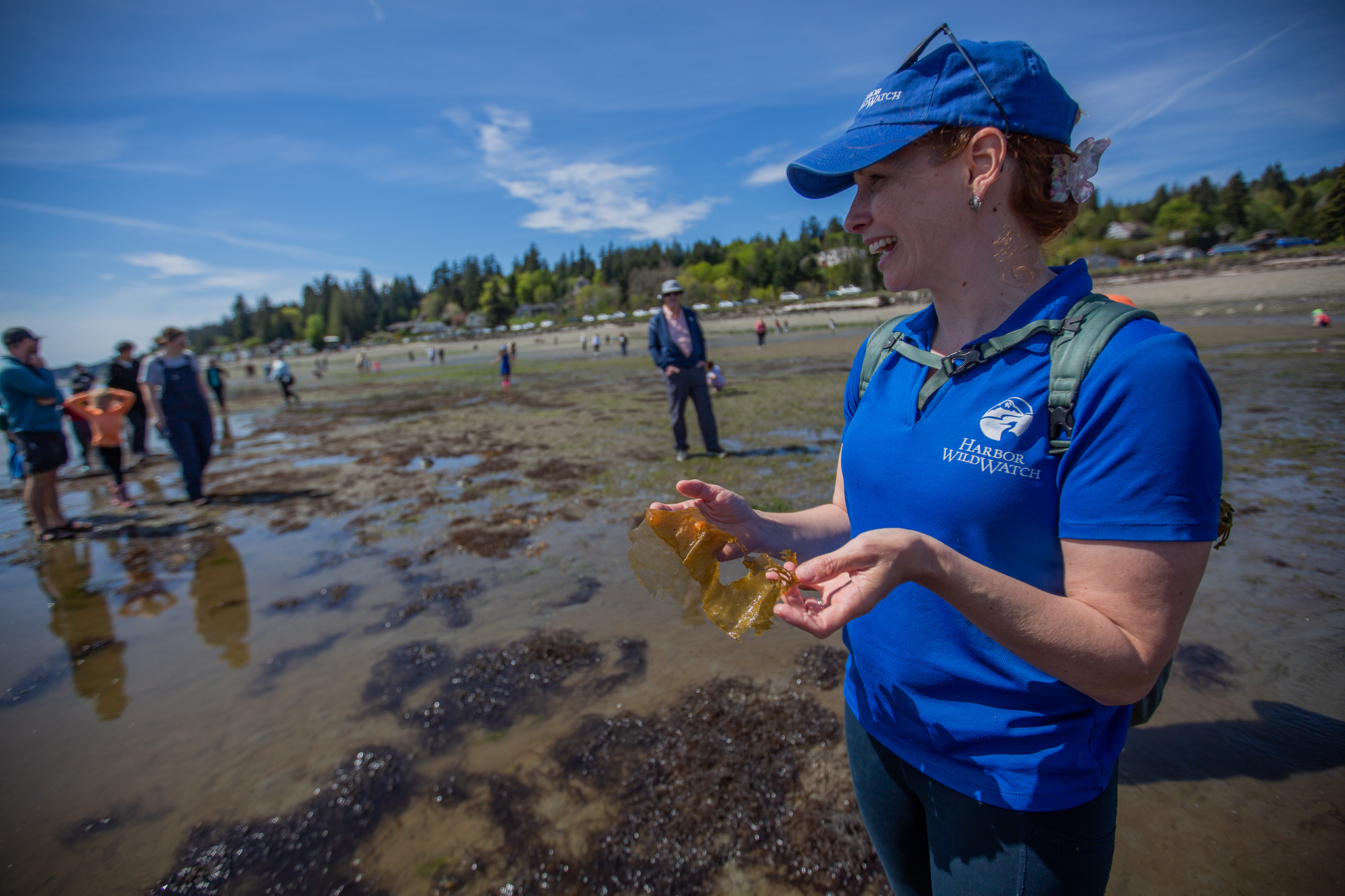
- Easton holds up a piece of sugar kelp, during Harbor WildWatch’s Low Tide Tour at the Purdy Spit on April 19, 2026. “it’s got saccharine in it,” Easton said. “It tastes salty to us. It doesn’t have quite enough of a sweet taste. Although, deer do preferentially eat this kelp over other foods, and they’re known to have sweet teeth too.” Photo by Carolyn Bick. © Carolyn Bick
-
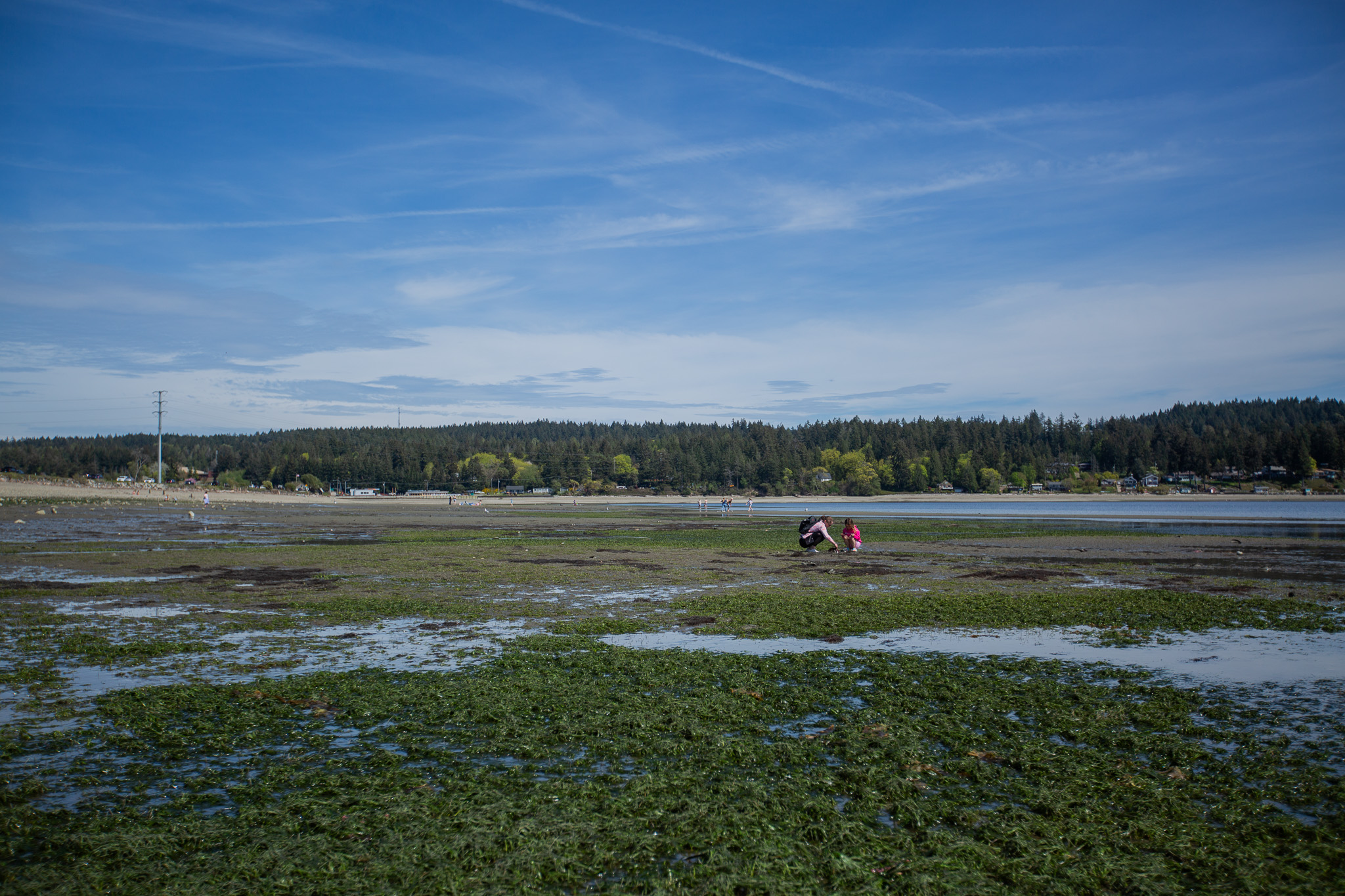
- Two attendees look at aquatic life, during Harbor WildWatch’s Low Tide Tour at the Purdy Spit on April 19, 2026. Photo by Carolyn Bick. © Carolyn Bick
-
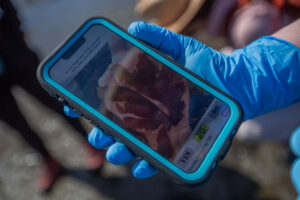
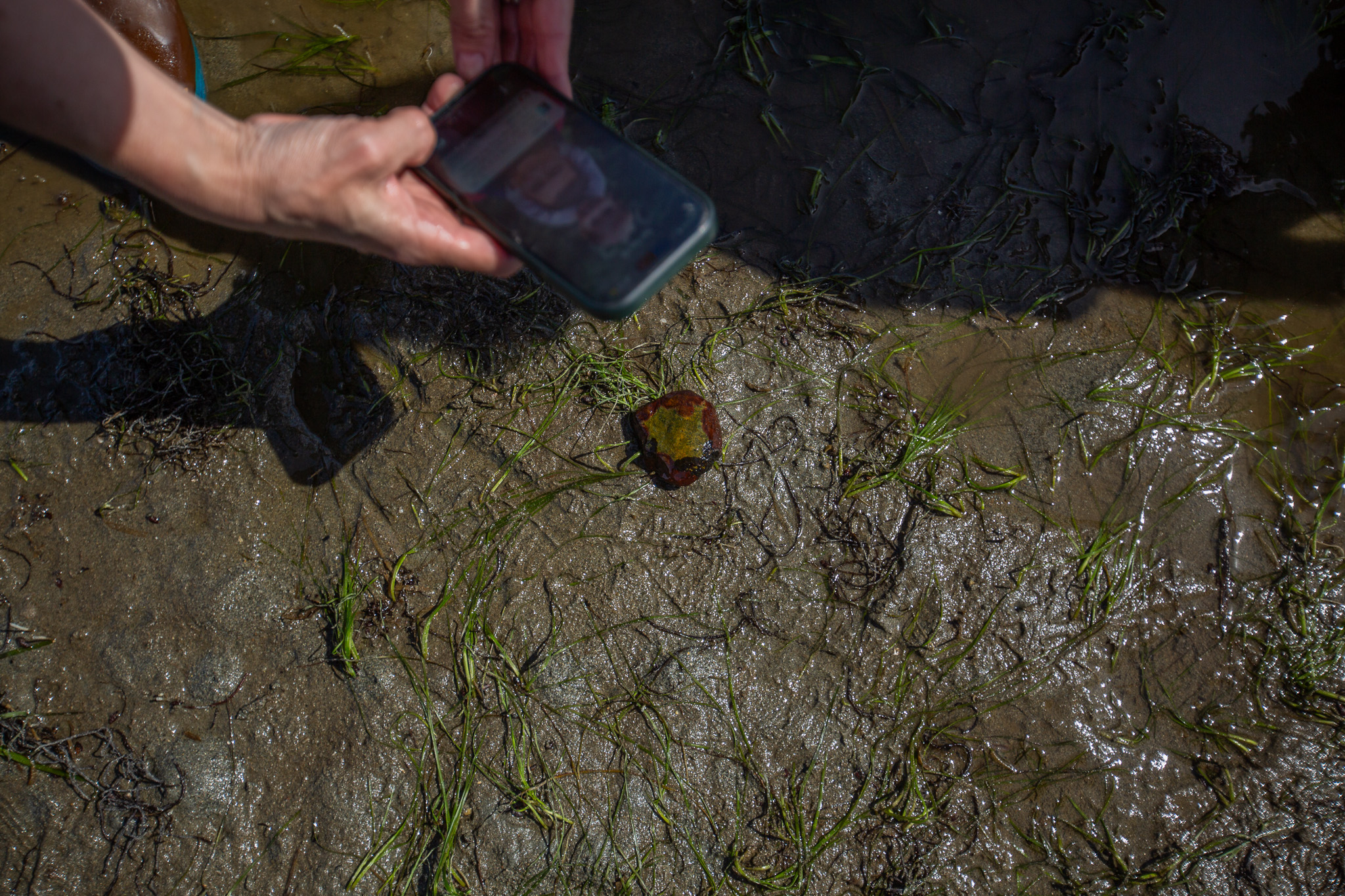
- Bliss, a Harbor WildWatch volunteer, demonstrates how to use Seaweed Sorter: Pacific Northwest edition, a specific app for identifying seaweed in the Pacific Northwest, during Harbor WildWatch’s Low Tide Tour at the Purdy Spit on April 19, 2026. Photo by Carolyn Bick. © Carolyn Bick
-
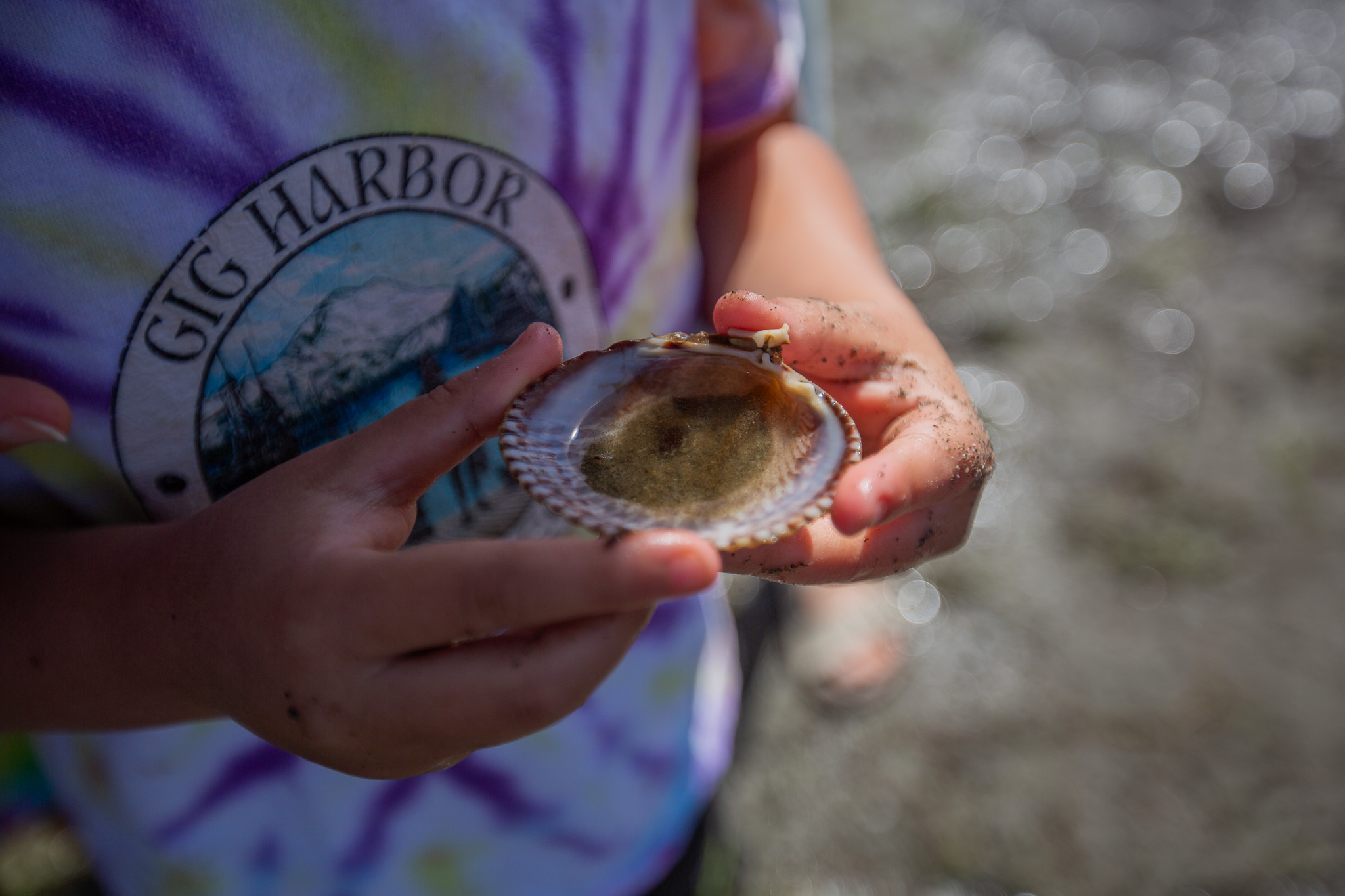
- A child holds a seashell full of water and a small shrimp, during Harbor WildWatch’s Low Tide Tour at the Purdy Spit on April 19, 2026. Photo by Carolyn Bick. © Carolyn Bick
-
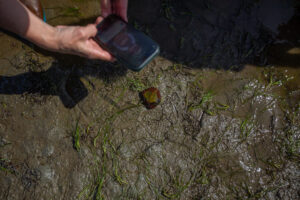
- Easton takes a picture of a rock covered in two kinds of seaweed in their young stages, during Harbor WildWatch’s Low Tide Tour at the Purdy Spit on April 19, 2026. Photo by Carolyn Bick. © Carolyn Bick