
Arts & Entertainment Community
Day Tripper | Cars, cars and much more than cars
My brother, John, is crazy about cars. He would call himself an automobile aficionado or an automotive expert. I call him a car nut.

Arts & Entertainment Sponsor
Arts & Entertainment stories are made possible in part by the Gig Harbor Film Festival, a proud sponsor of Gig Harbor Now.
Over several decades, I’ve accompanied him to many car shows and an automotive museum or two. I’ve even been to LA’s famed Petersen Automotive Museum on Wilshire Boulevard. When I left Southern California (where he lives) to come back to Washington, I figured I’d seen the last of all that.
Just over a year ago, I started hearing about a LeMay museum with lots and lots of cars. I assumed it was the big, beautiful, modern museum across the street from the Tacoma Dome. I soon learned that while that museum is a LeMay (the LeMay – America’s Car Museum) the one I was hearing about was actually LeMay Collections at Marymount in Spanaway.
There are three LeMay properties and all charge separate admissions — usually $20 for a regular ticket or $17 for a senior or AAA member. There’s America’s Car Museum near the Tacoma Dome; LeMay Collections at Marymount in Spanaway; and the LeMay Homestead, the private residence of the LeMay family. (LeMay family patriarch Harold LeMay founded LeMay Enterprises, which was at one point among the largest garbage removal companies in the country.)
The Homestead includes the family’s vehicle garages (home to around 300 automobiles), an old-fashioned soda shop and general store, and Nancy LeMay’s personal doll collection.
Day Tripper intends to visit both the Tacoma museum and the homestead sometime soon. But this month, I’m focusing on my visits to LeMay Collections at Marymount.
LeMay Collections at Marymount
Collections at Marymount is a very interesting place. It includes collections of an incredible number of vintage cars — at one point more than 3,000, then a Guinness World Record.
The facility hosts other collections as well — more than 250 outboard motors, hundreds of vintage signs, some 2,000 dolls, vintage toys, salt-and-pepper shakers. The items were gathered all over the country, often at swap meets and estate sales.
When I visited the property last fall, I was primarily interested in the cars and some of the related memorabilia. A collector’s gene runs through my family’s DNA and grows stronger with each generation. I’ve done quite a bit of research into where collecting stops and hoarding starts. I’ve heard people say that collecting is just an organized form of hoarding.
When I first arrived at the property, I was greeted by an old friend – one of the yard birds we first met in Chehalis.
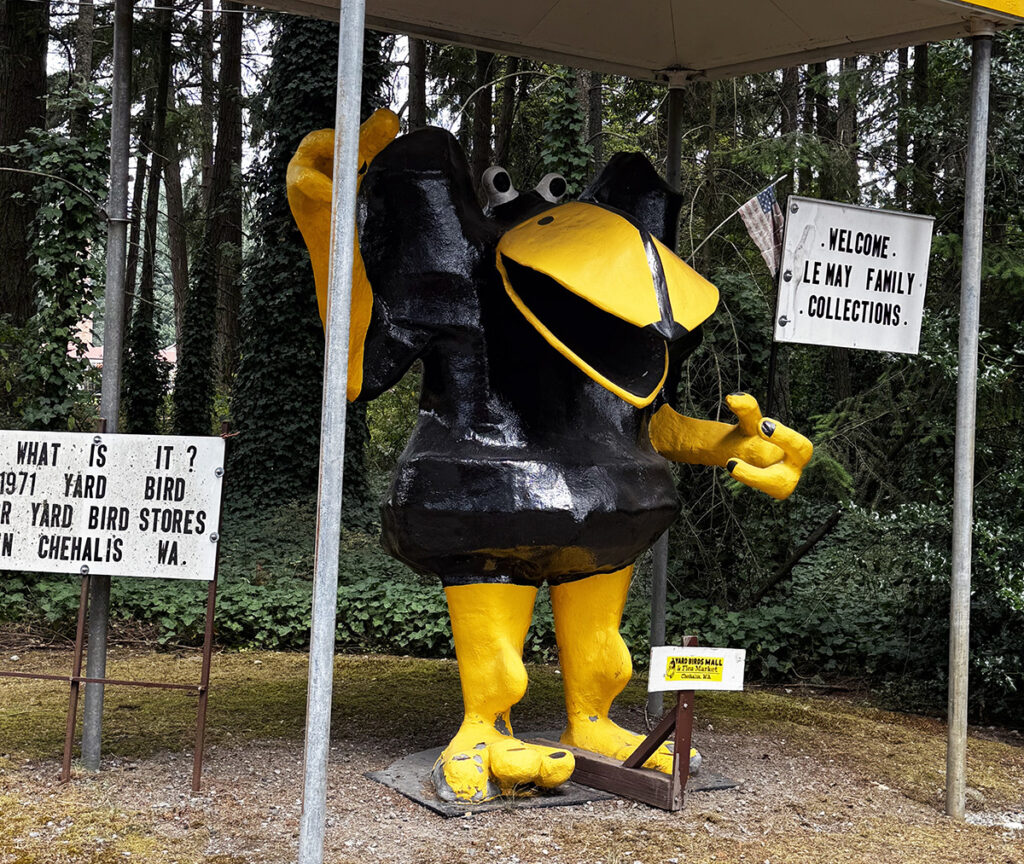
A Yard Bird from Chehalis found a nest at LeMay Collections at Marymount in Spanaway. Photo by Mary Williams
He’s one of a half-dozen life-sized brand ambassadors scattered around the property. The expansive grounds of Marymount and the museum are home to a number of larger memorabilia and vehicles, including some vintage trucks, a logging truck, an old fire engine and my favorite, a vintage duck boat. Most of the vehicles are just there to look at, but the museum actually uses its duck boat to transport guests from the distant parking areas.
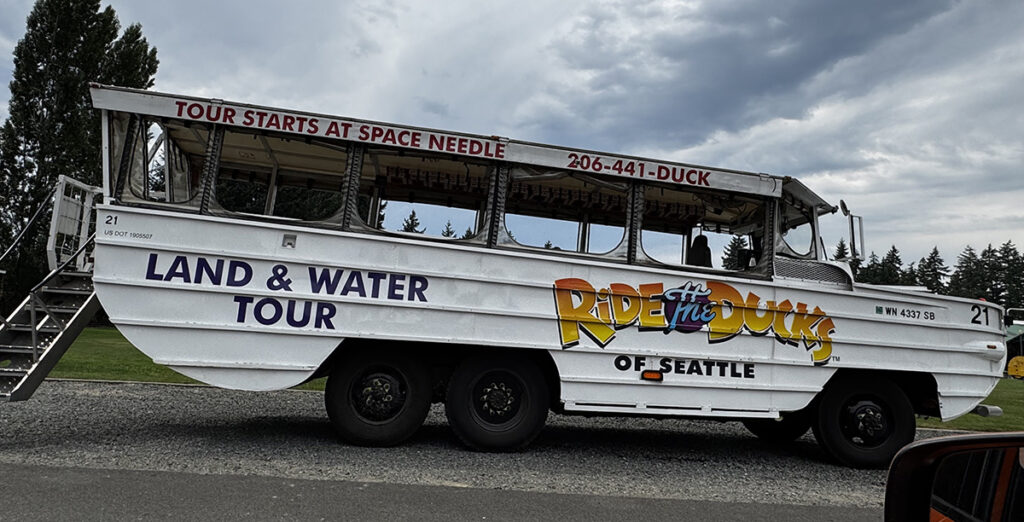
A vintage Duck Boat. Photo by Mary Williams
Near the museum entrance, lounging on a bench, is a life-sized Ronald McDonald. My favorite mascot was one of the original Michelin Men, Bibendum, an old guy trademarked in 1894. He beckoned me as I approached the lobby.
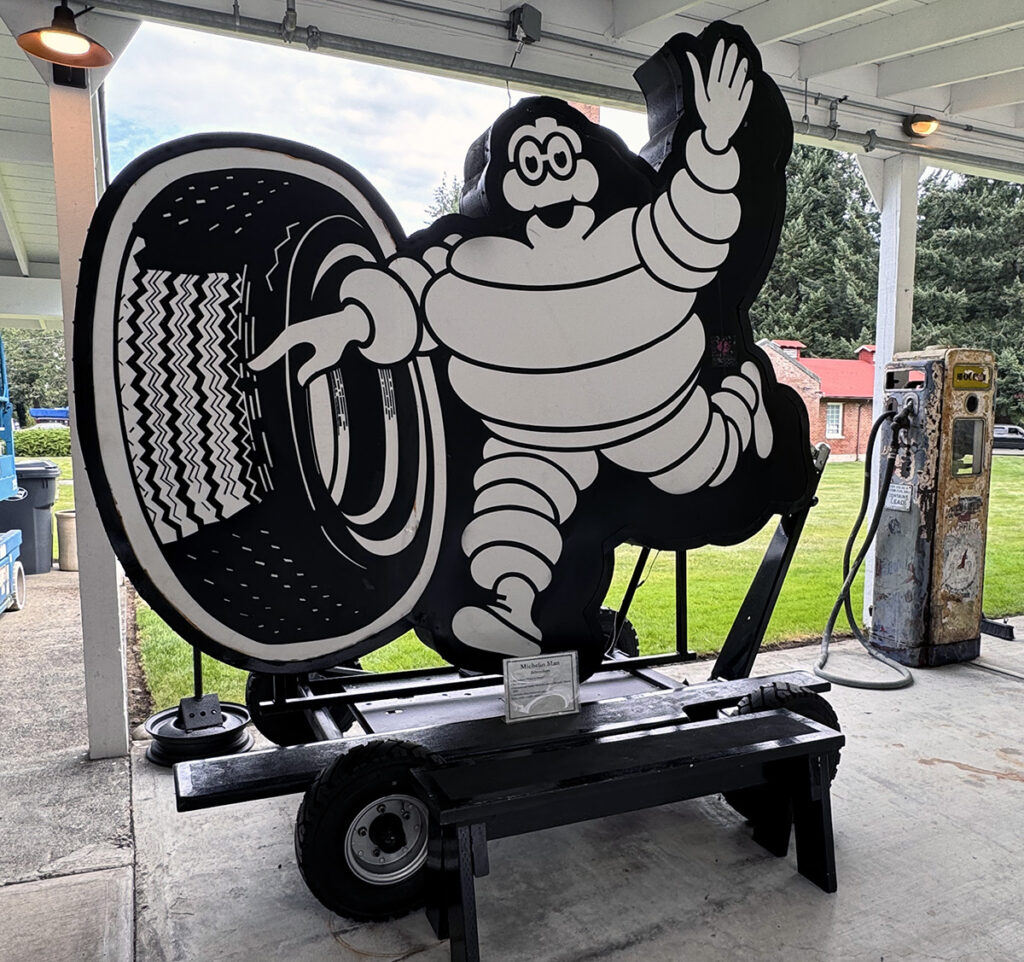
Bibendum, an original Michelin Man, points visitors toward the entrance. Photo by Mary Williams
Cars of all shapes and sizes
Inside, I found the usual: a small gift shop, brochures, bulletin boards, and a ticket counter. A large set of double doors opened to the original Marymount Auditorium, LeMay Hall. It is a huge multi-level room with vaulted ceilings that was once used for music, concerts, and plays. It is now jam-packed with an array of the cars that represent most of 20th century automotive history.
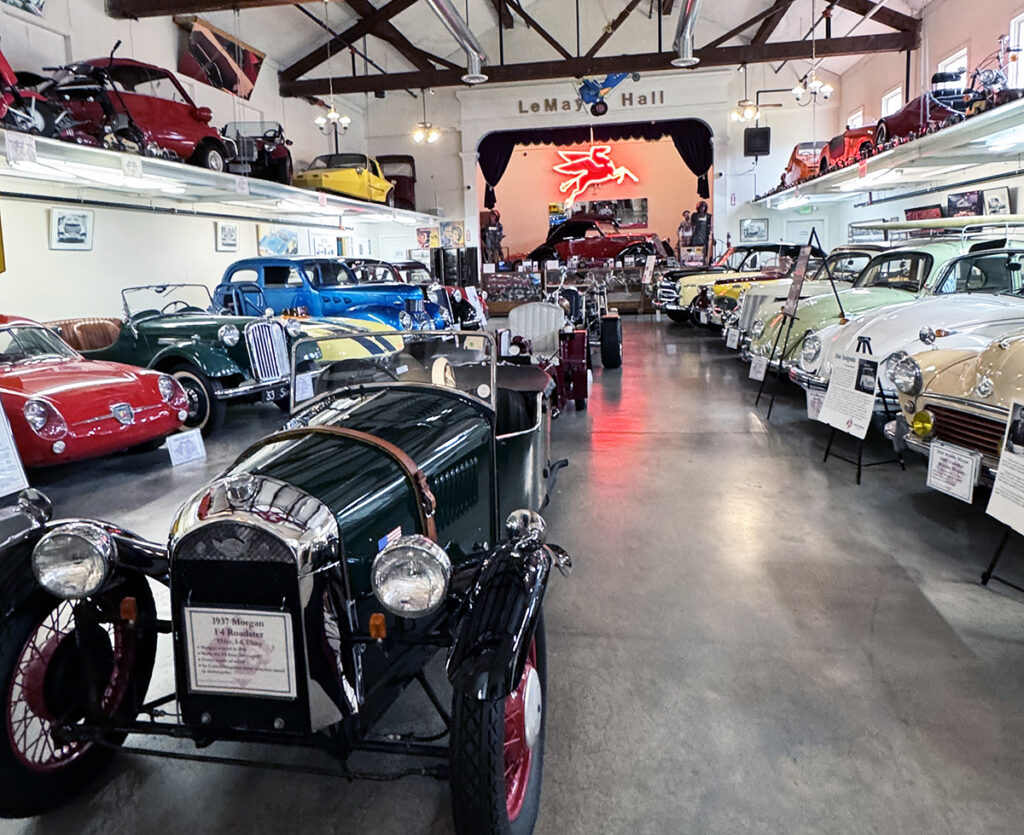
Vintage cars pack LeMay Hall. Photo by Mary Williams
I was really attracted to several of them, such as an old 1961 Nash Metropolitan.
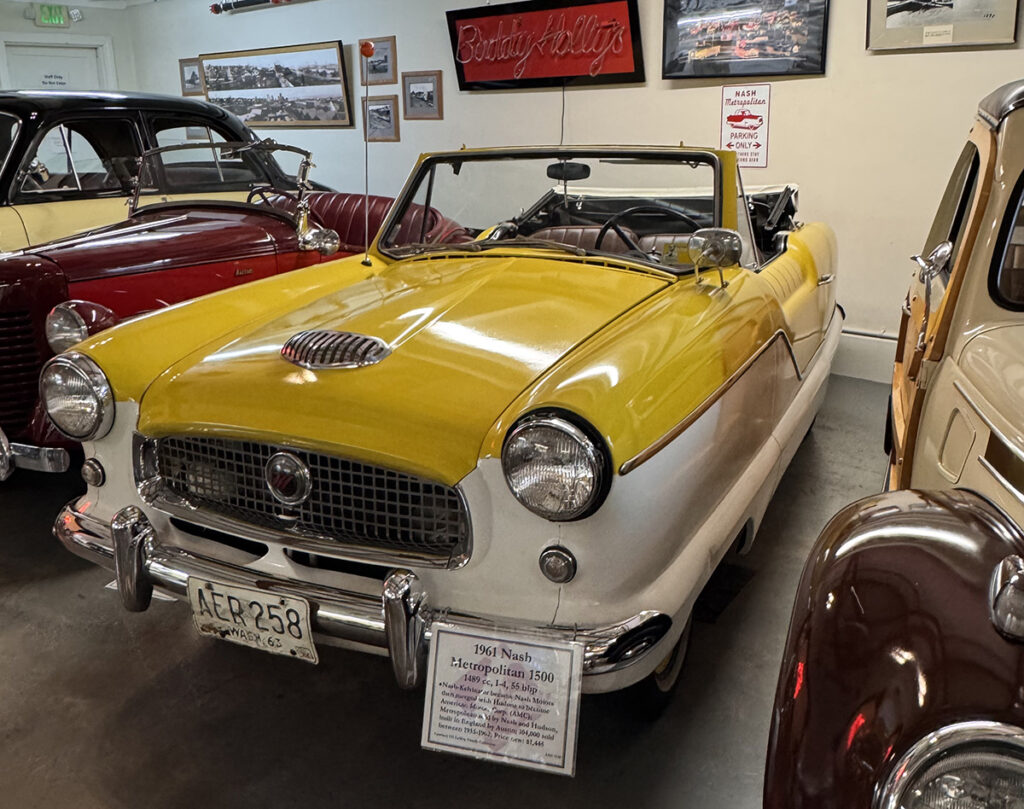
A 1961 Nash Metropolitan. Photo by Mary Williams
A large wood display case across the back wall contains collectibles such as model cars, model gas pumps, ads and more.
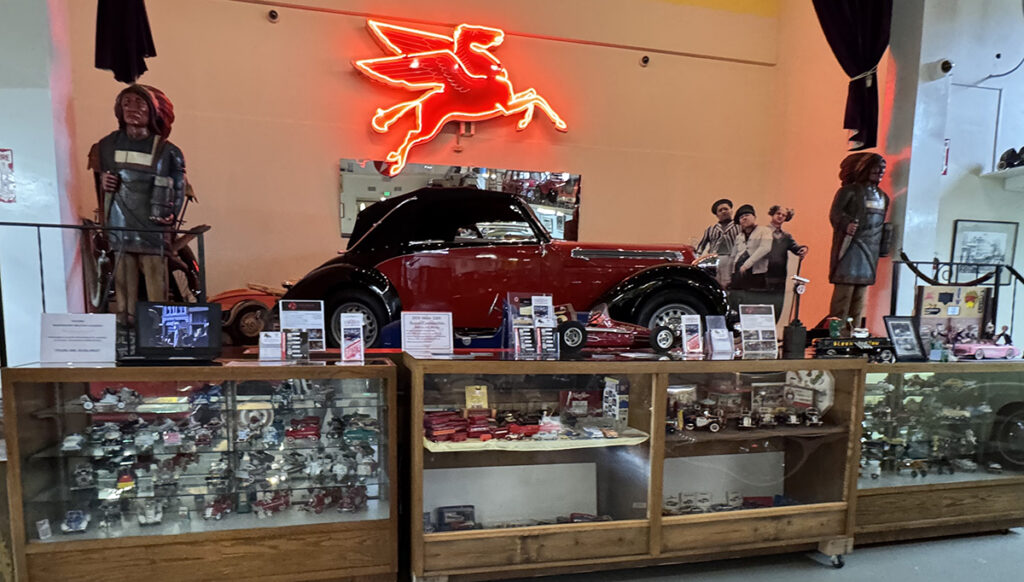
Trinkets on display at LeMay Collections at Marymount in Spanaway. Photo by Mary Williams
Today, every fifth car you see is a Prius. A recent Toyota commercial even describes them as iconic. But do you remember the original 2001 Toyota Prius Hybrid Electric?
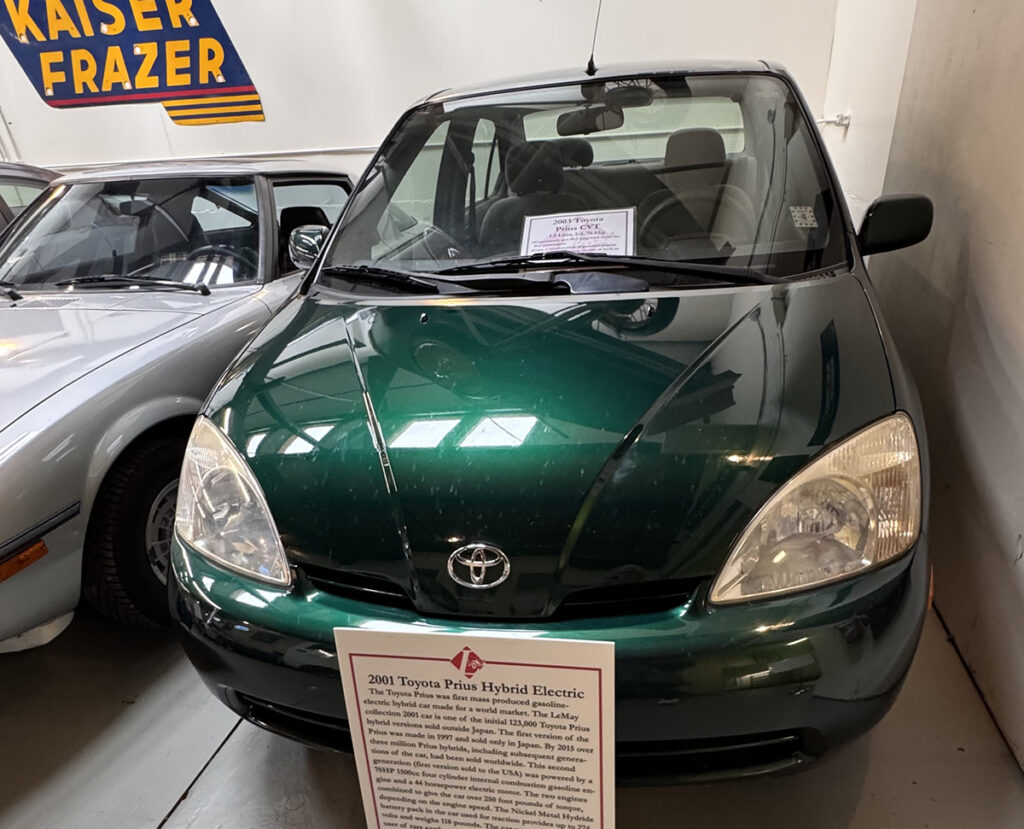
A Toyota Prius, already considered vintage. Photo by Mary Williams
And then there are vehicles that really ran on actual horsepower, such as a 1940s-vintage Amish buggy that hangs from the ceiling.
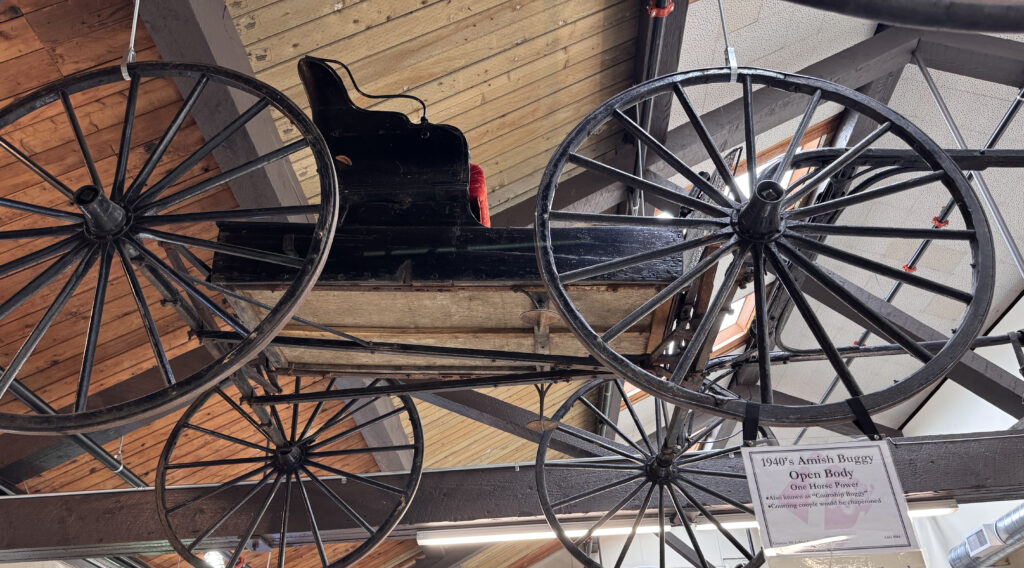
Not exactly an automobile. Photo by Mary Williams
Outboard motors, gas pumps and more
Snuggled into a corner is another old gas pump (remember when an attendant had to pump your gas?) and a collection of nozzles of various shapes and sizes.
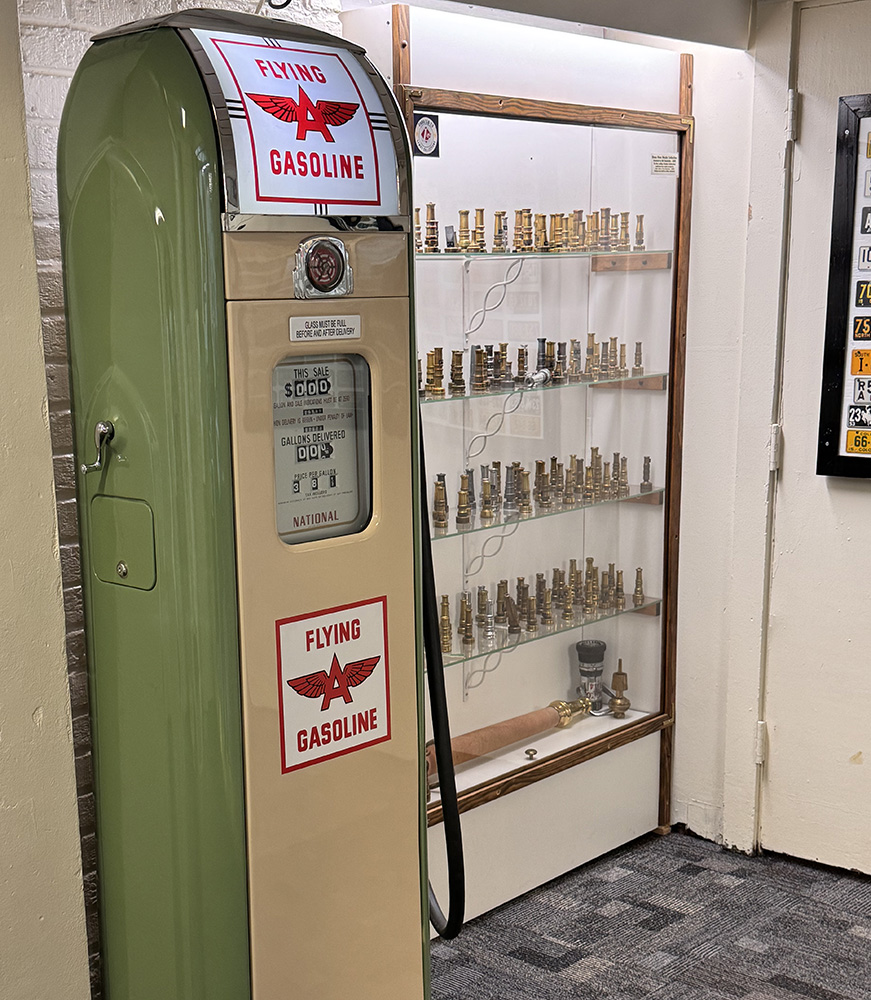
What gas pumps looked like in the olden days. Photo by Mary Williams
If you’re looking for modern electronic signage and fancy displays, don’t go to Collections. Signs provide a great deal of information, but they reminds me of the reports and posterboard artwork we would have prepared for our seventh grade classes. Nonetheless, if you take the time to read it, it provides a lot of information.
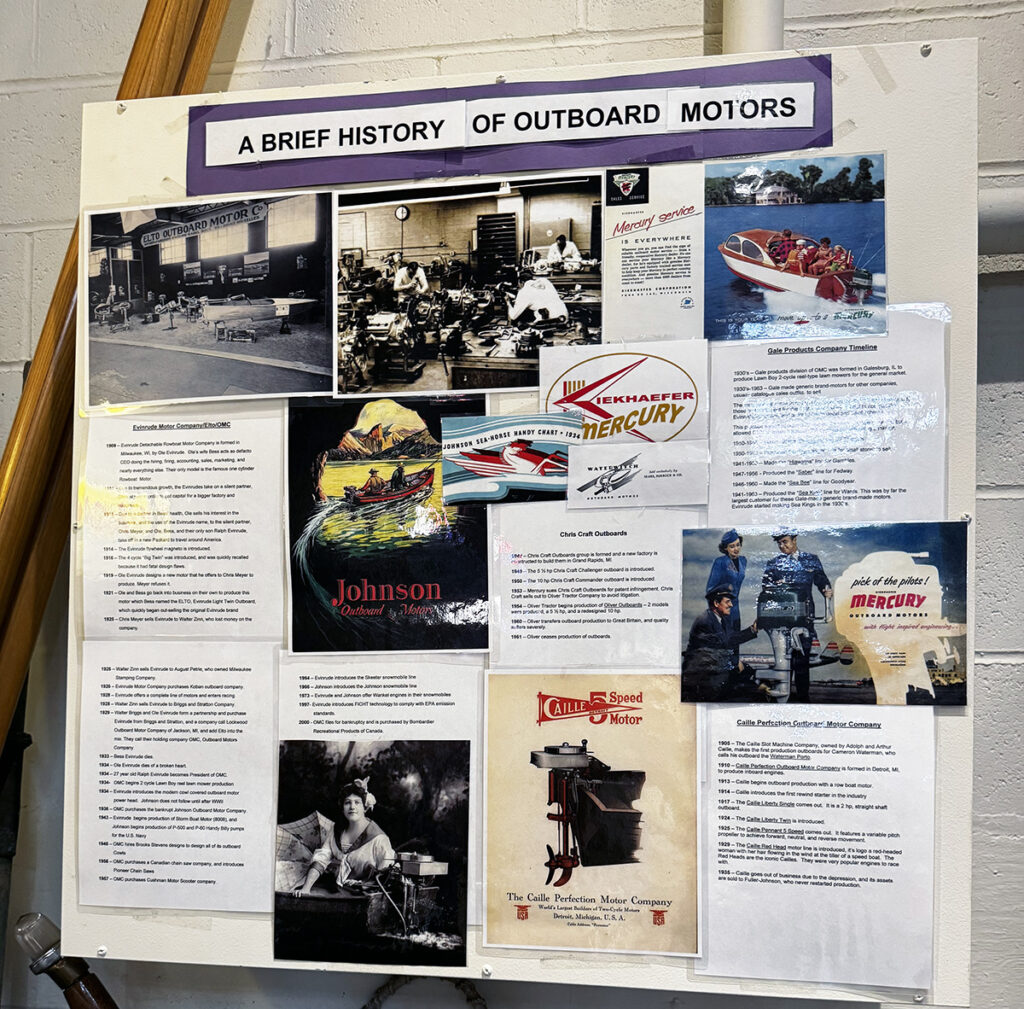
This history of outboard motors isn’t that brief. Photo by Mary Williams
The next room (a former gymnasium, I think) housed older cars. I could write a coffee table book using the hundreds of pictures I took on this day trip. I particularly like the 1947 Woodie, so that’s what I chose to share, but I could have picked dozens of other old cars to feature.
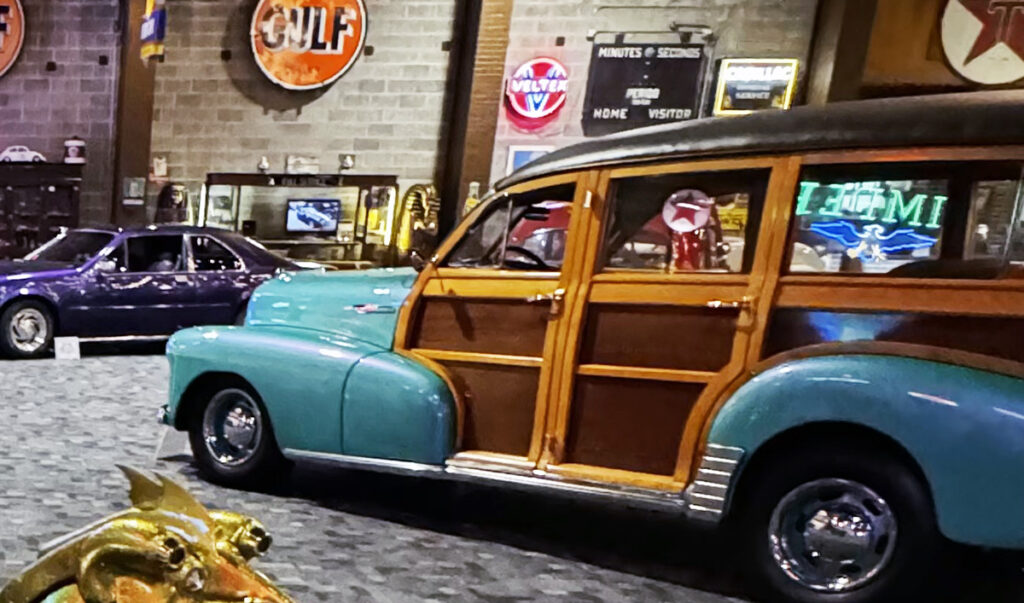
Mary’s favorite of the older cars at LeMay Collections at Marymount in Spanaway. Photo by Mary Williams
The museum groups together many other interesting motorized vehicles, from motorcycles to dragsters to hot rods. I loved the giant red shoe. It claims to be custom made, but this is at least the third one I’ve seen, including at MOHAI in Seattle. I can just see myself cruising down Highway 16, or even Harborview, in my 350 cc, Incline Twin, 45’ bhp, 1990 Red Stiletto.
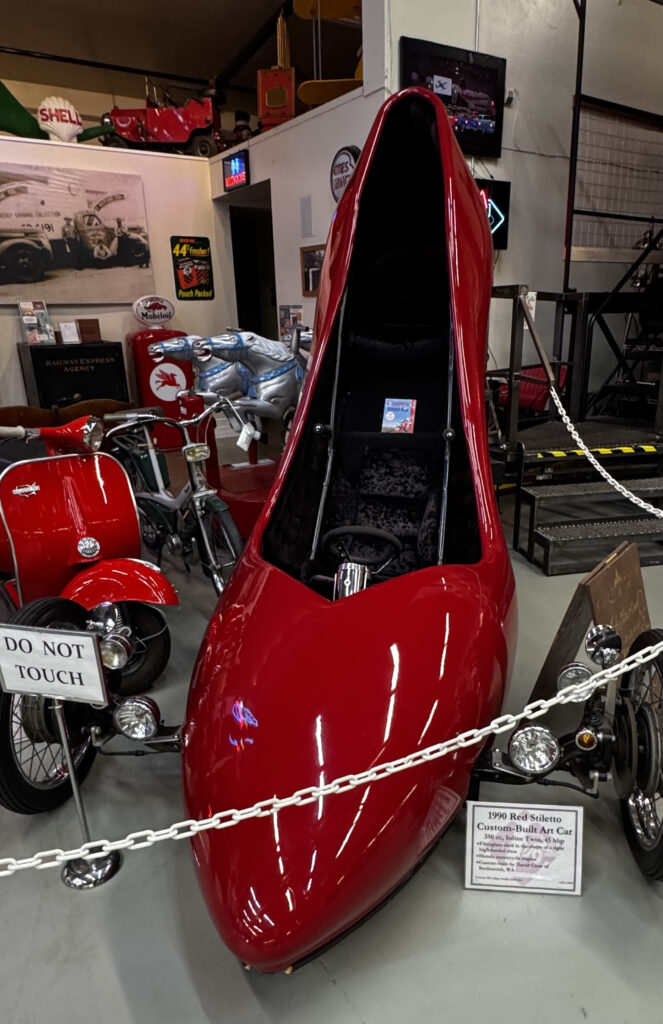
In theory, you could drive this vehicle on a road. Photo by Mary Williams
A huge area is dedicated to the history of the automobile. It includes long rows of cars, with each row dedicated to the vehicles of a different decade. The earliest cars are from the early 1900s, the newest from the 2010s.
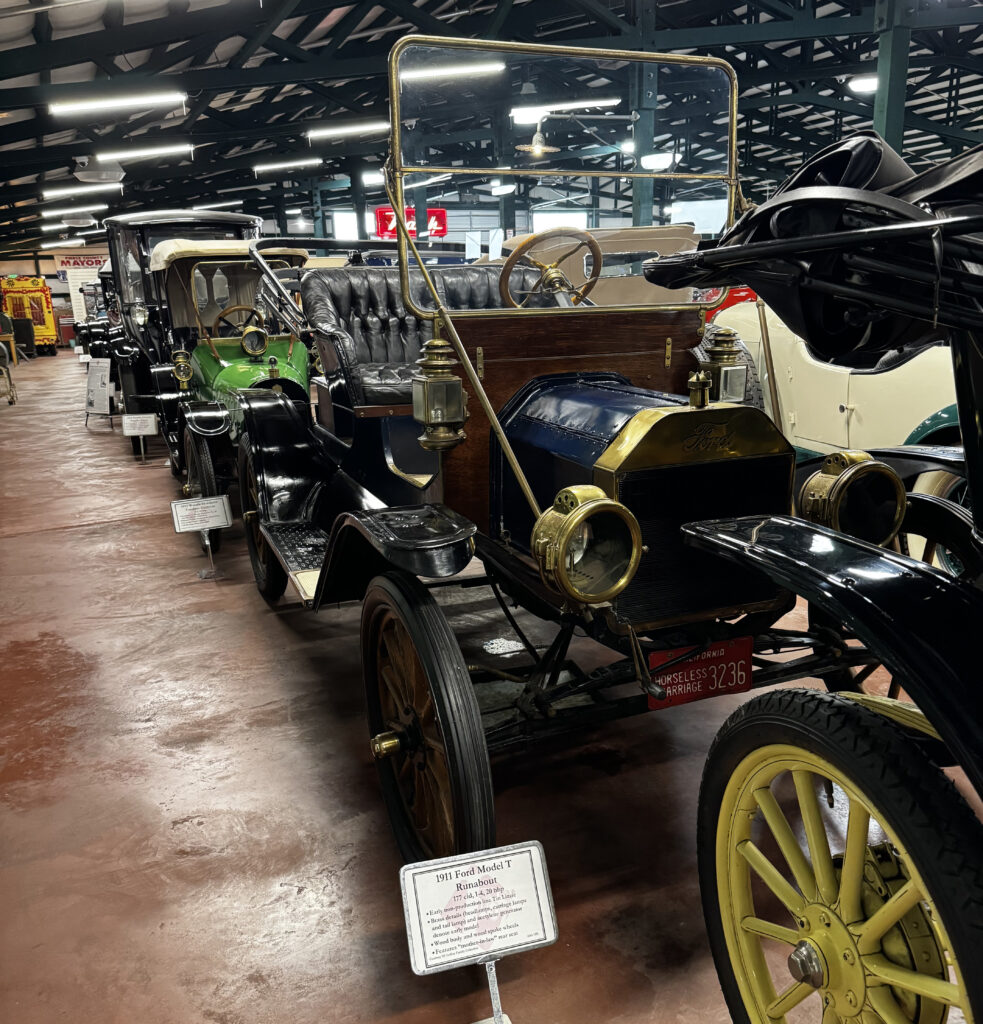
Some of the earliest cars. Photo by Mary Williams
A restoration area occupies a large portion of the property. The museum frequently purchases cars that require restoration. Once restored, some are sold to collectors from all over the country.
Marymount
It didn’t take long for me to realize that there was much more to learn if I was going to understand how and why a former boys military academy ended up as home to an automotive museum and a sculpture garden. It was time to do some research.
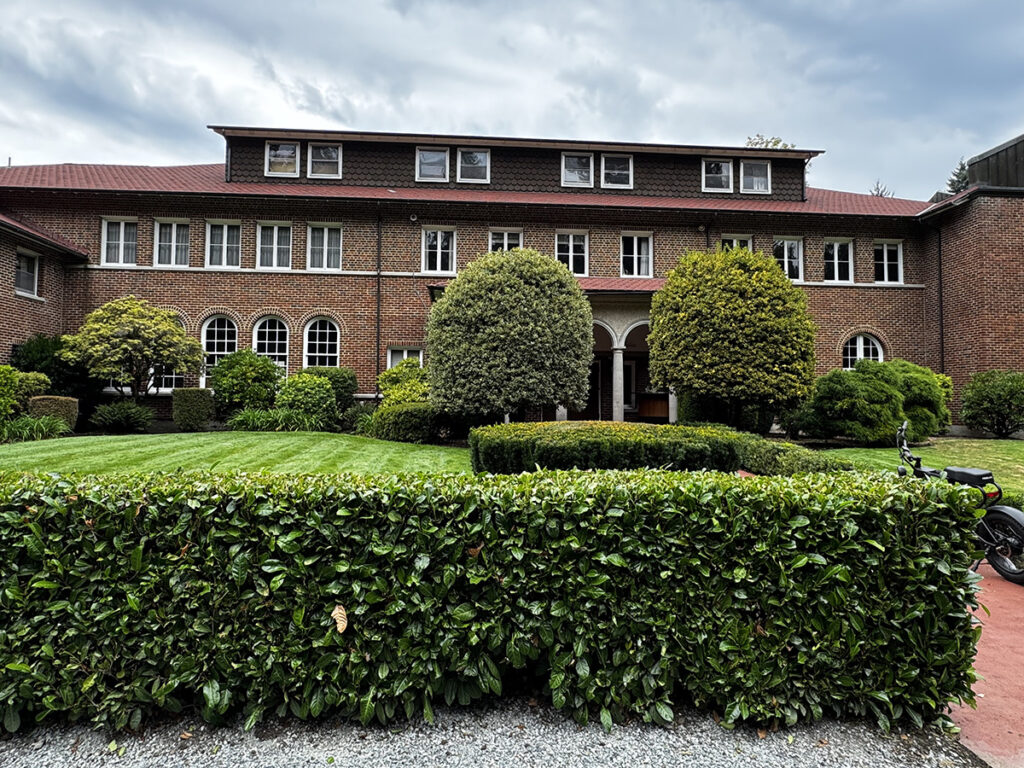
Marymount was originally a military academy for boys. Photo by Mary Williams
The James Longmire and Benjamin Franklin Wright pioneer parties first settled the land on which Marymount sits today. In 1919, the Sisters of St. Dominic purchased 100 acres from their heirs to build a boys military academy.
Dedicated in 1923, it became the state’s only accredited military boarding school, serving boys ages 6 to 16. Various buildings were added during the ’50s and ’60s. The main building also houses an indoor rifle range, a swimming pool, shower room, extra classrooms and equipment lockers.
Military instruction at the academy ended in 1972, when the Vietnam War made anything military unpopular. The school served as a private school from 1973 through 1976.
Harold LeMay bought the property from the sisters for $2 million in February 1992. The family used sections of the Marymount property to accommodate the sheer volume of their acquisitions.
After Harold died in 2000, the LeMay family decided to keep most of what had been so special to him. The family formed the nonprofit LeMay Family Collection Foundation in 2010 and opened Marymount for public tours six days a week
The main building includes an original west wing, the chapel, and an east wing that was added in 1953. The second floor of the west wing was originally used as dormitory rooms, while the third floor was reserved for young nuns in training. The nuns moved to the east wing when it opened and the entire west wing became student rooms.
Chapel and garden
The chapel has an interesting design, with two sections of dedicated pews and two altars set perpendicular to each other. One set of rustic wooden pews and confessionals were reserved for the students, with more comfortable pews designated for the sisters. The two altars were never used simultaneously.
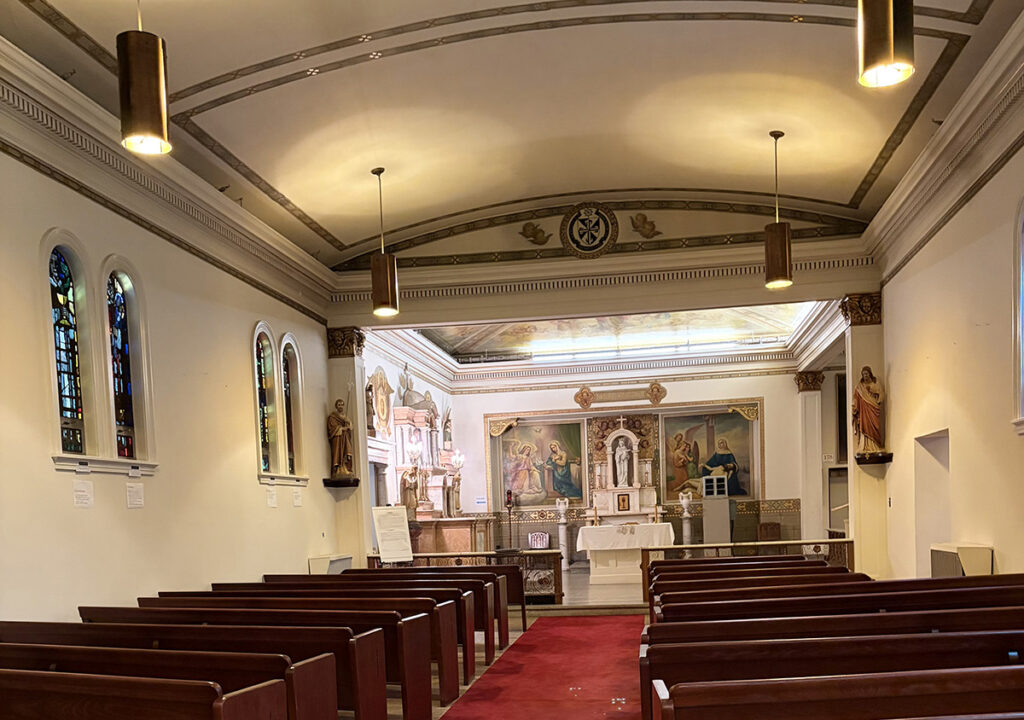
The chapel at Marymount. Photo by Mary Williams
Theodore Braasch lived at Marymount for the six months it took him to paint murals on the ceilings. Plumbing leaks have damaged the ceilings twice, but they were restored.
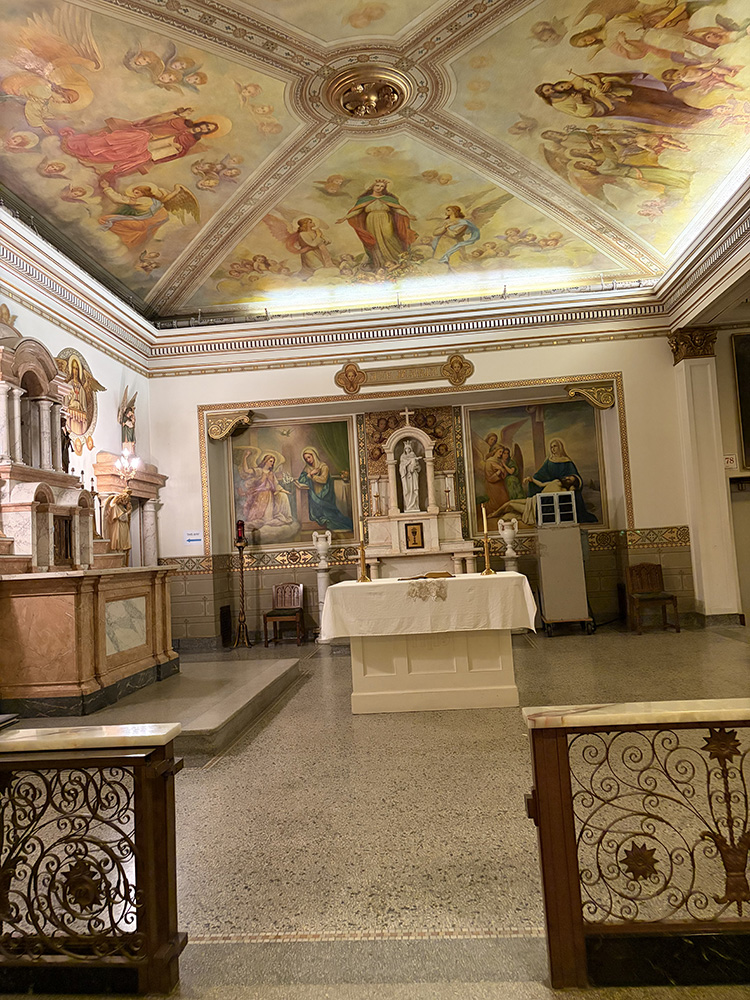
The chapel ceiling. Photo by Mary Williams
Gabriel Loire hand-made the stained-glass windows in Chartres, France. Thirty-two windows with Loire’s signature block were installed on Oct. 11, 1962, the day before an historic storm felled more than 300 trees on the Marymount property but spared the chapel.
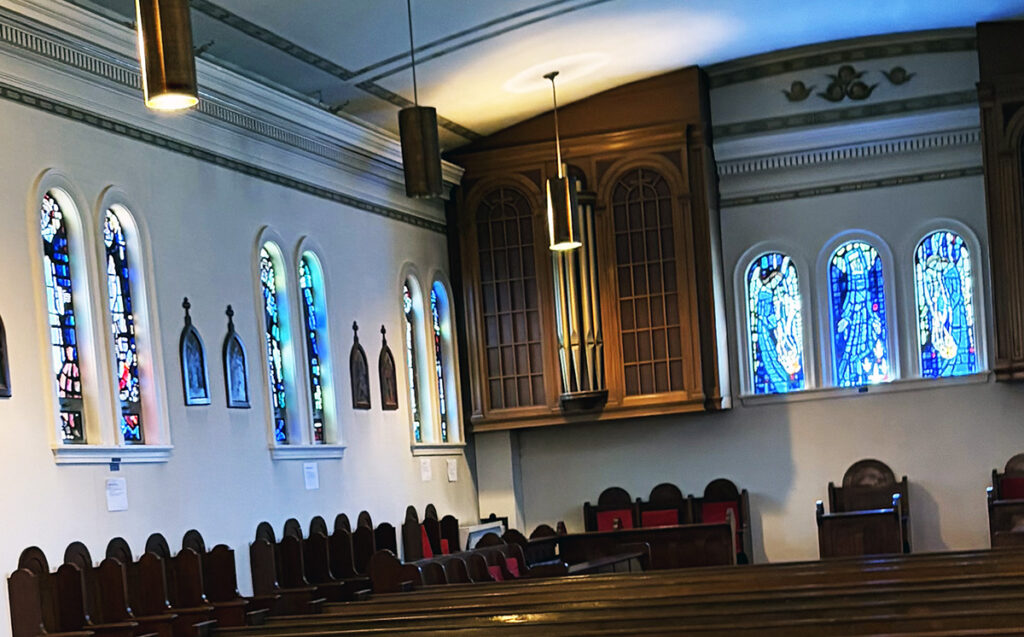
Stained glass windows at Marymount’s chapel. Photo by Mary Williams
Most of the east wing was reserved for a convent and the infirmary where elderly or ill nuns were cared for. There was also a nurses station, a kitchen, and a common area bathroom. The elevator in the east wing, which is no longer functioning, was large enough to accommodate hospital beds and caskets.
The building is now primarily used for weddings and in support of family and crew preparing for the annual auto show. A number of rooms in the west wing have been renovated to provide space for brides and wedding parties.
One of the best parts of a visit to the Marymount area is strolling through the gardens, which is free. The property includes a lush forested area with walkable paths. In 2017, the LeMay Family Foundation added a sculpture garden to the site. It features three sculptures by French artist Auguste Rodin cast from his original molds.
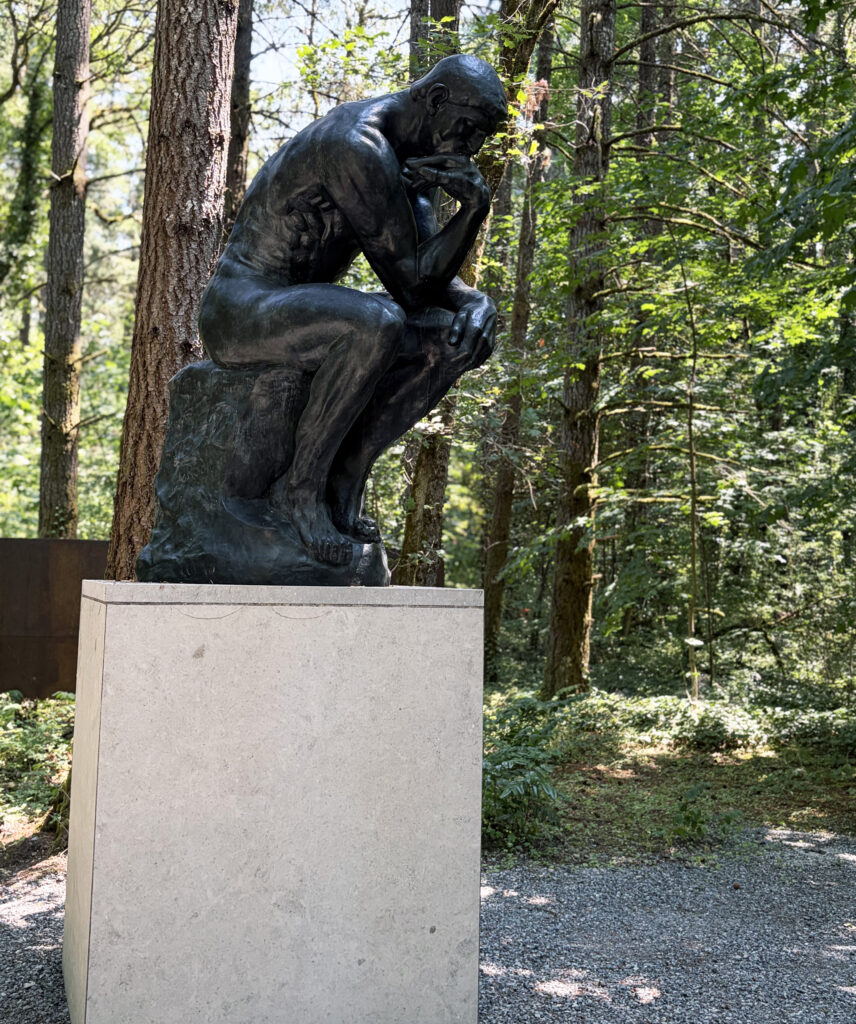
A sculpture cast from the original mold for Rodin’s The Thinker. Photo by Mary Williams
Clearings in the existing forested area were trimmed to create a series of outdoor rooms. Two large gateways lead to the sculpture gardens. The castings that the family acquired include The Thinker, Eve, and The Age of Bronze.
I really wish that the gardens weren’t 20 miles and a bridge toll away. I can only describe the area as serene. In the 15 minutes I was in the garden, it felt like my blood pressure dropped at least 10 points. I can easily imagine making a weekly pilgrimage so I could curl up on a bench to meditate or read.
LeMay Collections at Marymount are at 325 152nd St. E. in Spanaway. If what I have shared intrigues you, and you’re willing to brave the crowds that attend, its 48th annual car show is Aug. 29 and 30. But if you just want to pay a leisurely visit, the museum is open year-round, Tuesday through Sunday.
You can learn more about all of the available tours, and much more about the show by checking out their website. If you’re at all nostalgic, a visit will bring back memories that you didn’t even know you’d forgotten.
About the Day Tripper column
Gas prices are sky high, and a night in a hotel is approaching astronomically expensive. So, for the foreseeable future, I imagine many of you are going to find yourselves taking day trips rather than the road trip vacations we’ve grown to love.
This beautiful region in which we live is ripe with opportunities to explore new places, see new things, and learn a little something at the same time. I promise to keep the longest journeys to a one-way distance of under 200 miles. Whether you want to make it an overnight trip, a weekend, or just a very long day trip, we should be able to pull it off.
I hope you’ll grant me the honor of your virtual company as we travel these roads together. Happy trails!