Community Government News
Citing increasing cost, staff time burden, city may scale back event sponsorship
The rising cost of sponsoring a growing number of community events may prompt the city of Gig Harbor to scale back its involvement.
But city staff has recommended a tiered system that would preserve full sponsorship for so-called “legacy” events: the Maritime Gig Festival, Summer Sounds, Halloween, the Tree Giveaway, the Farmer’s Market and the Holiday Tree Lighting.
Jennifer Haro, city parks manager, told council members at a July 30 study session that the events the city sponsors are costly because they demand more and more staff time and logistical planning every year. The time staff dedicate to these events takes away from their regular city duties.
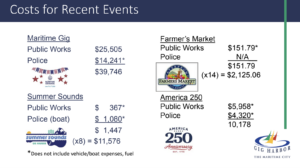
For instance, this year, the Maritime Gig Festival cost a total of $39,746, with $25,505 coming from public works staff time, and $14,241 coming from police staffing. The police staff cost didn’t include the cost of vehicle expenses or fuel.
“For police, the event staffing is kind of a budget issue that they’d like to be able to plan for. Historically, their overtime staffing for events came out of our tourism budget when we had a tourism department, but now they’re absorbing more of that in-house,” Haro said. “For public works, the bigger concern is time away from other duties without increased staffing.”
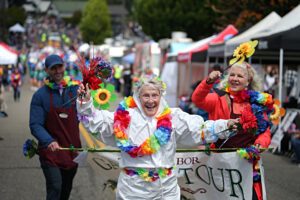
The annual Maritime Gig Festival Grande Parade in Gig Harbor along Harborview Drive on Saturday, June, 6, 2026. Larry Steagall / For Gig Harbor Now
The number of events the city sponsors increases every year, Haro said. In 2025, the city received a total of 34 applications for event sponsorship. But this year, the city has already received 37 applications for event sponsorship — and because organizations seeking sponsorship are supposed to apply 60 days before an event, that number doesn’t include October, November or December.
“And that doesn’t include each recurrence of events, such as Summer Sounds and the farmers’ market, which are multiple weeks in a row, or multi-day events, like some of the Paddlers Cup athletic events,” Haro said. “The city directly and indirectly funds many of these events, either through tourism dollars paid to Visit Gig Harbor and the Chamber (of Commerce), Creative Endeavor grants, Washington Tax Advisory Committee funds, or waived permit fees and donated staff time.”
The 37 events for which the city has received sponsorship requests so far total 69 days’ worth of events. Not all of the events have been processed or approved, Haro said.
The level of planning complexity for these events varies, too. For instance, the city has to handle complex planning for events like the Gig Harbor Farmers Market and the Maritime Gig Festival, while others such as weddings and Harbor WildWatch learning events require minimal planning and effort.

Summer Sounds in Gig Harbor drew thousands of people despite smokey conditions on Tuesday, Aug. 4. Photo by Chapin Day
For weddings and educational events, all city staff really need to do is clean up places like Skansie Brothers Park, Haro said.
But for events like a fun run or the Maritime Gig Festival, multiple departments have to coordinate throughout the city. Major events can require the city’s lone permit coordinator to perform up to 18 hours of permit review. Runs, which Haro said are especially logistically challenging, require multiple planning meetings with organizers, public works staff and city police, as well as putting up road closure signs and redirecting traffic.
During some events, public works staff provide bathroom cleaning, garbage pickup, traffic control and garbage disposal after the event, she said, adding that events requiring road closures demand “the most work from staff, at least 16 to 24 hours of street department staff alone just preparing the signs and putting them out.”
Public Works Director Jeff Langhelm also briefly discussed a cost responsibility table that staff recommended the city adopt. If the city adopts this cost structure, any given event’s complexity will dictate how the costs are divided between the city and the event organizers.
The tier runs from a legacy event, like the Farmer’s Market, to a private event, such as a wedding. For the former, all of the financial responsibility would fall on the city. For the latter, all of the financial responsibility would fall on the organizers.

Alyssa Burke and Silas, left, check out some of Vang Garden’s cut flowers, during the first day of the Gig Harbor Farmers Market at Skanskie Brothers Park on May 21, 2026. Photo by Carolyn Bick. © Carolyn Bick
Council comments
Councilmember Reid Ekberg said that he is “probably in support of this,” but worried that creating six new categories for organizers asking for city sponsorship would just create more administrative burden.
“I don’t want it to sound like … we’re trying to complain about all the things that we have to do,” he said. “Yes, we need to educate them on the resources that we’ll use up. I just want us to be careful in the way we go about that.”
Other council members indicated their agreement with the new plan, noting how much work city staff already do and recognizing the burden an increasing number of events places on them.
Public reaction
Miriam Battson, president and CEO of the Gig Harbor Chamber of Commerce, didn’t say directly whether the chamber agreed with these changes, but said that the chamber has looked at the community impact of these events, including average spending at local businesses during events.
She said that events requiring road closures, like the Fool’s Run — which the chamber organizes, funding the event through money it receives from lodging tax funds — bring “economic impact to the community.” The Maritime Gig Festival brings in about $1.5 million, she said.
She also said that the National Night Out sees the average person spend $106, while the Tree Lighting brings in even more money than that, because people are shopping and eating at restaurants in the city. She also said the Fool’s Run, which would not be a legacy program, saw attendees spend between $116 and $119 per person.
“So people are coming, they’re also shopping and eating after the event,” she said. “So that’s some of the information that we have, and we thought that you might find that interesting.”
Gig Harbor Police officer Lt. Jarab Daniel said he supported the proposed changes.
“We get these events and these races and these road closures that are pretty taxing and we support the events and whatnot, but they’re unplanned and then it comes out of our current budget that’s not budgeted for,” he said. “As for my budget, I need to know what events we’re going to be paying for. … We try to know roughly how much we pay per hour for the whole event.”