Community Government
Pierce County Council candidates offer views on law enforcement funding, growth and more
Voters will narrow the field of candidates for the Pierce County Council seat representing District 7 in the Aug. 4 primary election.
District 7 includes Gig Harbor, Fox Island, the Key Peninsula and parts of Tacoma.
Incumbent Democrat Robyn Denson announced in March that she would not seek a second term, leaving the position open to new candidates. Denson, a former Gig Harbor City Council member, won election in 2022 with the support of nearly 58% of District 7 voters.
The Pierce County Elections Office mailed ballots to registered voters this week. Ballots must be postmarked or returned to a drop box by Tuesday, Aug. 4.
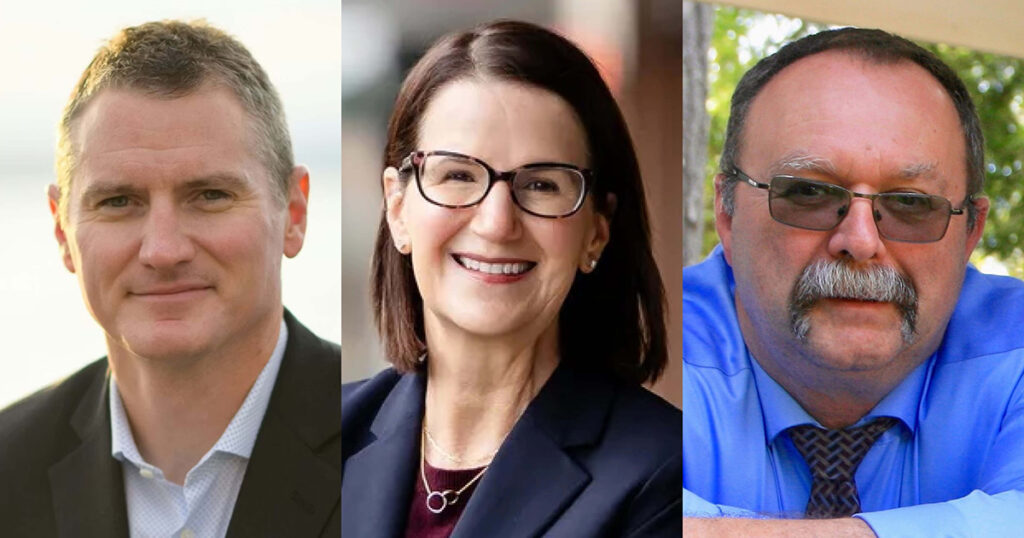
From left, Mike Solan, Brenda Lykins and Chuck West
The candidates
The candidates vying for Denson’s seat include:
Brenda Lykins, a neonatal nurse practitioner who currently serves on the Pierce County Charter Review Commission. Lykins, a Democrat, served on the Gig Harbor City Council before resigning last year after moving outside of city limits.
Mike Solan, a Seattle police officer and the former president of the Seattle Police Officers Guild. Solan, a Republican, won a court order to be restored to the ballot after the Pierce County Elections Office initially ruled him ineligible. Solan registered to vote in District 7 in March, and the county charter requires candidates to be registered for at least a year in their district. A Pierce County judge ruled that voter registration requirement is excessive.
Chuck West, a Peninsula School Board member running as an independent. West is a retired Key Peninsula Fire Department battalion chief and small business owner who ran for the same position as a Republican in 2022.
A fourth candidate, Ann E. Jolie, filed but is not running. Her name will remain on the Aug. 4 primary ballot, but she urges voters to support Solan.
Voters may mail their ballot, or use one of the 57 ballot boxes located in the county. To find a location, go to piercecountywa.gov/elections.
Gig Harbor Now asked the three active candidates the same four questions. Here are their answers in their own words.

Brenda Lykins
Q: Do you support the 0.1% sales tax for public safety initiatives that the county council approved in March? What would you do as a council member to increase staffing in the Peninsula Detachment of the Sheriff’s Office?
Brenda Lykins
I support the 0.1% public safety sales tax because it provides a stable, dedicated funding source to address Pierce County’s growing public safety needs. District 7 residents consistently tell me they want a stronger law enforcement presence, particularly on the Peninsula, and achieving that requires sustainable funding for recruitment, retention, and training.
Pierce County is facing significant financial pressures that outpace existing revenue, including state-mandated increases in public defense, increasing tort claims liabilities related to juvenile justice, labor agreement obligations, constitutionally required jail medical services, and the need to modernize aging jail facilities. In the 2026–2027 biennial budget, approximately 76% of the County’s General Fund is dedicated to the criminal justice system, underscoring that public safety is a top priority for the county. The public safety sales tax helps ensure these essential services remain adequately funded without jeopardizing other core county services.
The funding framework for the justice fund was developed with input from the Sheriff’s department, the courts, corrections, and other justice partners, and includes investments, such as modernized equipment to assist law enforcement in efficiency, and recruitment incentives and retention bonuses to help address persistent staffing shortages.
My support for public safety is backed by my record on the Gig Harbor City Council. I voted to significantly increase staffing for the Gig Harbor Police Department and ensured officers had the resources they needed to serve our community. I also proposed using opioid settlement funds to create the city’s first Housing, Health, and Human Services Manager position, which provides behavioral health and social service support, allowing officers to focus on law enforcement while connecting residents with appropriate resources.
As a County Council member, I would continue to support investments that improve recruitment and retention within the Sheriff’s office. While the County Council does not determine collective bargaining agreements or assign deputies to specific precincts—that responsibility rests with the County Executive and the Sheriff’s office—I will advocate for the staffing levels and funding necessary to give the Sheriff the flexibility to increase staffing at the Peninsula Detachment as vacancies are filled and the department grows. My priority is ensuring Peninsula residents receive the public safety resources to keep our communities safe and protected while maintaining responsible stewardship of taxpayer dollars.
Mike Solan
The additional sales tax was approved by 5 members of the County Council without a vote of the people. The additional sales tax can fund the hiring and training of law enforcement officers; public-defender staffing and legal-aid programs; domestic-violence prevention and response; behavioral-health, substance-use, and homelessness-reduction initiatives; and community-policing and reentry programs. If the ordinance for the tax had been written to specifically support or our law enforcement and corrections officers, I would have supported it; however, based on the bill’s numerous allowed uses, I believe that the tax revenue will be directed to other areas that already have funding sources (behavioral health, homelessness, domestic violence).
Not a dollar of the new tax revenue retains deputies for the road. Pierce County already has the lowest deputy-to-resident ratio in the country — roughly 0.57 deputies per 1,000 residents, against a national average above 2.4. Instead of fixing that, the bill drew a record number of negative public comments, and the county council passed it anyway. This is unacceptable.
As a council member, I’d direct our law enforcement resources to what the Peninsula Detachment needs — patrol positions, competitive pay, and retention of the remaining highly trained police officers with a fair labor contract. Bottom line: County government needs to prioritize listening to the voters, put public safety first and live within its budgeted means. Ultimately, the Office of the Sheriff creates the plan for available law enforcement staffing coverage within the county. In the past, we had a more lawful citizenry and the staffing plan at the time was sufficient. Not having enough police officers leads to longer response times, an increase in crime and an unsafe public safety environment. Added to this pressure point, county priorities in contract negotiations with the Pierce County Deputy Sheriffs Independent Guild, has created unnecessary consternation and forced many of our highly qualified deputies to flee for other higher paying, more police friendly jurisdictions. One of my objectives would be to make the employees of the Pierce County Sheriff’s Office feel valued and create a safer public safety environment across the district. This can be done by engaging in positive contract negotiations with the union starting in ‘27.
It is my belief that securing fair labor contracts creates a friendlier police employee environment which would allow deputies to feel valued by county government and not flee to other higher paying more supportive jurisdictions. I will also cultivate a meaningful relationship with the elected sheriff to be able to share ideas for programs that will help make Pierce County a place where deputies want to work and enhances community trust. This would organically create a safer relational community environment, improve public safety and police response times.
Chuck West: The issues with our law enforcement problems go deeper than just adding a few deputies. We need the structure behind them. We need to staff the jail and courts, also. Deputies are frustrated that the work they do arresting a criminal goes for naught when the criminal is released without recourse. They need to be supported. And staffing of the Peninsula Detachment needs to be brought back up. Whenever we raise taxes, it should be done though public voting process. I think we have a spending problem more than a revenue problem. Dollars have been shifted away from basic services. Reviewing the county budget shows more spending than revenue. The county has been tapping into the reserve savings for the past two years.
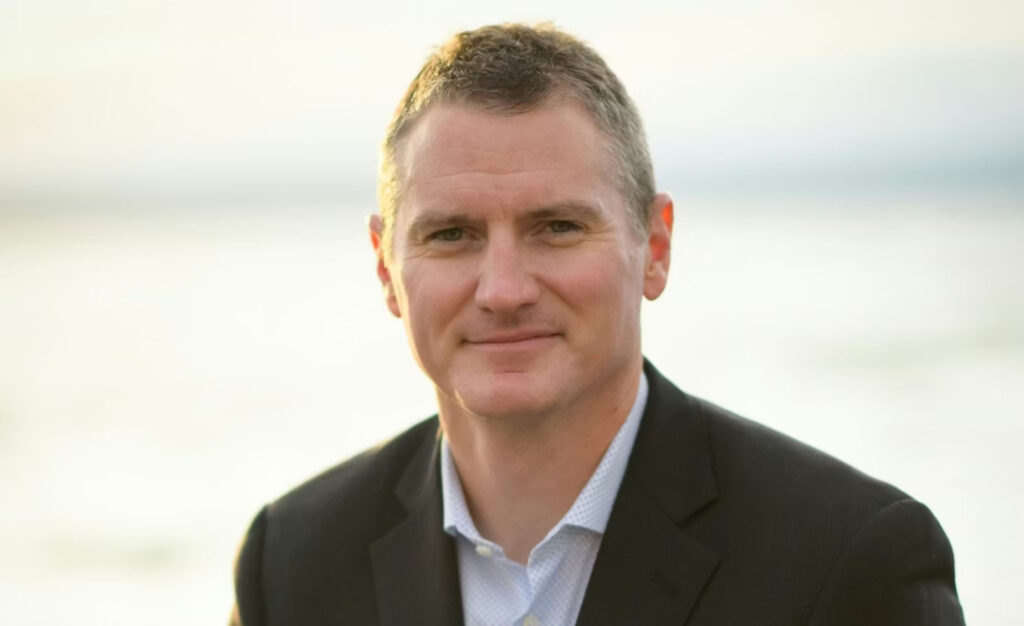
Mike Solan
Q: Construction of a new Fox Island Bridge could start before the end of your term if you win this election. How should the county go about paying for the bridge, which is expected to cost around $300 million?
Mike Solan: We must be honest about how we got here: years of poor fiscal management, with no reserve ever set aside for a bridge everyone knew would eventually need replacing. That failure happened at the county level, outside the control of the people who cross that bridge every day. The realistic solution combines several sources — Fox Island, Pierce County, the State of Washington, and the federal government. In addition, we should also explore selling off county land not already marked for conservation or development to potentially close the funding gap.
What wouldn’t be fair is dropping the entire cost on Fox Island residents to cover maintenance decisions the county never made. My priority is an equitable funding partnership and the kind of long-term capital planning this county has lacked, so we’re never caught flat-footed on major infrastructure ever again.
Chuck West: The county is currently looking at several options. It’s most likely going to be funded through multiple sources such as state/federal grants and county road funds. I would work hard to avoid tolls. Pierce County Public Works recently did a study for the Key Peninsula Community council that showed public works funding versus expenditures. According to the study the Key Peninsula donates about $1.5 million per year more than what is spent on the roads and projects. I suspect a study of the Gig Harbor Peninsula and Fox Island will show an even larger disparity. We have the tools, with this knowledge, to leverage public works for more dollars to be spent on our roads and bridges. Someone needs to fight for that money to come back to the district when projects like this emerge.
Brenda Lykins: The Fox Island Bridge is a critical piece of infrastructure that must remain safe, reliable, and affordable for the residents who depend on it every day. A project of this magnitude deserves a thoughtful, transparent decision-making process that puts the community first. The project continues to move through the legislative process at the County and will likely be an active legislative topic in the upcoming council term.
Before determining how to pay for a new bridge, it is essential that the county plan comprehensive fiscal analysis and engage in meaningful public outreach. Residents can learn about a clear the project options and related costs, the available funding options, and the long-term financial impacts of each approach. Every alternative should be openly discussed, including county funding, state and federal grants, partnerships, special taxing districts, and tolling. While I personally do not favor tolls, I believe all options should be evaluated transparently before a final decision is made with community input.
I will also strongly advocate for state and federal funding to reduce the financial burden on local taxpayers. Given the importance of the Fox Island Bridge to public safety, emergency response, and regional transportation, we should pursue every available opportunity to secure outside funding.
In my conversations with Fox Island residents, I’ve heard a consistent message: they want the least expensive solution that still delivers a safe, durable, and dependable bridge for generations to come. That is the principle that will guide my decision-making. My commitment is to ensure the process is fiscally responsible, transparent, and driven by community input while protecting both public safety and taxpayers.

Chuck West
Q:What is your idea on growth in the area and what role does the county council play in directing that growth?
Chuck West: I like the rural nature of our community and I will fight to protect our way of life. I grew up here on the family farm on Peacock Hill. I understand the rural lifestyle. We need to direct most of the growth into the Urban Growth Area but realize there will be families moving into the rural neighborhoods, also. We have several thousand undeveloped large lots in the unincorporated areas that can be developed eventually. The county will need to better plan for the road improvements to facilitate that growth in conjunction with the city of Gig Harbor.
Brenda Lykins: The Pierce County Council plays a critical role in directing growth through its authority over land use and zoning. Those decisions determine where housing, businesses, and infrastructure are built, and they must balance the need for new housing with protecting the resources in our communities and ensuring infrastructure can support future growth.
The Pierce County Council recently adopted the ten-year Comprehensive Plan in early 2025, which reflects a balanced approach. The plan significantly reduced growth capacity in the unincorporated rural areas of District 7 by removing approximately 400 acres from the Urban Growth Area and eliminating the rural density bonus. This lowers the growth potential in the unincorporated areas in District 7 significantly. These changes recognize that many rural unincorporated areas in District 7 lack the roads, utilities, and other infrastructure needed to support additional development, while also protecting valuable farmland, forests, and critical environmental habitats.
At the same time, Pierce County must continue to address our housing shortage, particularly the need for more affordable housing. The Comprehensive Plan appropriately directs future housing growth toward urban and transit-oriented communities across the county where infrastructure already exists or can be expanded more efficiently. Focusing growth in these areas supports more affordable housing choices, reduces transportation costs, makes better use of public investments, and preserves the rural character that residents value. Choices such as cottage housing, that was recently approved by the County Council, help achieve these goals.
I believe this is the right approach. Smart, well-planned growth with a county-wide approach benefits everyone by creating vibrant urban communities while protecting our rural landscapes, small towns, and natural resources. As a County Council member, I will continue to support policies that encourage housing where it makes the most sense in the county and invest in the infrastructure needed to support a strong quality of life in Pierce County.
Mike Solan: I’m a strong proponent of reasonable, common-sense growth. Our peninsula communities have real character worth protecting, and growth managed well can strengthen them. The trouble is that current county policy too often works against sensible development — piling on bureaucracy and regulation that stifles growth and cuts into the profitability of our local businesses. This must change and is nonsensical.
The council sets that policy, and that’s where the change must come. My role would be to cut the red tape, give residents and business owners a predictable land use process, and let this district grow in a way that fits into our communities rather than fighting them at every step. This can be done with respecting our tremendous parks, and our open spaces with a pro-conservation, pro-environment mindset. Proving that conservation and development can coexist for generations to come.
Q: Beyond the three issues we asked about above (law enforcement funding, the Fox Island Bridge and growth), what is one specific issue you would focus on as a county council member?
Brenda Lykins: The forests, shorelines, streams, and waterways of District 7 including Gig Harbor, the Peninsula, North and West Tacoma, and Ruston are among our community’s greatest assets. They define our quality of life, support recreation and tourism, provide habitat for fish and wildlife, and protect the clean water and healthy ecosystems that future generations will depend upon. As our region continues to grow, preserving these natural resources becomes even more important.
I believe environmental stewardship and responsible growth can occur together. We can accommodate housing and economic opportunity where adequate infrastructure exists while protecting the natural landscapes that make Pierce County such a desirable place to live.
I support: protecting shorelines, forests, wetlands, streams, and critical wildlife habitat through thoughtful land use and development decisions; conserving open spaces, parks, and working lands so future generations can continue to enjoy the natural beauty and outdoor recreation that define our community; promoting clean water by protecting watersheds and supporting infrastructure investments that reduce pollution and improve water quality; ensuring development is guided by sound environmental science and includes mitigation where impacts cannot be avoided; and partnering with local governments, conservation organizations, and community members to preserve the environmental character of the District 7. I am proud to have been a founding donor to the Gig Harbor Land Conservation fund, and while on City Council in Gig Harbor where, along with my colleagues, voted to preserve in perpetuity the 52-acre conservation area in the city.
Protecting our environment is not only about preserving our natural heritage, but also an investment in public health, economic vitality, climate resilience, and the long-term quality of life for everyone who calls District 7 home. I am proud to have earned the endorsements of both Environmental Groups, including the Pierce County Environmental Coalition and Washington Conservation Action, as well as the Tacoma-Pierce County Realtors, because I believe we can work address the county-wide housing shortage while still preserving our critical environmental assets.
Mike Solan: I’m not a politician — I’m running because this county government has lost sight of the people it serves, spends too much money and has not budgeted within its means. Beyond public safety, the bridge, and growth, the issue I’d additionally focus on is accountability and rebuilding community trust in their elected officials. This can be done by focusing first on funding where mandated by the State of Washington and the basic services expected from county government. Whether it’s a public safety tax sold as something it wasn’t, or infrastructure we failed to plan for, the common thread is a government that hasn’t leveled with its residents. This is precisely why I’m running for office.
These aren’t partisan ideas. They’re common-sense values I believe most people in both parties would get behind: spend money honestly, plan, and treat the taxpayers who fund all of it like the priority they should be.
Chuck West: Public works needs to be better connected to our communities. Permitting issues need to be resolved. The county permitting office is only located in Tacoma, yet it does not do any building permits in Tacoma. Building permit technicians should be based in the communities they serve. I would like to see satellite offices in the rural areas of the county
that they serve. This would help them to become familiar with the needs of the communities and give better access for our citizens. Also, the homeless problem needs to be looked at with fresh eyes. Whatever we are doing now isn’t working. We need to stop and assess where all the money is going and cease the spending on programs that don’t work. Let’s support our non-profits that are making a difference.