
Arts & Entertainment Community
Two In Tow & On The Go | Getting crafty at Tacoma’s Tinkertopia
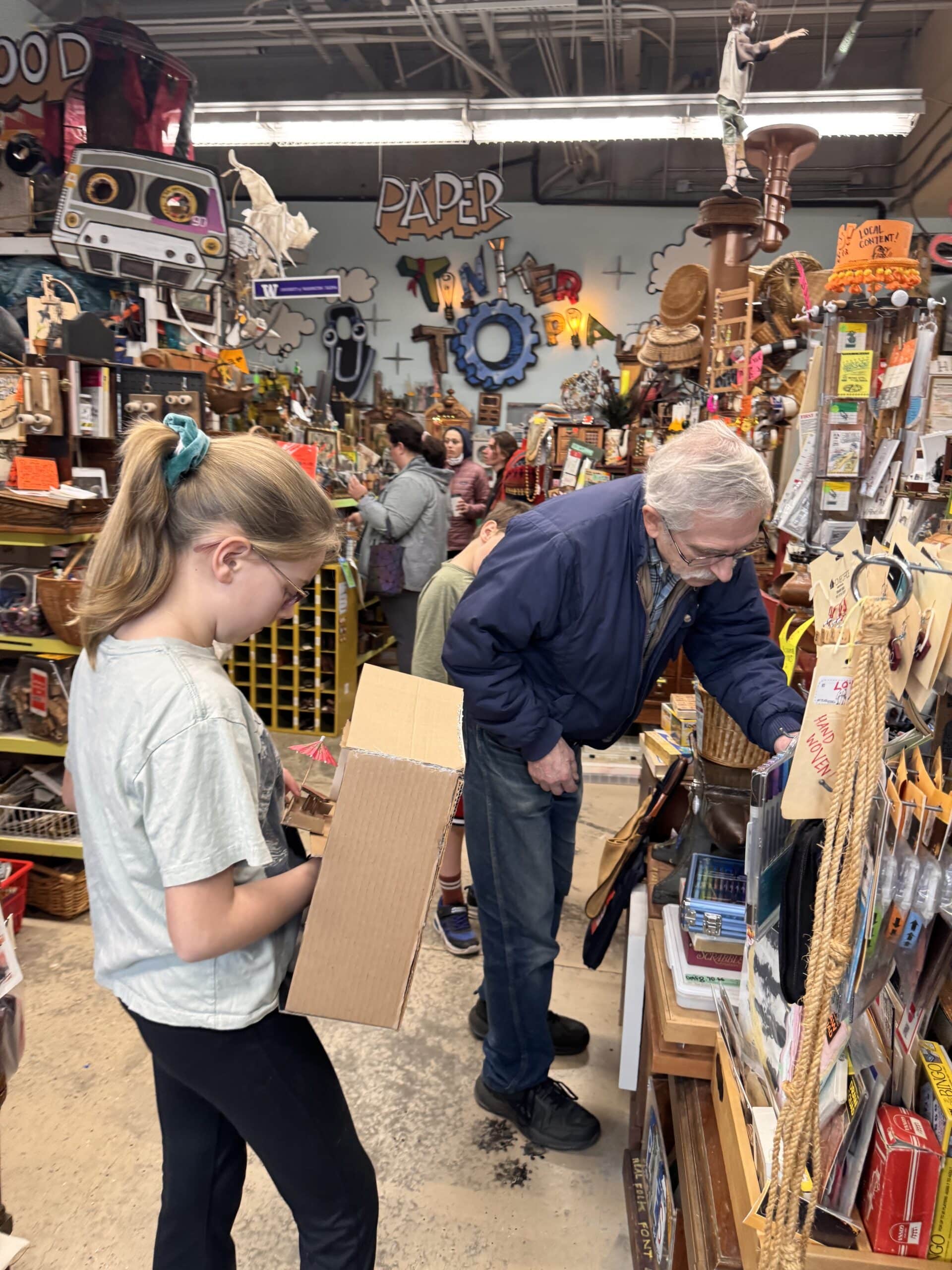
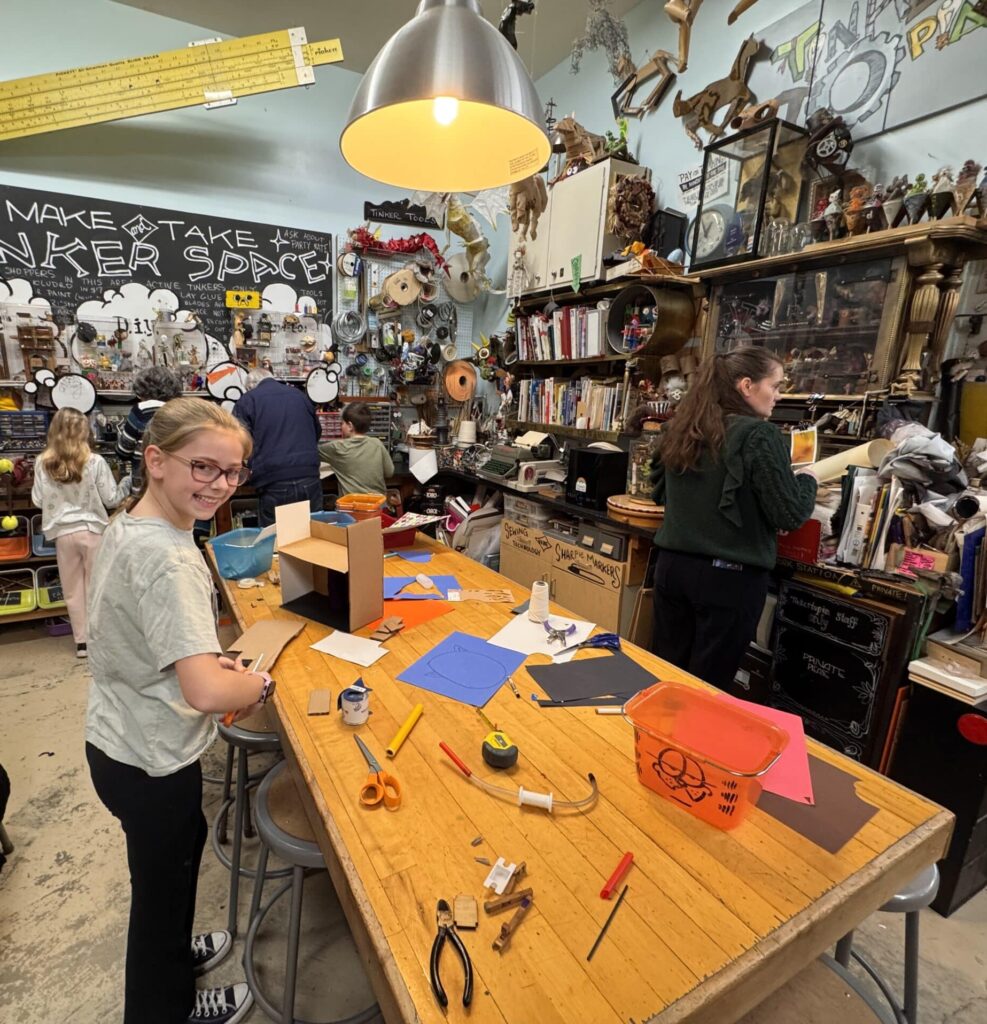 Would you like to Take and Make… or, perhaps, Make and Take? Because at Tinkertopia, those are, in fact, two different things. And both are equally delightful. Our latest kid-venture brought us across the bridge to downtown Tacoma to explore the shop that bills itself as a creative workspace, thrift shop and alternative art supply store with bins of found objects to use for crafting. We didn’t even touch the retail side on this visit (a choice that required real restraint from me). Instead, we booked a 90-minute Make & Take session.
Clara, Wyatt, Greg, and I all sat down at the same work table with access to the same bins, and walked away with four very different junk-store masterpieces we plan to keep forever and ever.
Clara’s Build
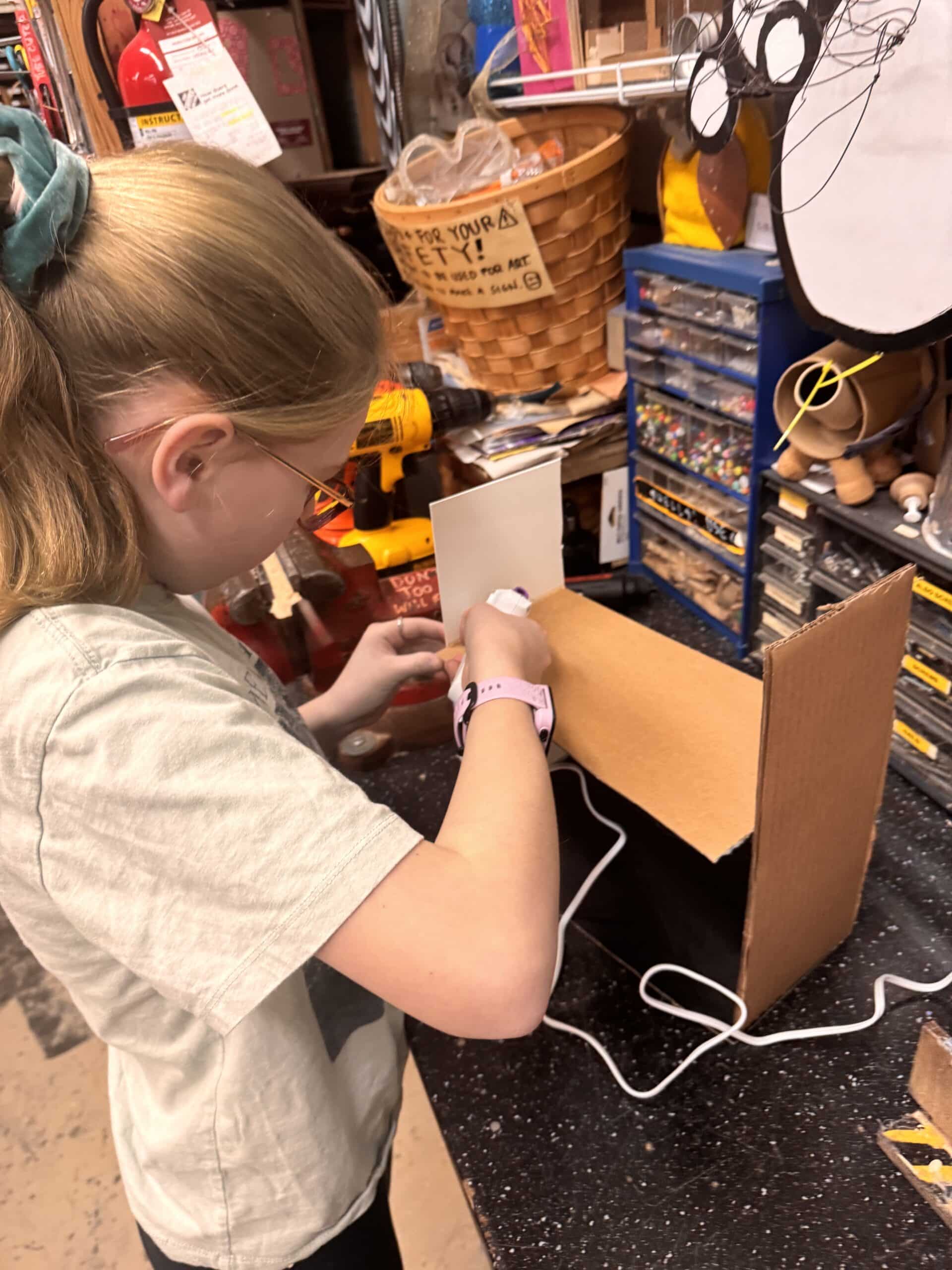
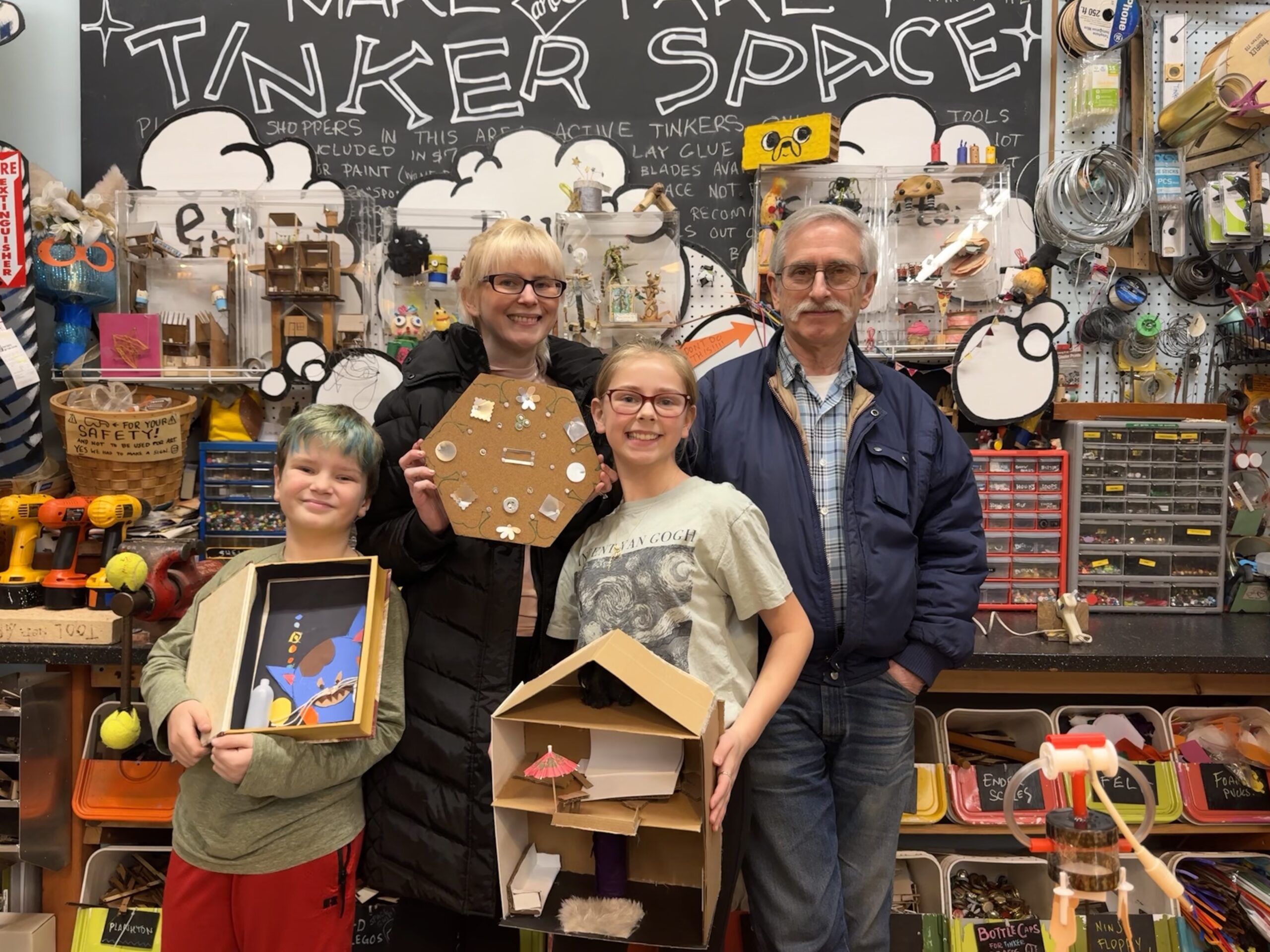
Clara built a dollhouse: a three-level, cutaway home made entirely from reclaimed cardboard. All carefully sectioned and clearly designed by someone with strong opinions about interior layout. The structure stands upright with clean edges and deliberate lines, the kind that say, “Yes, I measured. No, I did not rush.”
Up top, tucked under a sharply pitched roof, is a snug attic anchored by a hand-drawn fireplace set into the back wall. Tiny brick details frame the hearth, and the fire itself glows warmly in marker. Because even cardboard houses deserve ambiance.
A small ladder leads up to the attic, giving it secret-room energy, like a place she’d curl up with a book on a rainy day. The middle level opens onto a balcony, complete with the cutest paper cocktail umbrella (resourcefully chic), shading a miniature table-and-chair set made from layered corrugated scraps.

Downstairs, the details really shine: A cardboard daveno upholstered in hand-cut white pleather squares, paired with a fuzzy white rug that somehow makes the whole room feel cozy despite being, you know, made of boxes. A TV hangs on the wall with “Netflix” written in red (because obviously).
And running floor to ceiling through the center of the house? A deep purple column. Elevator shaft? Secret tunnel? No. It’s the carrying handle. What struck me most wasn’t just the detail, but the intention. This wasn’t random gluing. It was world-building. Every floor had a purpose. Every scrap contributed to her vision.
And she wants to go back ASAP.
Wyatt’s Build
Meanwhile, Mr. Wyatt Dean took a pre-existing book box and turned it into … “The Door to Outer Space!!!” (I don’t know if that’s the official name, but it should be. Hollywood, call us.)
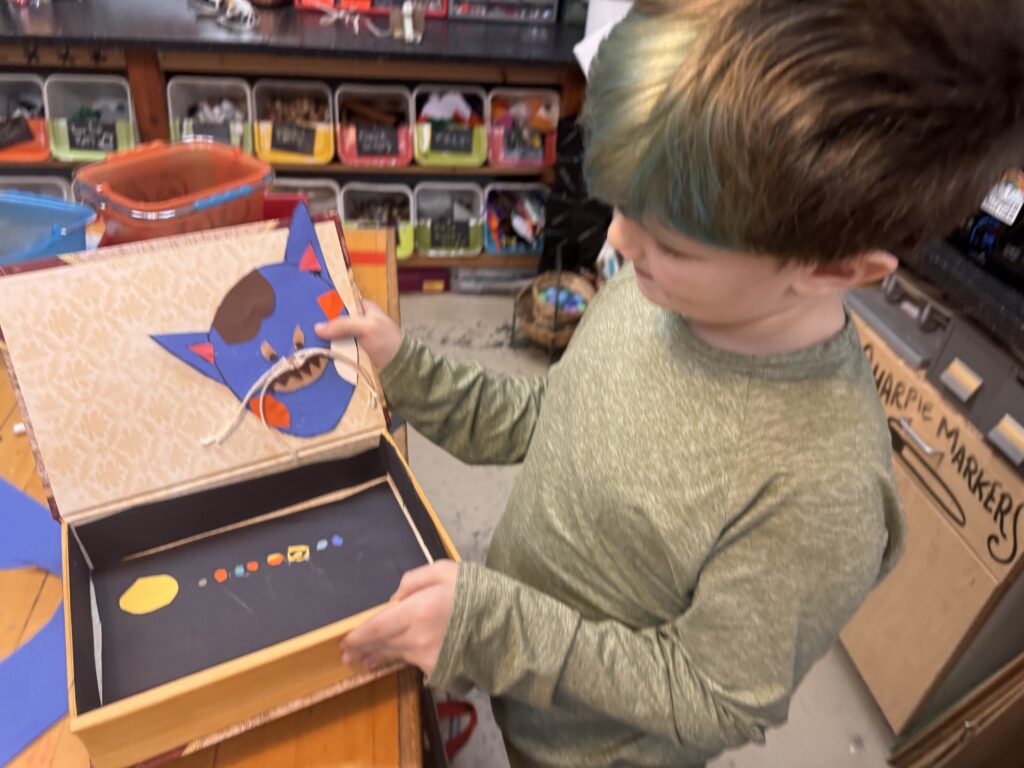 Open the box and there’s a dramatic reveal: a dark, inky backdrop with a miniature solar system stretching across the base. Tiny planets, each their own shape and color, float in a carefully spaced line. A yellow sun anchors the scene, transforming the box into part storage container, part diorama, part gateway to a secret world.
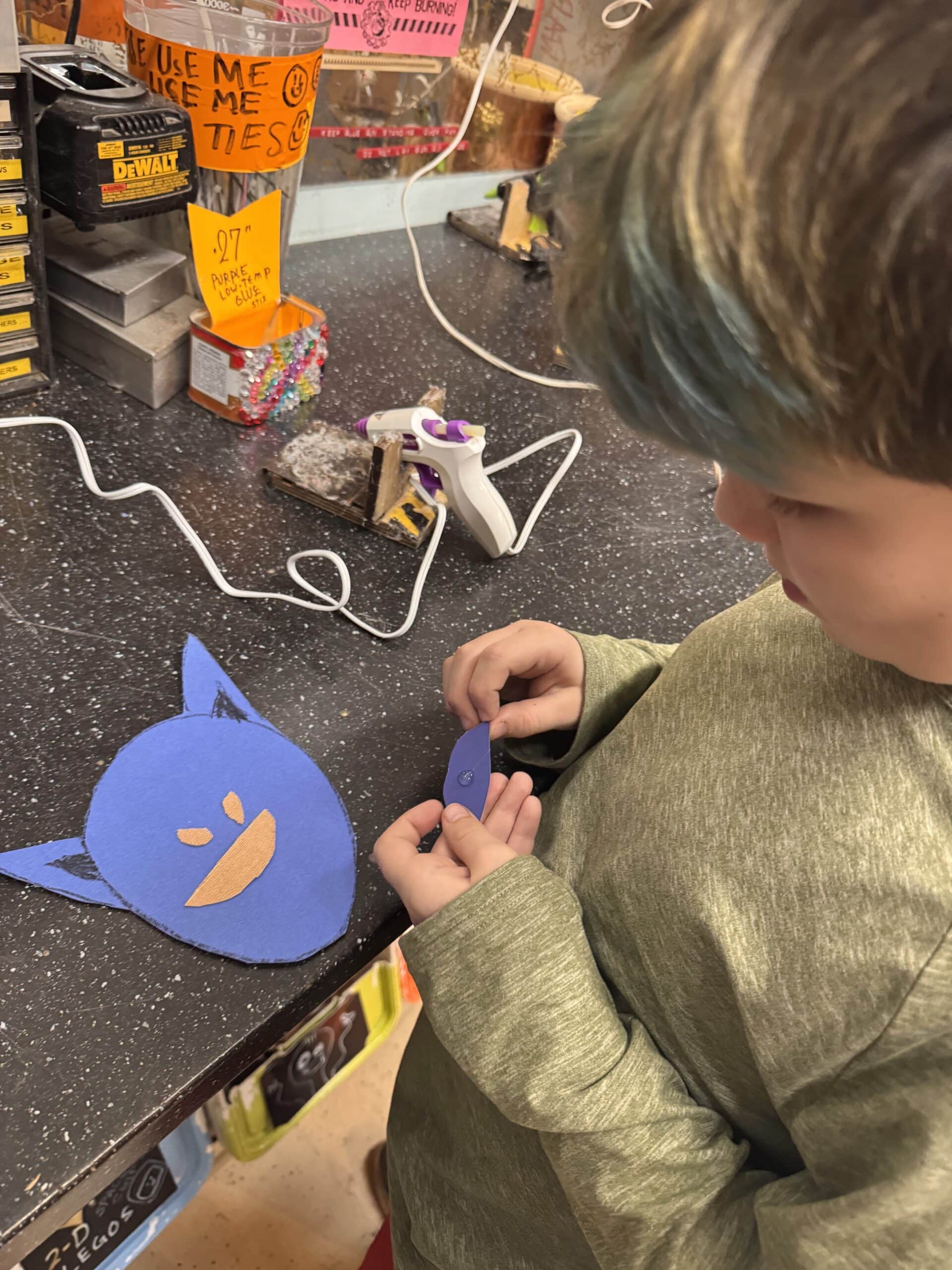
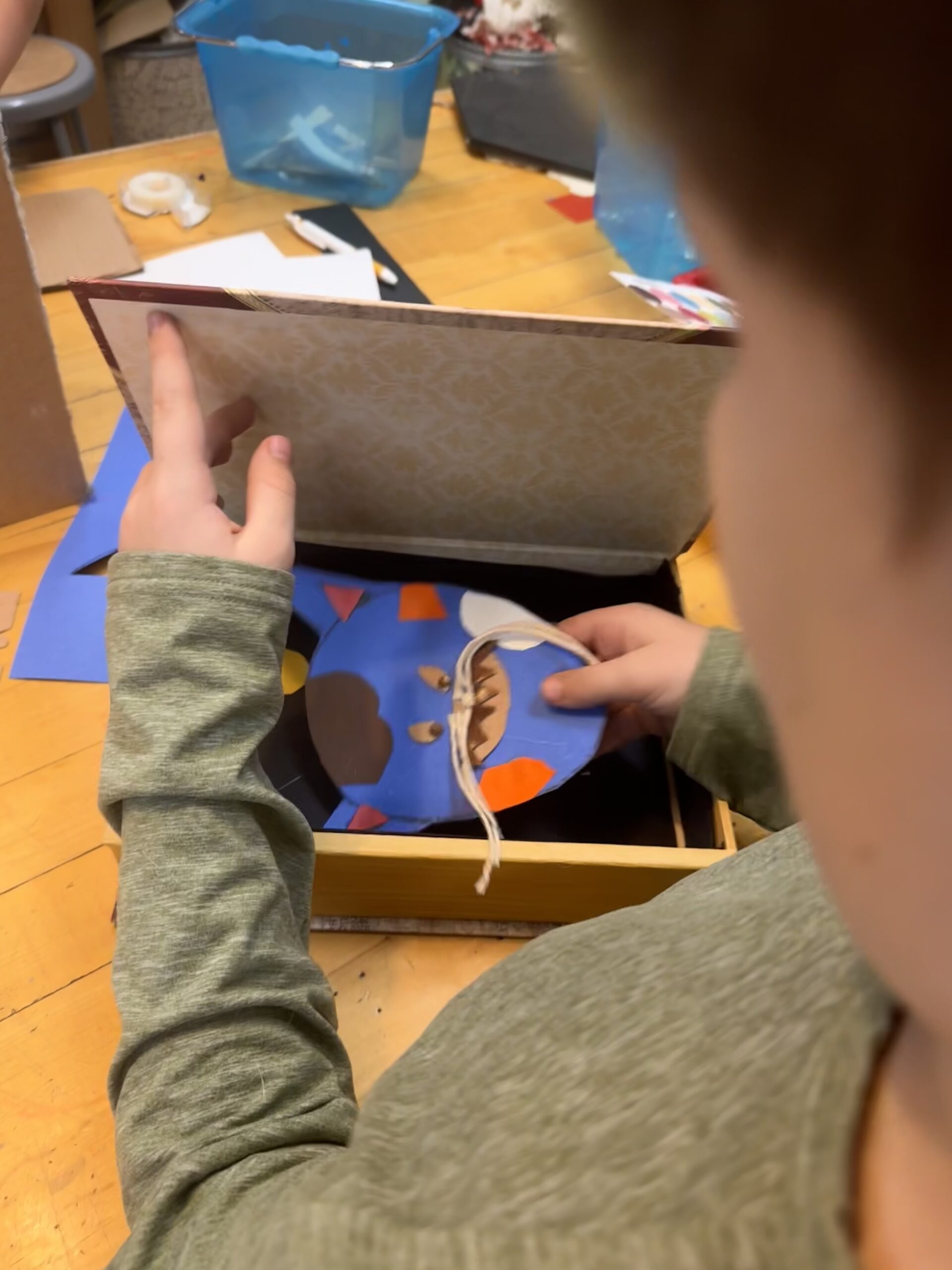
Separately, Wyatt also created a bold blue cat face from cardstock. The ears are sharp. The eyes are sly. The mouth is toothy. There are actual string whiskers, because of course there are. Watching him work was a study in process: draw, cut, refine, glue, pause, check alignment, repeat. This kid loves cats, and it showed.
Greg’s Build
Greg’s creation sat somewhere between practicality, comedy, and hands-on ingenuity.
He assembled what he cheerfully referred to as a dialysis machine: with the important caveat that it was unfinished. (To which I say: 90-minute medical equipment; coming to a hospital near you!)
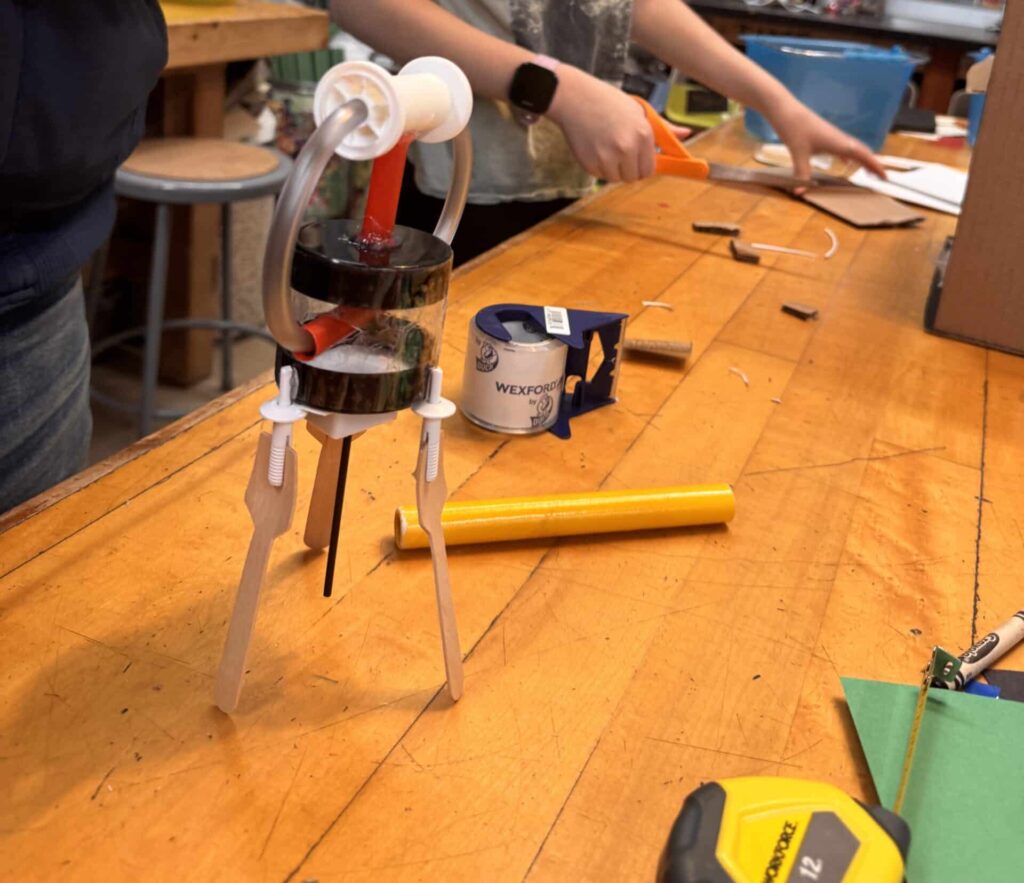 The structure stands upright on a tripod base fashioned from what appear to be tiny wooden shrimp forks. Very official. Slightly medical. Slightly sci-fi. Like it might hum to life at any moment.
At the center is a cylindrical body made from layered plastic and, possibly, a heroic amount of shipping tape. Bands, fittings, and clamps suggest filtration and circulation. Translucent tubing loops around the top, connecting to a red vertical element that looks convincingly purposeful carrying something important from one important place to another important place. Nothing about it feels random. The proportions work. The balance holds. It stands on its own — like a prototype paused mid-demonstration.
When I asked Greg for a statement, he offered this:
“In light of the advancing and already-advanced years of myself and many of my friends, I thought it practical to come up with something useful. I was aiming for a dialysis machine, but obviously didn’t have time to finish it.”
Which might be the most Tinkertopia sentence imaginable. Practical. Slightly absurd. And unfinished in the way most good creative experiments are.
My build
I also made something… but I’m running out of writing time, so I’ll just include photos and let you guess.
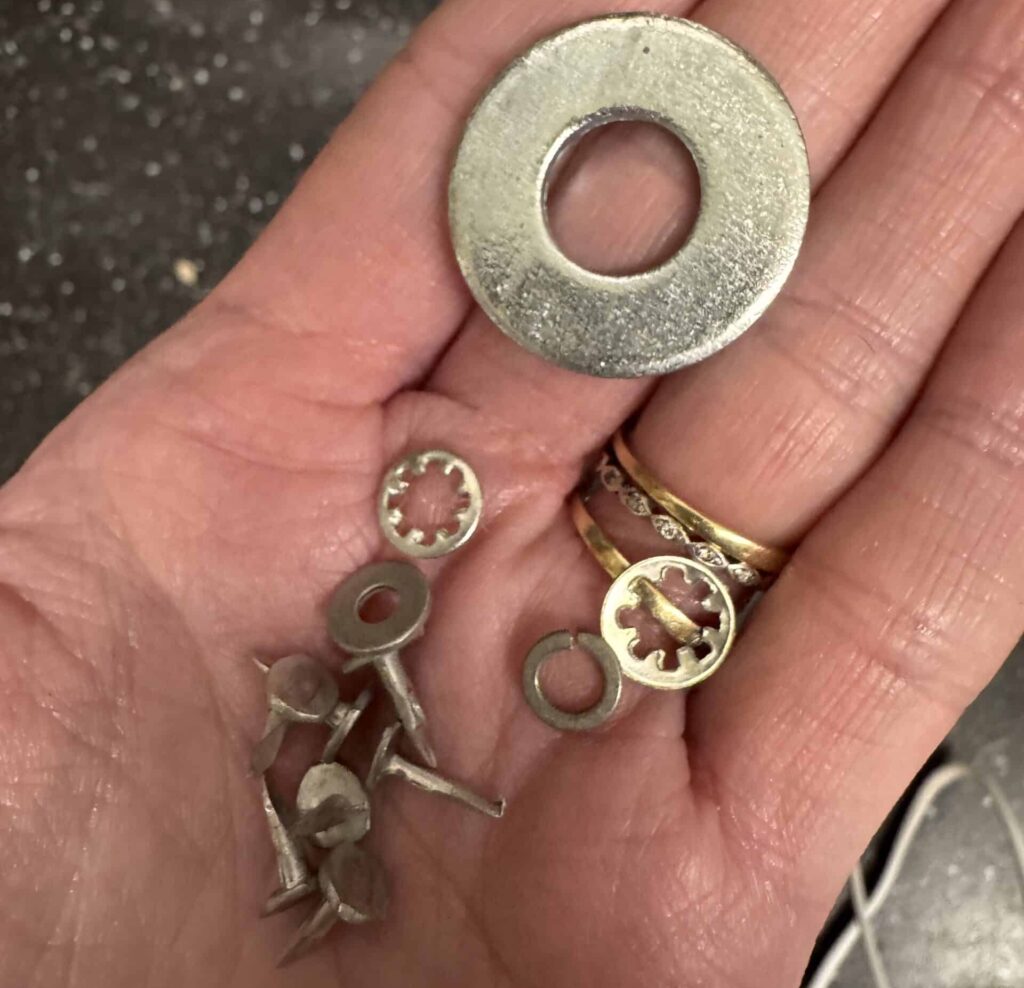
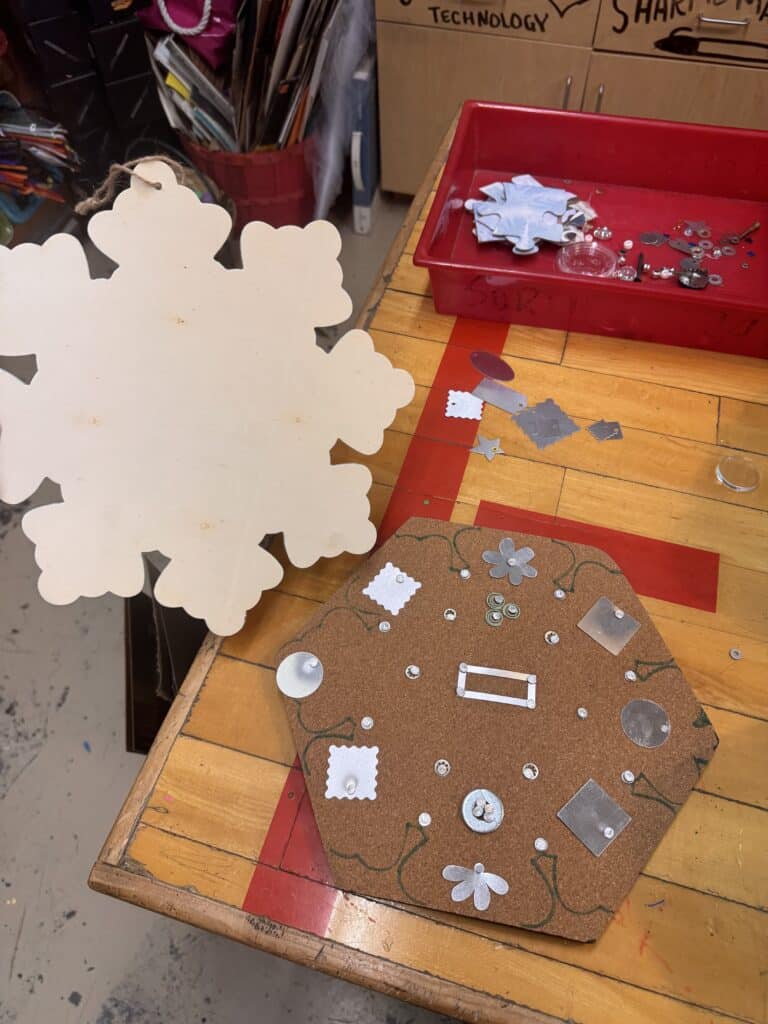

About the store, how it came to be
If you’ve never been, Tinkertopia feels like several wonderful ideas humming along at once, all powered by the shared question: What could this become?

Tinkertopia is located at 1914 Pacific Ave. in downtown Tacoma.
The creative reuse center and curiosity shop has been a downtown Tacoma staple since 2013, renting a former deli space from the University of Washington’s Tacoma campus. The shop, at 1914 Pacific Ave., faces the Washington State History Museum across the street.
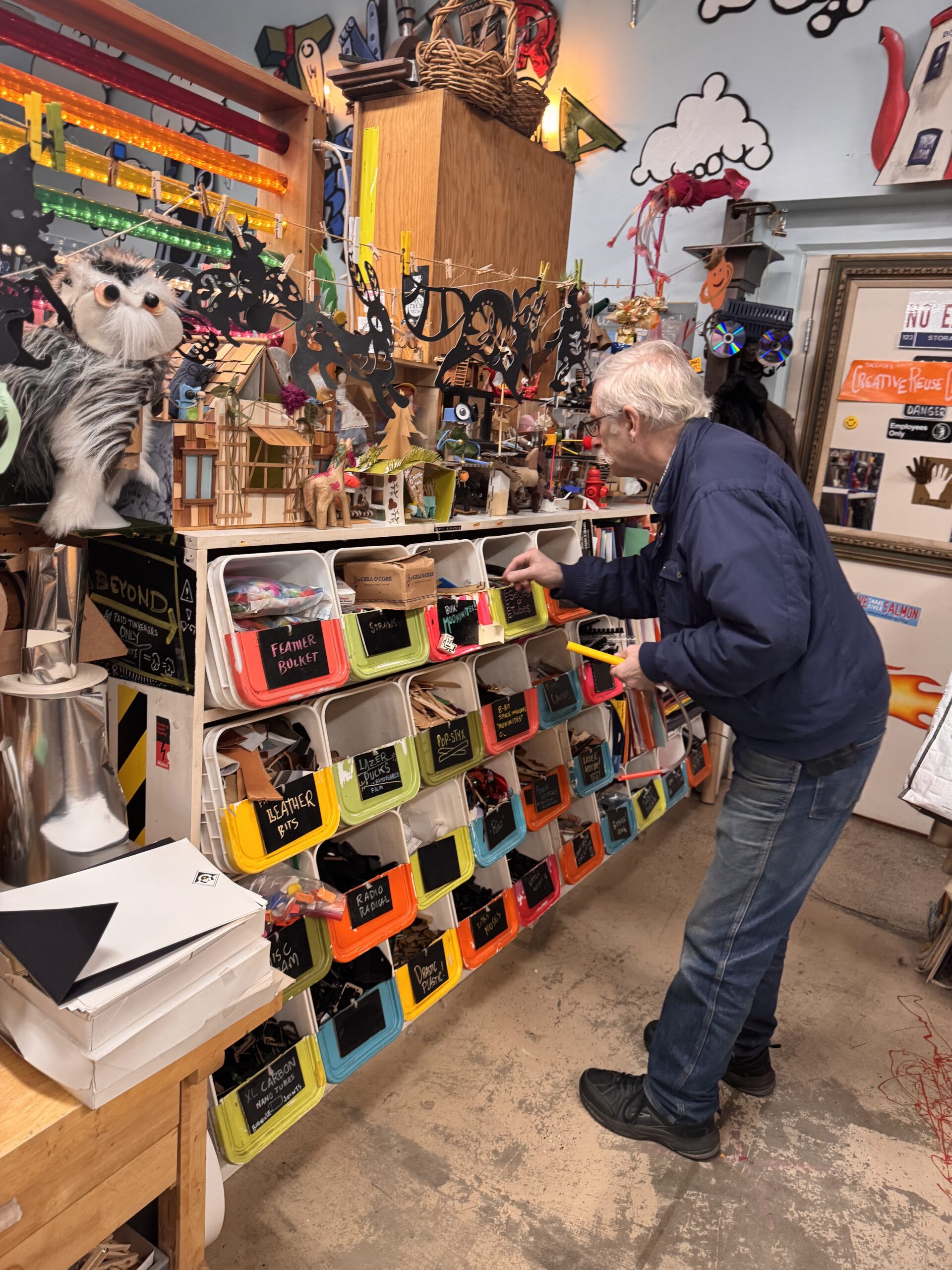
You’ll see it the moment you step inside: everything at Tinkertopia is displayed not just as a material, but as a possibility. Nearly every shelf, bin, and corner shows off inventive uses for the things they collect, little visual nudges that say, Hey, this could be something else.

In Tinkertopia’s case, the business idea was picked from a stack of applications and given a six-month trial run, and the chance to figure out pricing, workflow, and whether this quirky-but-fun idea could sustain itself.
Spoiler: it did.

Today, while its roots are nonprofit, Tinkertopia operates as a for-profit mom-and-pop shop. They are parents Darcy and Ryan Anderson. Darcy Anderson is a former early childhood education teacher with a deep love of miniatures, puppetry, and hands-on learning. Ryan Anderson is a political cartoonist with a snarky streak whose quirky, inventive collective-based underground art projects have popped up around Tacoma for years. Around the shop (and perhaps also in life), they’re known as Ms. Darcy and RR Anderson.

In a 2013 Tinkertopia promotional video, Darcy Anderson describes their business as an opportunity to use things in ways that stretch the imagination. “What could a cork be? What could a milk cap become?” she said. “There’s this expanding of the imagination when it comes to just an ordinary thing that could have been thrown out.”
That philosophy is baked into everything Tinkertopia, from the way materials are sorted, to the open-ended tinkering sessions, to the gentle encouragement to look at junk not as a discard pile, but as the beginning of something different.
At the store, that concept is split into two worlds:
Take & Make, the retail side

On the Take & Make side, you shop with one of three bulk bag sizes from near the front of the store. Then you wander through bins on bins on bins. Barrels. Buckets. Baskets. Clock gears to clarinet parts. Magnets to motor pieces. Test tubes to typewriter keys. If it can be reused, repurposed, reimagined, or turned into something else entirely, it probably lives here. Or lived here last week and is already gone. Mixed among the bulk bins are individually priced treasures: rare curiosities, antiques, and vintage ephemera that stop you mid-browse and make you rethink your entire project plan.
The shop owners also assemble in-house craft kits if you want something guided.
Make & Take, the crafting studio
Then there’s the Make & Take studio, where the dreaming turns into doing.
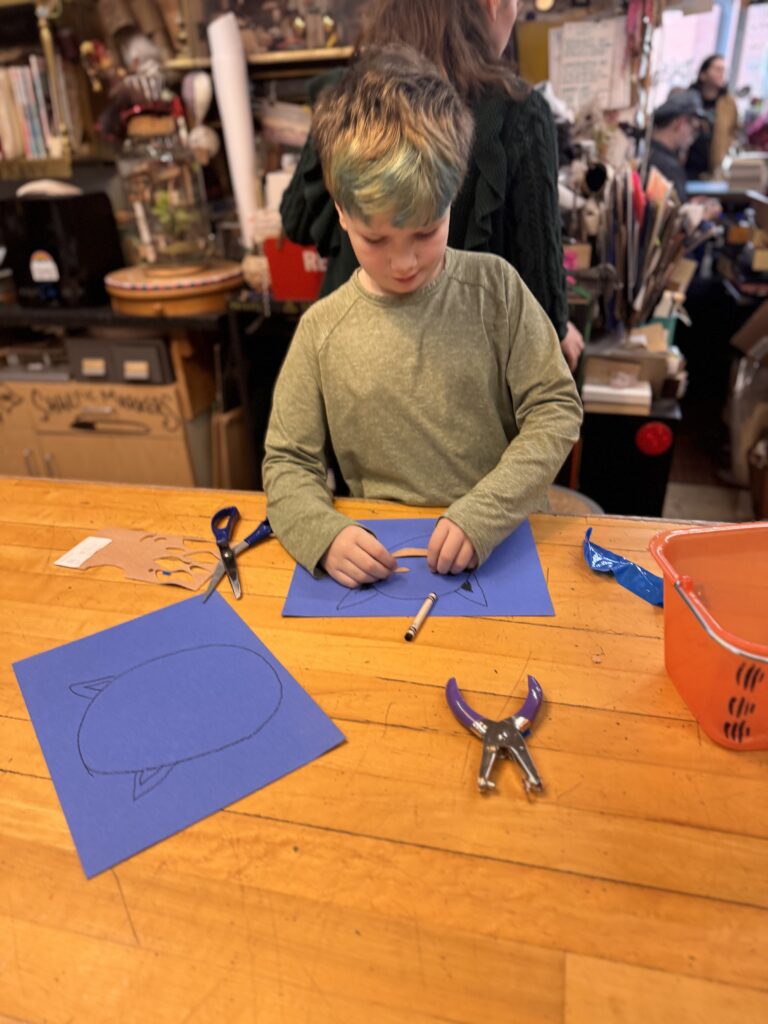
You don’t need to fill a bag to create here; the studio has its own inventory and tools for the 90-minute session. There are no instructions, minimal guidance, a few safety tips, and a whole lot of freedom. Reservations are required to tinker, but not to shop.
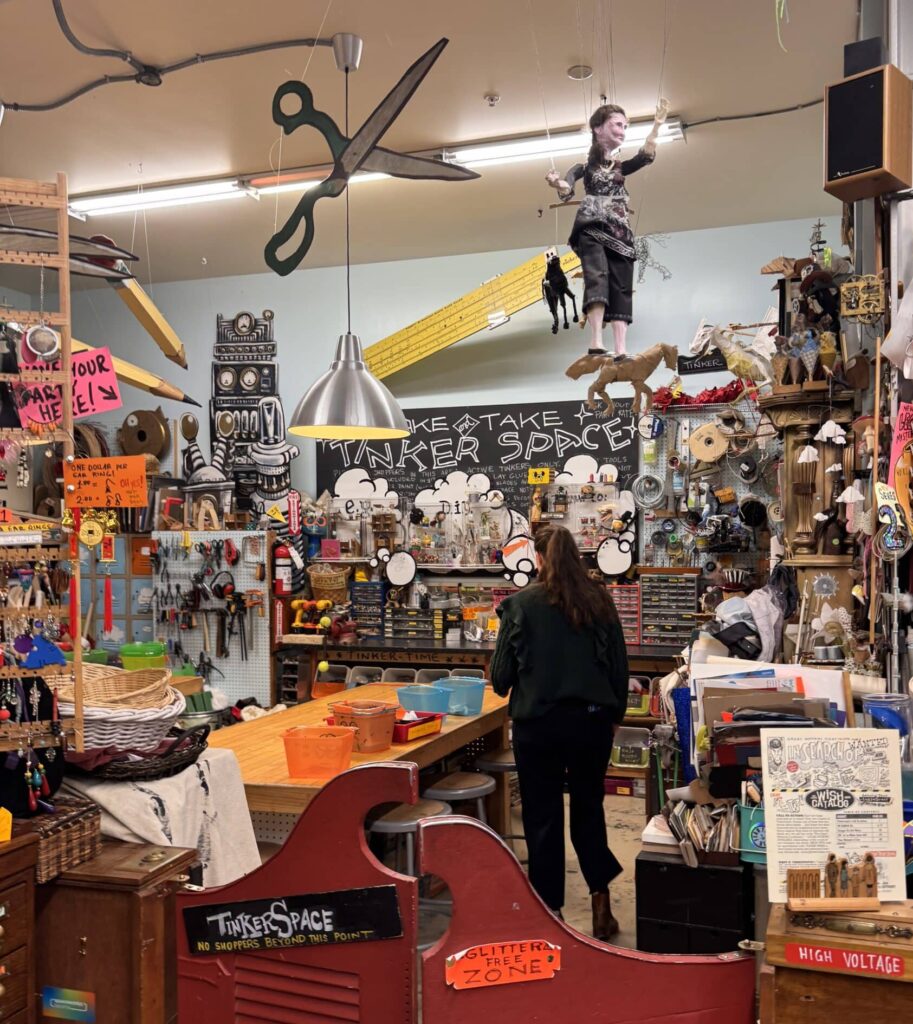
At the front door, the layout is retail to the left, and the creative studio tucked to the right. It’s tucked behind a short saloon-style swing gate just after you pass the checkout booth.
Reservations can’t be booked online, which means you must actually pick up the phone and speak to a real human. (Is this the ’90s?!) But honestly, given Tinkertopia’s love of all things vintage, it feels on brand.
After procrastinating for several days, I finally called on a Friday to book a Saturday session, and there were openings. We reserved a 90-minute slot for four makers. Victory.
If you go
1914 Pacific Ave.
Hours
Monday–Saturday: 10 a.m.–6 p.m.
Sunday: Noon to 5 p.m.
Retail
https://tinkertopia.com/shopping/
Materials on the retail side are priced by bulk bag size. There’s also separate individually priced items like vintage pieces, and specialty kits are marked separately and don’t go in the bulk bags. Prices are linked above.
Crafting session reservations
Reservations are required for the Make & Take crafting sessions; call 253-778-6539. You don’t need a reservation to shop the retail side of the store. There is no online booking.
Cost:
$10 per person: 90-minute building session
$5 per person: Helper/Supervisor/Observer grown-up in 90-minute building session
All materials for building are included during your session
The tinkering studio includes two large tables, seating about 5 to 6 people each. Same-day reservations may be available if space allows
Sessions are capped at 10 people total. Larger groups are encouraged to book at least two weeks in advance
When calling, you’ll be asked for the total number of people in your party, including builders and observers/helpers
Socials
Website: https://tinkertopia.com/
Facebook: https://www.facebook.com/Tinkertopia/
They also maintain a presence on TikTok and X (formerly Twitter) where they post new stock, curiosities, and behind-the-scenes creations, so if you’re treasure hunting for oddities or watching their upcycle magic unfold, follow them there, too.
See ya out there!

Tonya Strickland is a Gig Harbor mom-of-two and longtime journalist. Now in the travel and family niche, her blog, Two in Tow & On the Go, was named among the 10 Seattle-Area Instagram Accounts to Follow by ParentMap magazine. Tonya and her husband Bowen moved to Gig Harbor from California with their two kids, Clara (11) and Wyatt (9) in 2021. Find them on Facebook for all the kid-friendly places in and around town.