Community Environment
Two In Tow & On The Go | Low tide at Penrose Point State Park
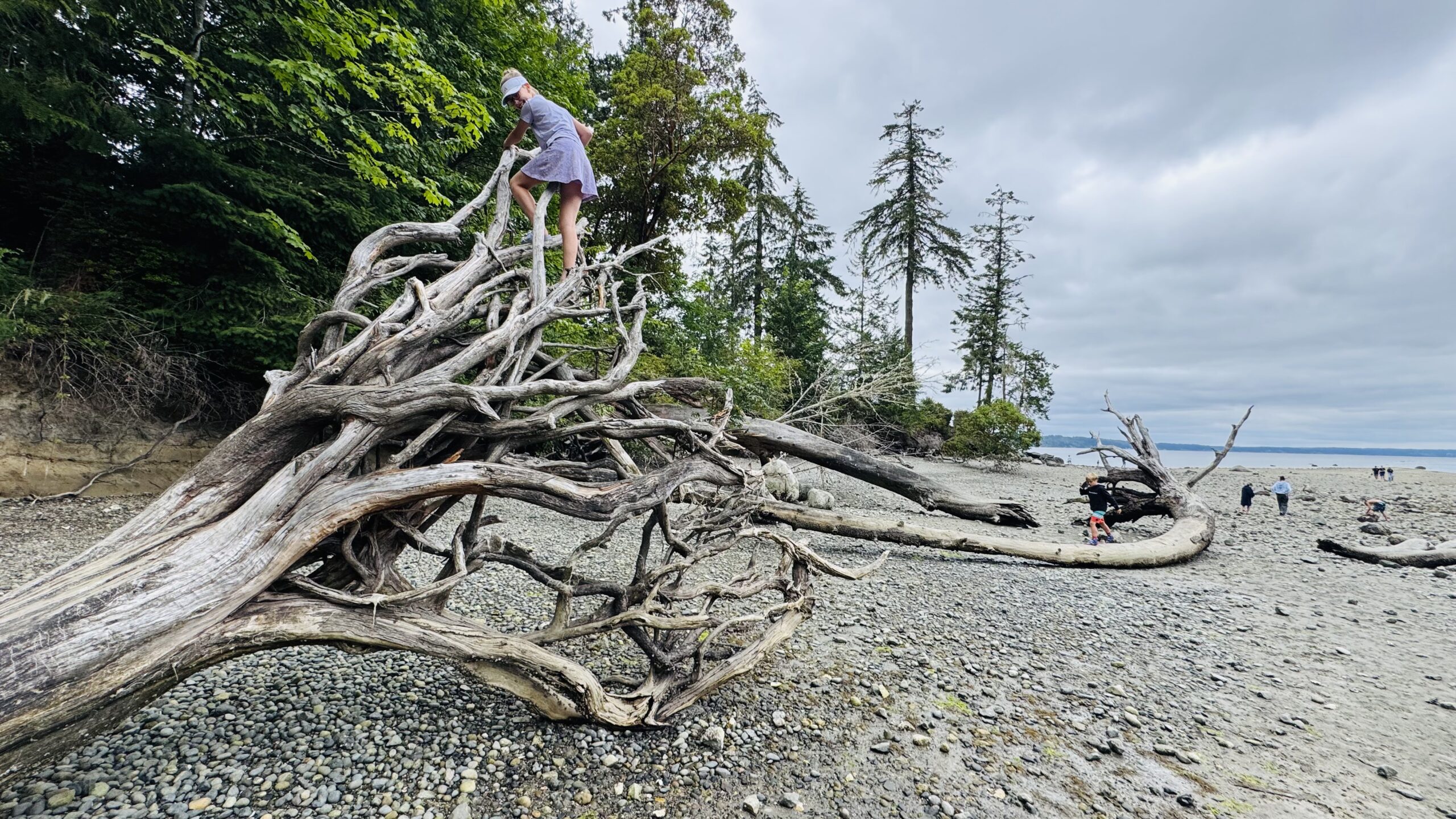
Clara’s towering climb. Photo by Tonya Strickland.
Along a Key Peninsula shoreline studded with shells, rocks and the tangled reach of uprooted stumps, we found limpets, hermit crabs and several kinds of clams in the tide pools at Penrose Point State Park.
Located at 321158th Ave. SW in Lakebay, this kid-friendly site offers beach access, trails and overnight camping.
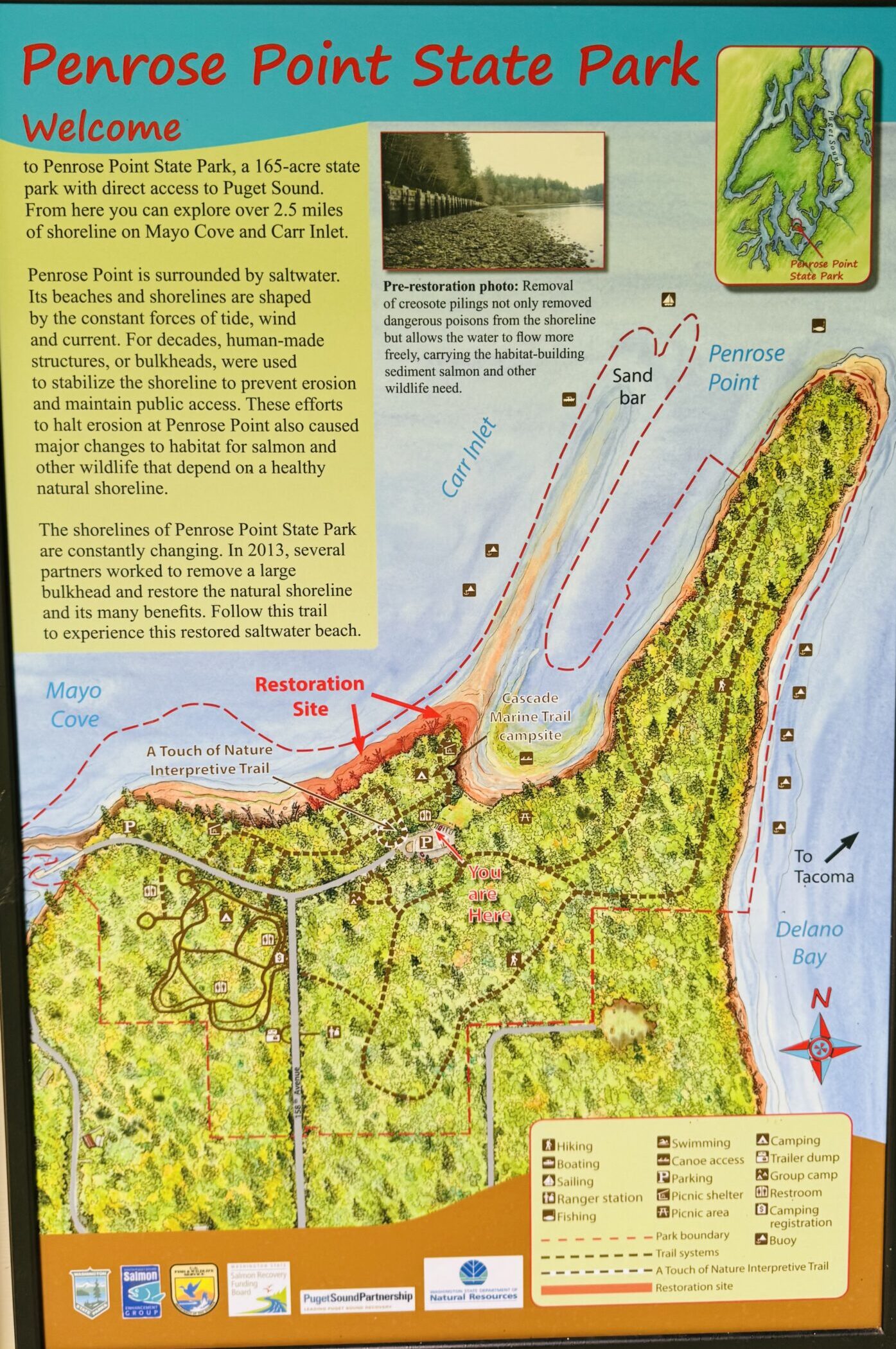
Penrose Point State Park map displayed in its day use parking lot. Photo by Tonya Strickland.
Our visit to Penrose Point, my first kid adventure of the summer, also kicks off another Three In Tow season of day trips with Gig Harbor Now history writer Greg Spadoni. We joke that the kids and I adopted Greg, bringing him along for his local fun facts and comedic Baby Boomer ways. He also brings candy sometimes. Not that our increased chances for sugar consumption would sway our decision to keep inviting him places. Nope. No way.
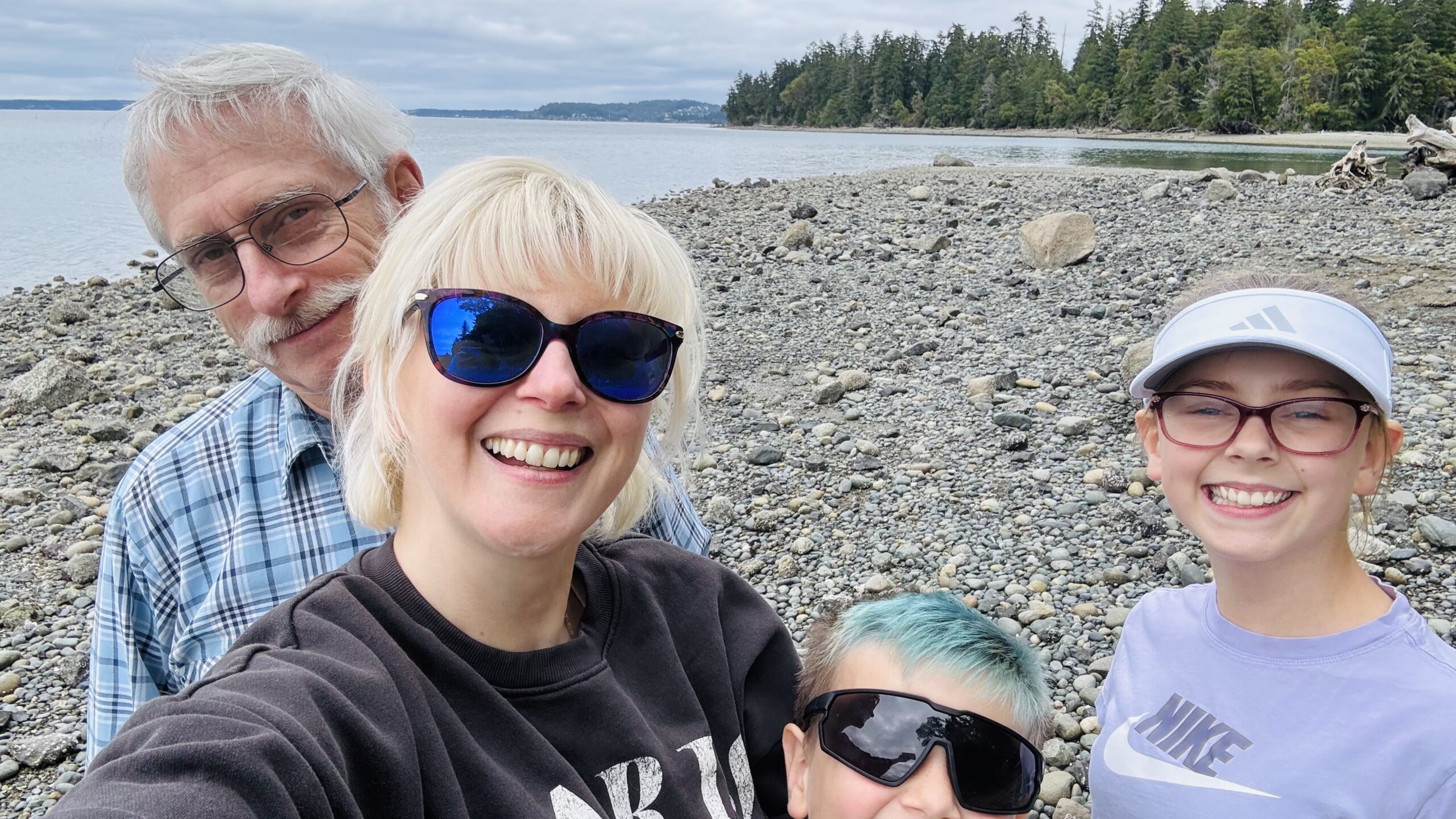
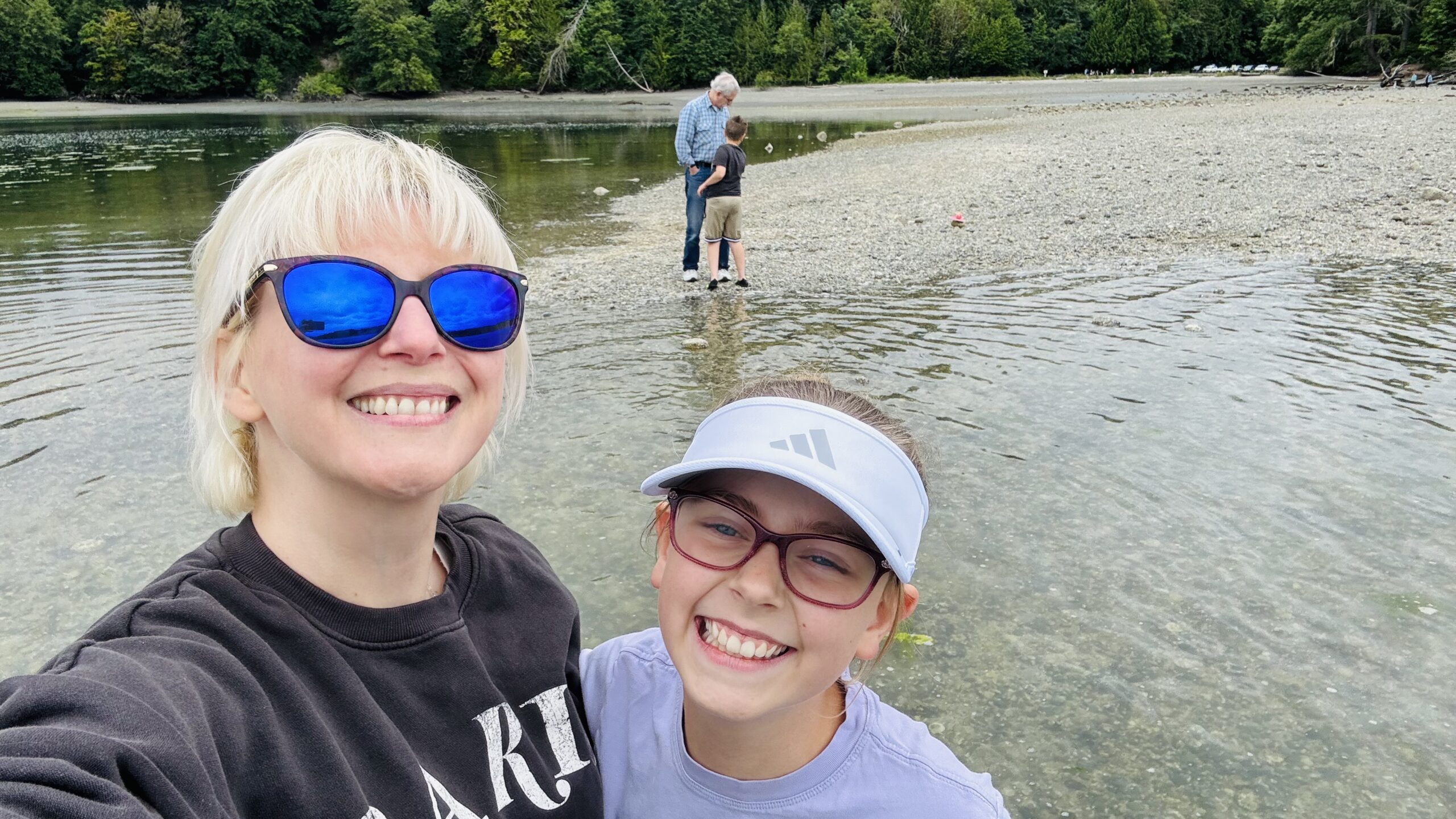
Gig Harbor Now writers unite at Penrose Point State Park. Photo by Tonya Strickland.
Beach access, low tide
On this trip, we explored the park’s beach on the west side of Carr Inlet near Mayo Cove. It’s accessible from the day use parking lot, a spacious, paved area next to a restroom, an information board, trailhead and an impressively wide grassy lawn with picnic tables. The same grassy area made for a perfect place to sit with a sack lunch and a few games of tag during Wyatt’s third grade field trip in the spring of 2025.
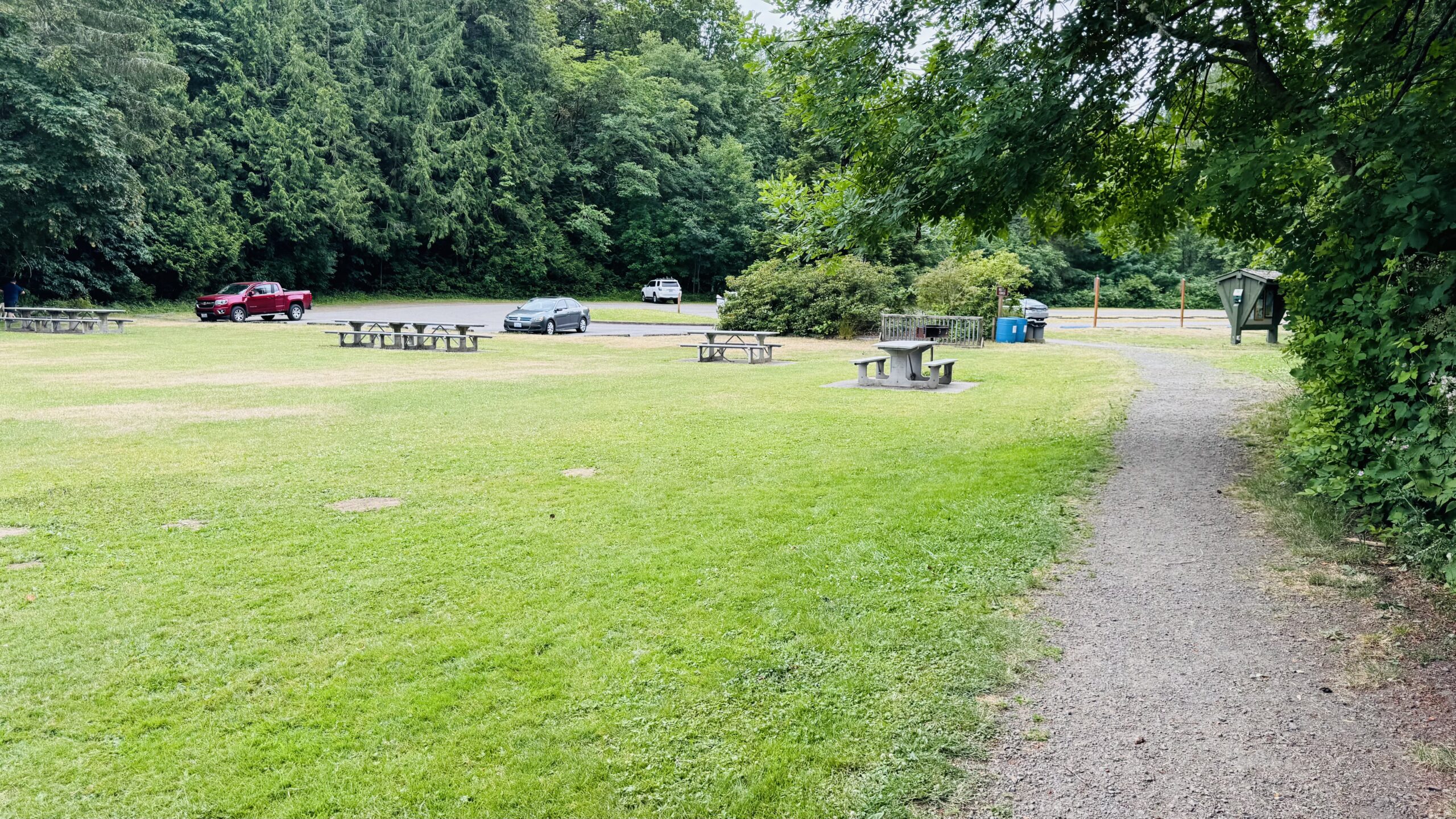
The giant picnic lawn at Penrose Point State park is located in the park’s day use area. Photo by Tonya Strickland.
We specifically went during low tide so we could walk the expansive sand bar that emerges as the water retreats, revealing a walkable path stretching north from shore. From our experience with the tide coming back in that day, the same sandbar slowly becomes a series of tiny, two-kid islands before disappearing entirely beneath the water.
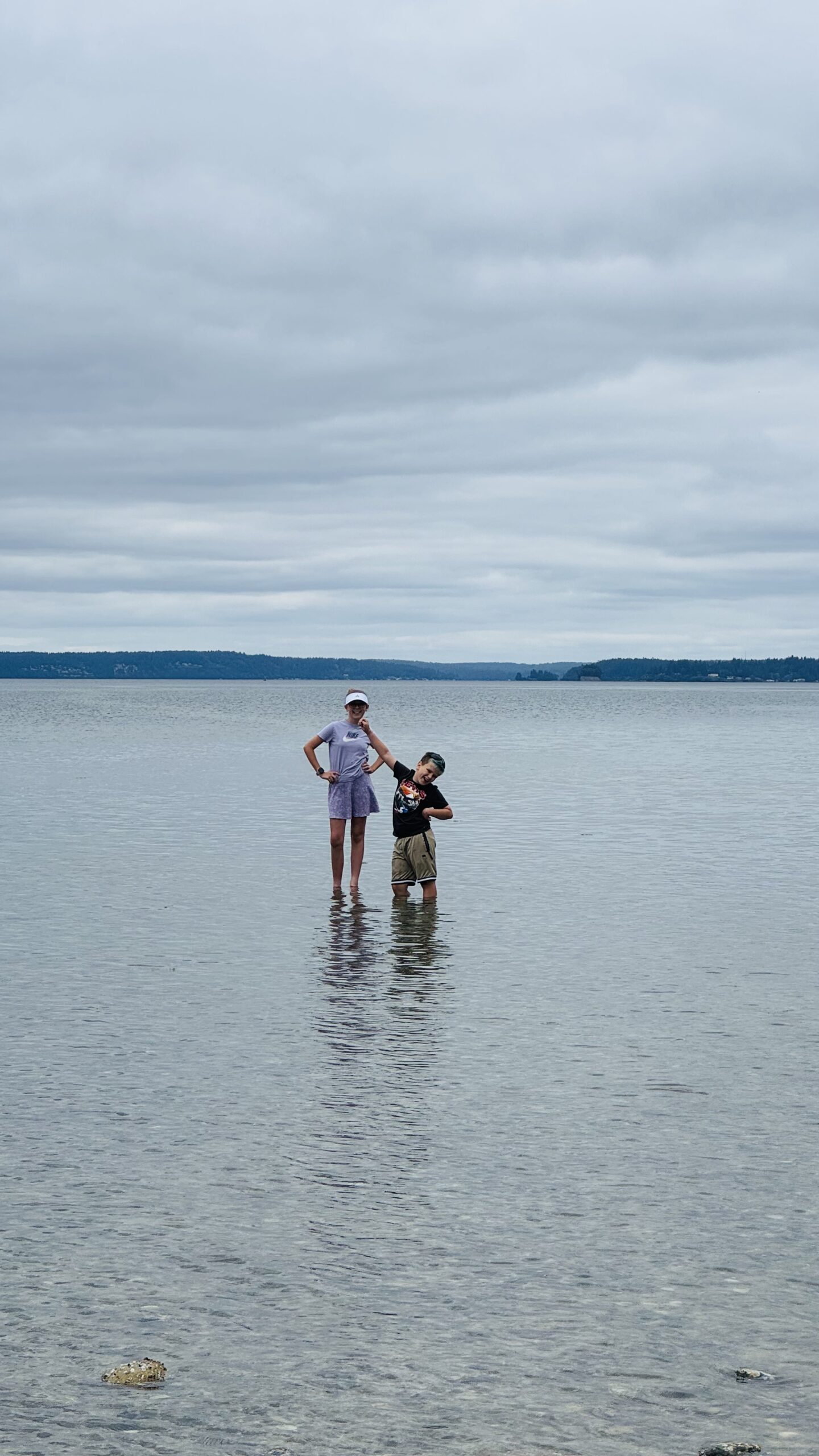
Clara and Wyatt stand on the disappearing sandbar at Mayo Cove as the tide comes in. Photo by Tonya Strickland.
It’s a scene that, apparently, is quite the local phenomenon. Washington travel page Wander Wonder 2.0 says Penrose Point State Park’s low tide brings “an entirely different landscape” to its shoreline. “The water pulls back so far that you can walk hundreds of feet out onto wide, exposed sand flats,” making the beach “feel almost twice as large as it appears at high tide,” it says. The post explains that Carr Inlet’s “unusually gentle currents” gradually deposit fine layers of sand that create “broad tidal terraces” that emerge when the water retreats. The result, the author writes, is “a rare Puget Sound experience” where visitors can wander far into the inlet on firm sand as “the shoreline behind you seems to stretch and reshape itself.”
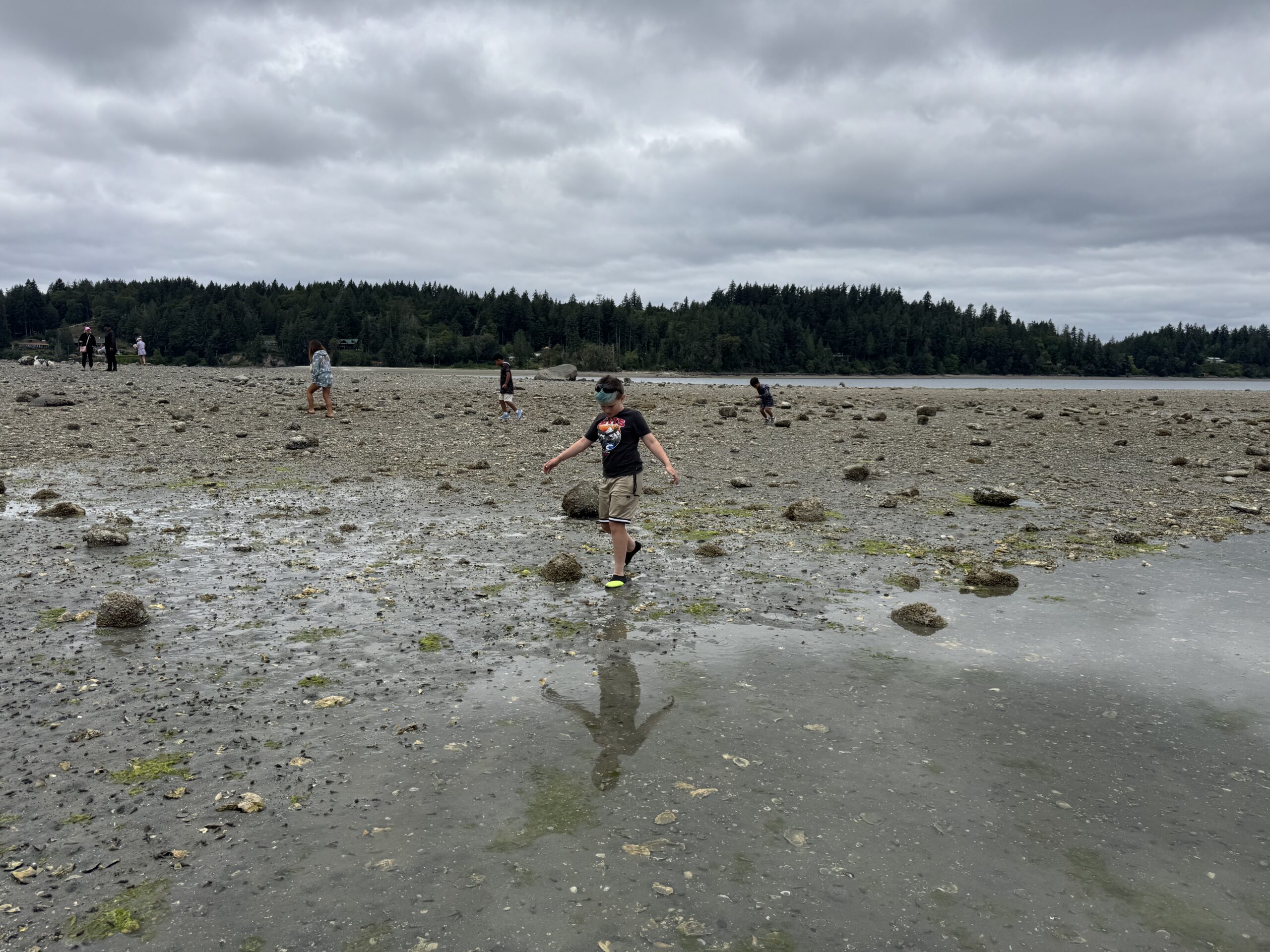
The bonus beach exposed at low tide is expansive. Photo by Tonya Strickland.
Driftwood giants
When we first approached the shore, I was feeling pretty thankful that Clara and Wyatt were double-digit big kids who no longer required constant reminders to be careful on our wild outdoor adventures. And yet … if there’s one universal law of childhood, it’s this: if something looks remotely climbable, kids will find a way to reach its highest point. Penrose Point’s weathered driftwood giants are no exception. I looked away for what felt like five seconds and suddenly I heard “Mama, look!” from Clara, who was surveying the beach from atop a towering mass of creaky roots. Naturally, Wyatt soon followed with his own version of the climb. I quickly snapped a few pics and was able to guide each child (minus Greg, who didn’t attempt the climb) back down.
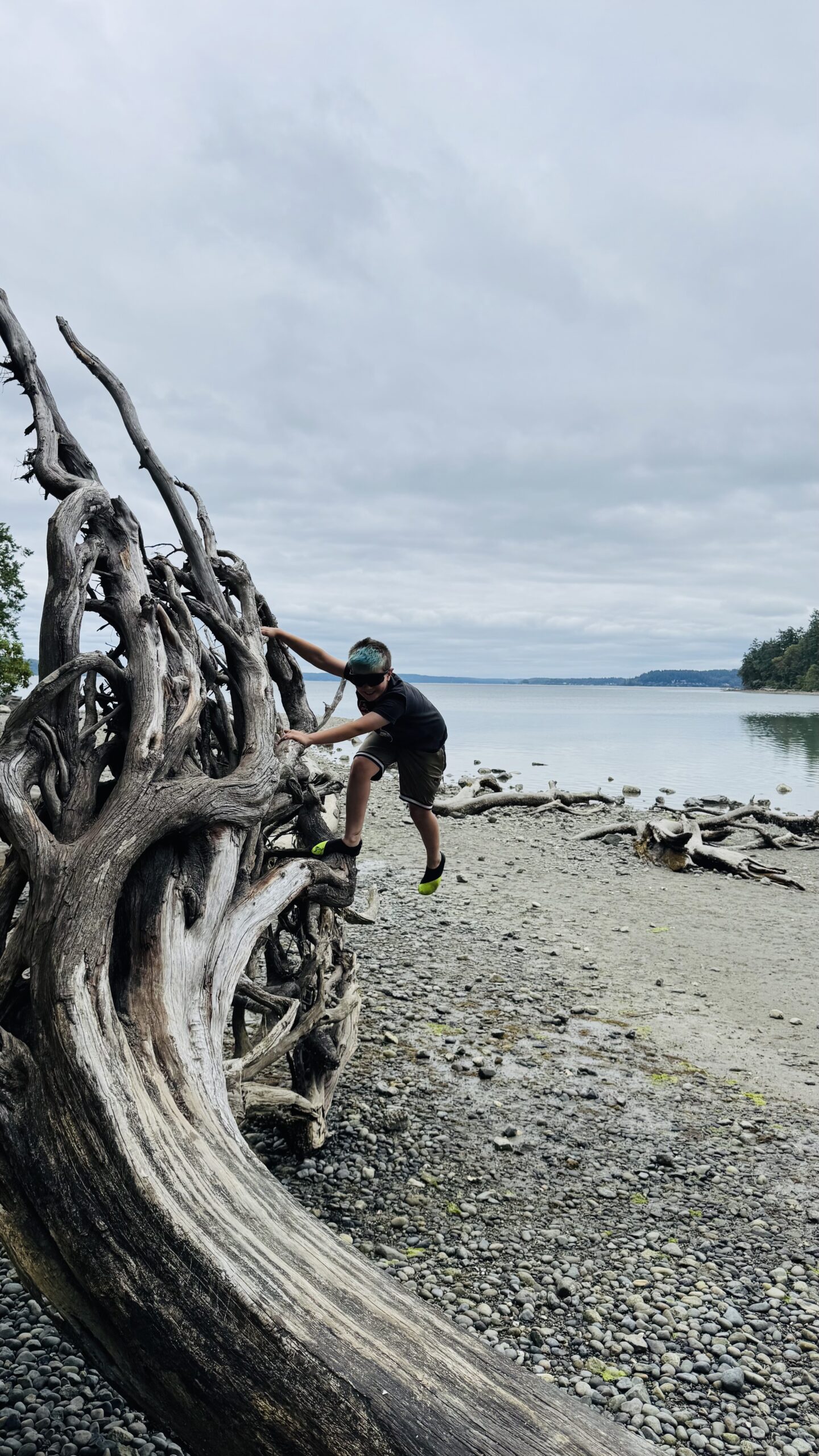
Wyatt’s driftwood climb. Photo by Tonya Strickland.
Tide pools
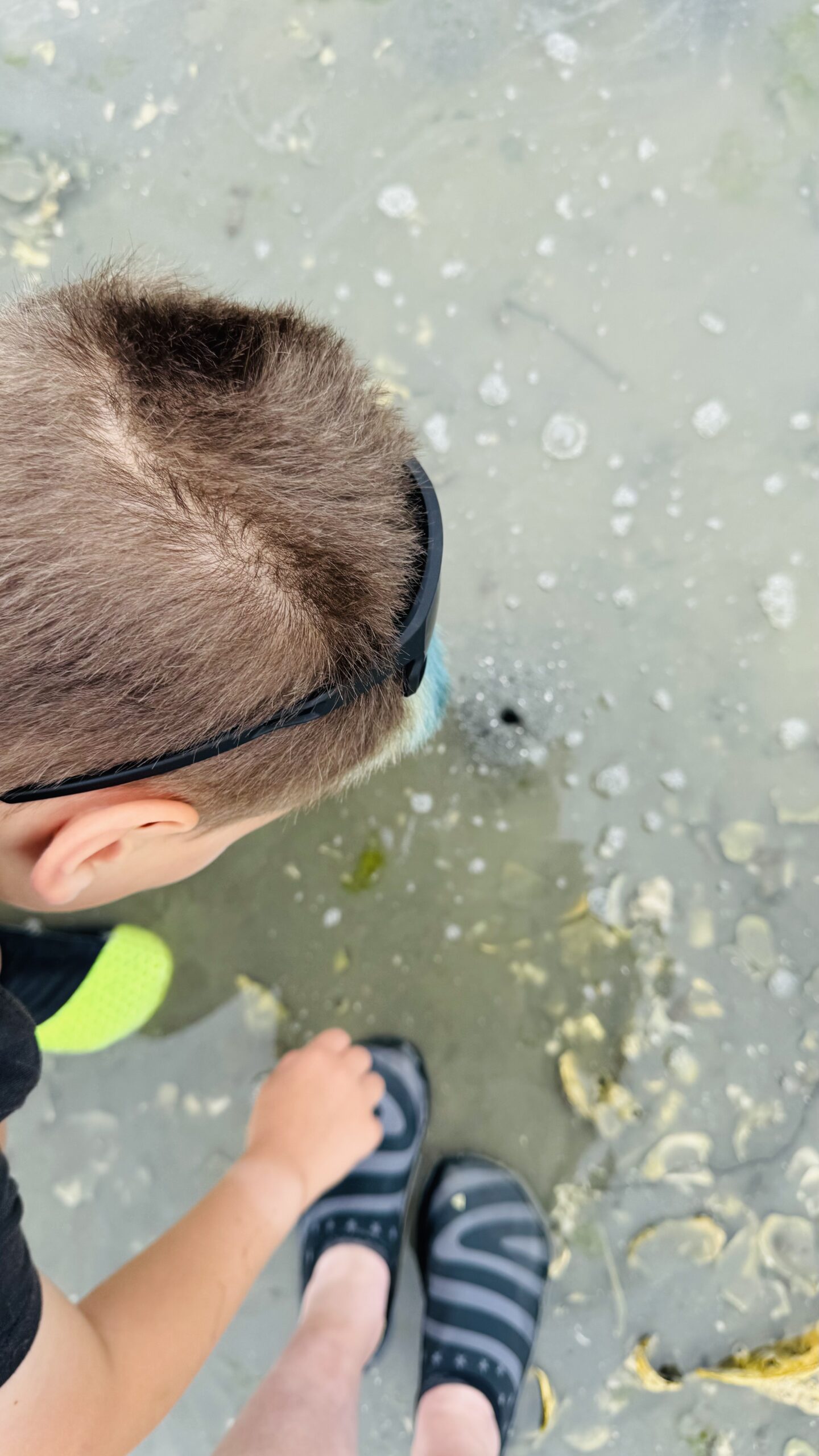
After the vertical adventures were over (fingers crossed), we explored various intertidal rocks that served as temporary shelters to dozens of small shore crabs scattering sideways on our approach. Finding these tiny crabs in their variety of colors and watching them interact with one another with their goofy little eyeballs and tiny claw hands was a joy. We could’ve watched them all day.
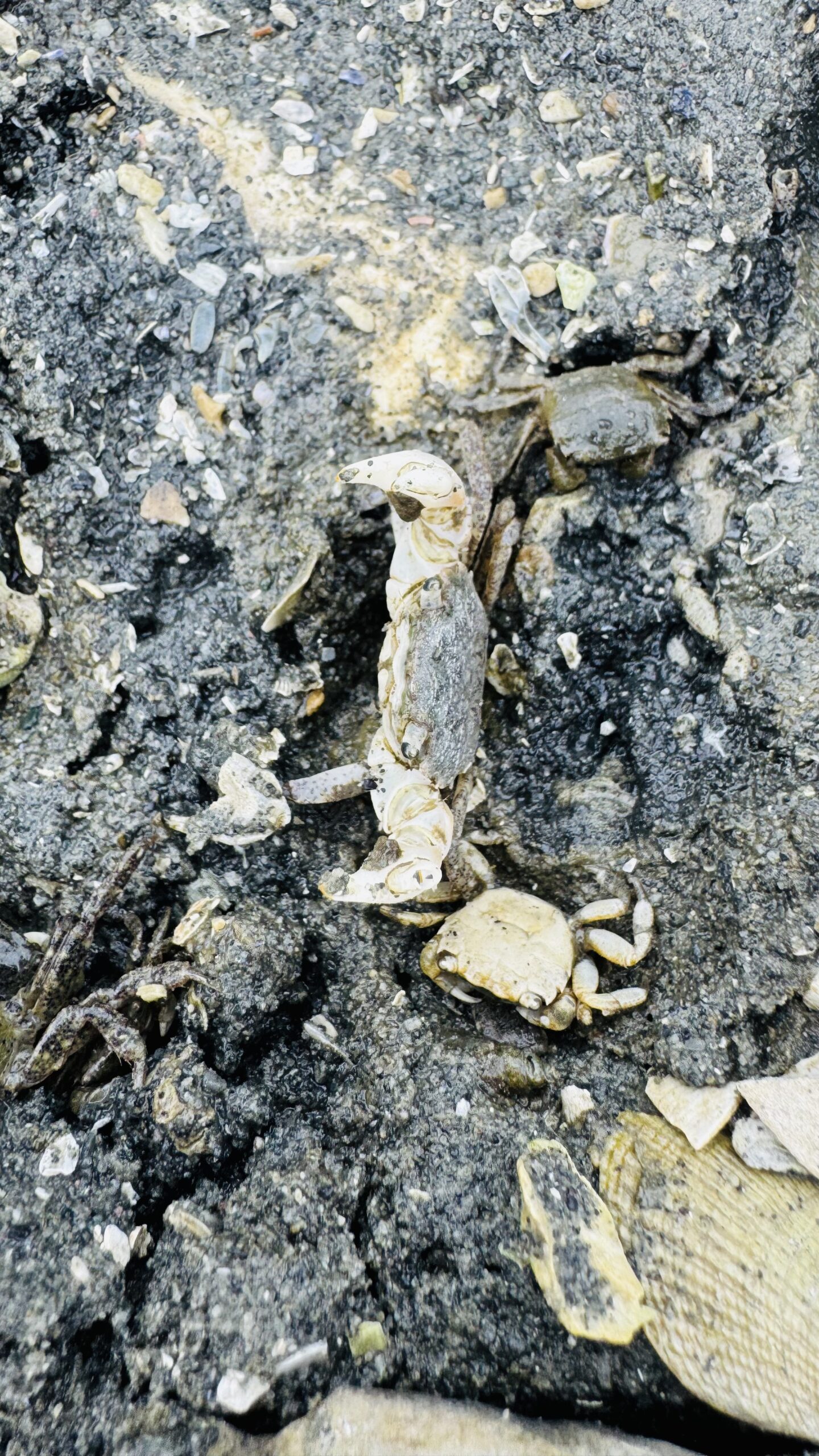
Crab friends at low tide. Photo by Tonya Strickland.
Shell display
We later learned the names of some of the critters we saw when we stopped to read the park’s information board outside the restroom. I especially enjoyed the framed, eight-part mini-exhibit “Popular Intertidal Shellfish.”
Arranged in a neat sunburst pattern, the display pairs real shells mounted beneath glass or acrylic with identification notes for different species. The display helped us identify many of the creatures we were about to encounter, including several types of clams that looked mind-boggingly alike.
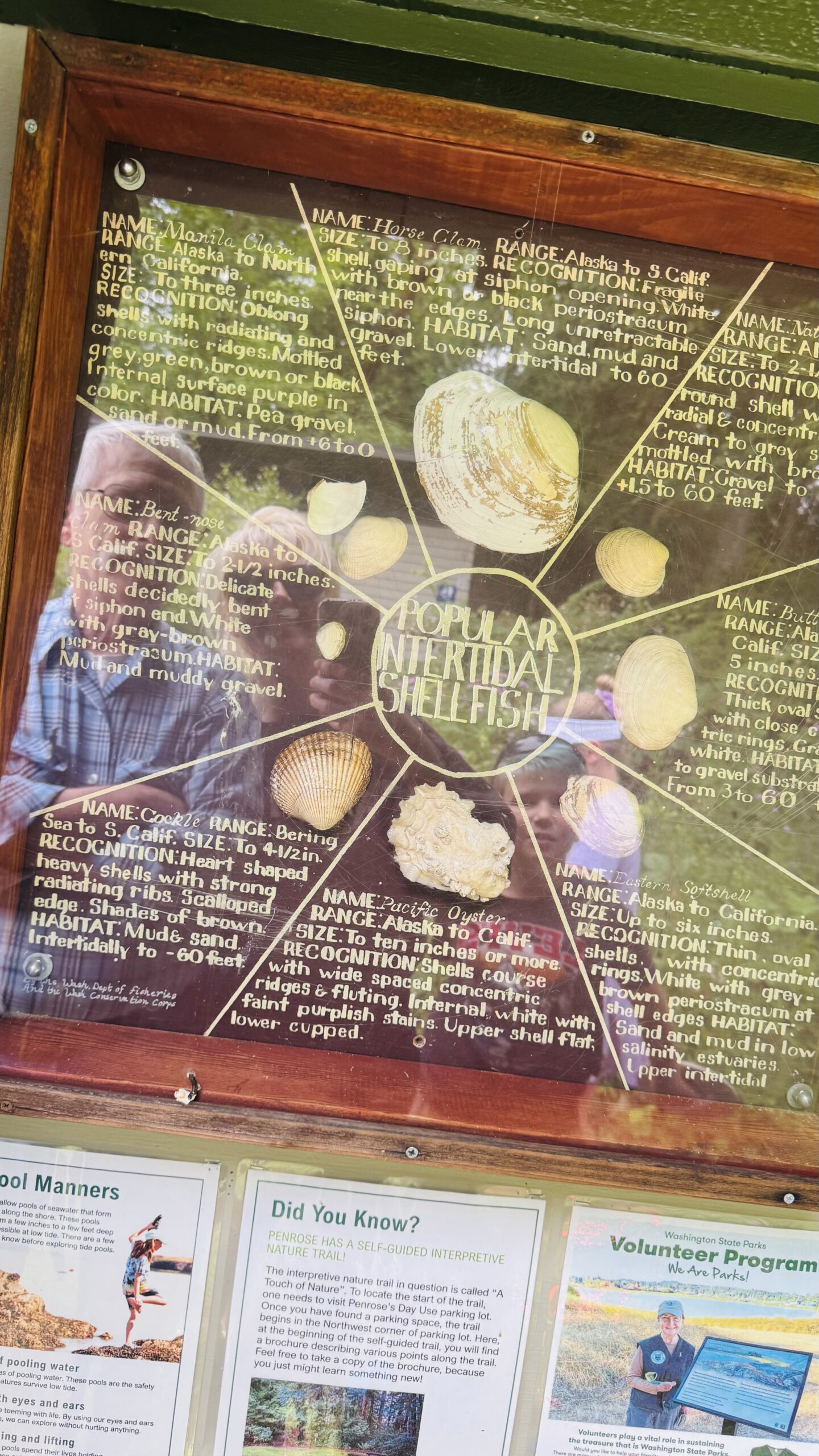
“Popular Intertidal Shellfish” vintage display at Penrose Point State Park, along with other state park updates posted on an information board at the park. Photo (barely not considered a selfie) by Tonya Strickland
Here’s an abridged summary of the displayed information on Washington’s eight most common shellfish and how to spot them:
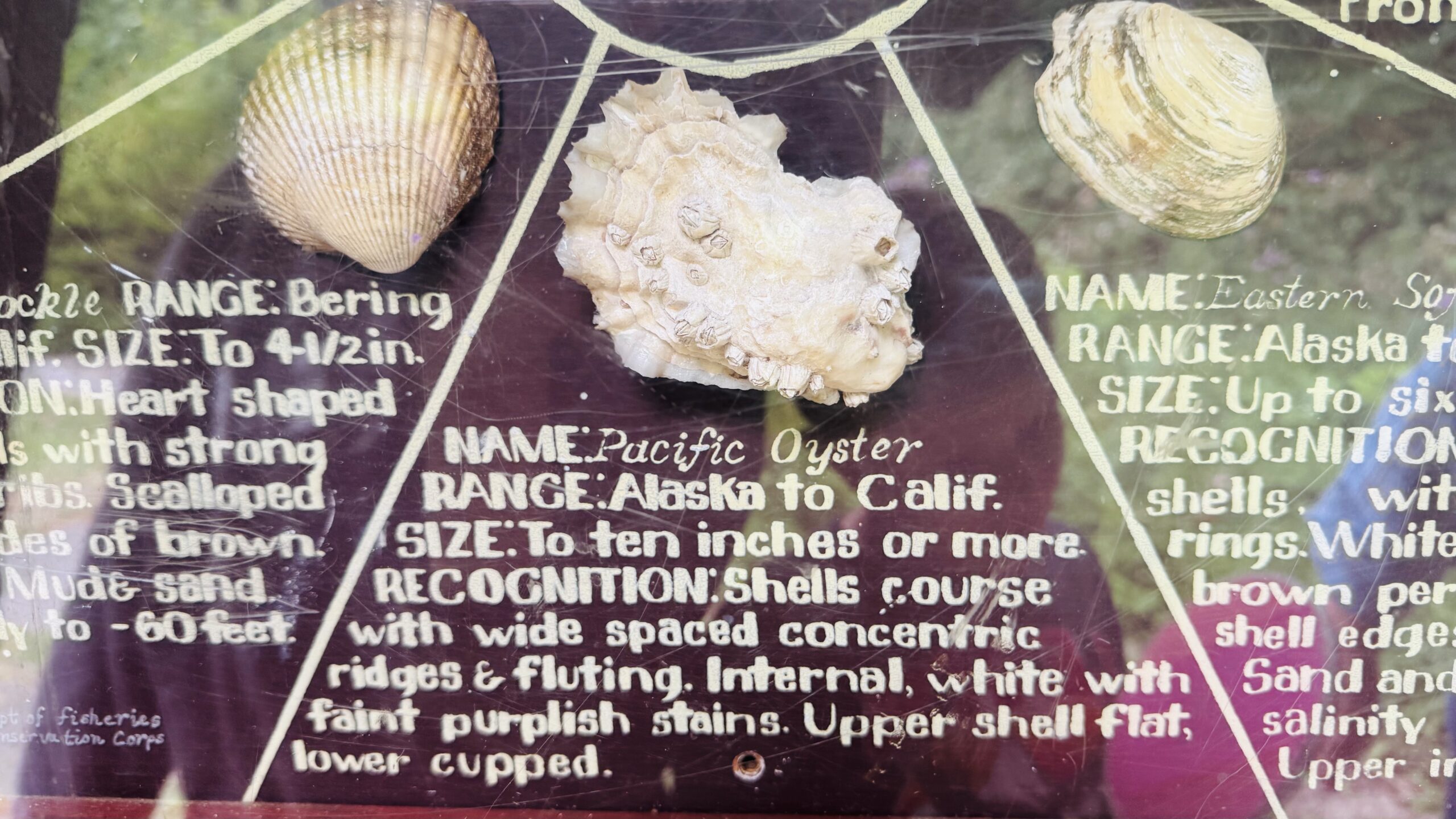
Part of the shellfish display. Photo by Tonya Strickland.
- Manila clams with their oblong shells, coarse ridges and purple interiors.
- Horse clams sporting a giant gaping shell and large siphon.
- Native littleneck clams in small, rounded shells with perfectly nested rings and a cream and gray palette.
- Butter clams with their thick oval shells, almost ball-like in your hand, decorated in closely spaced rings.
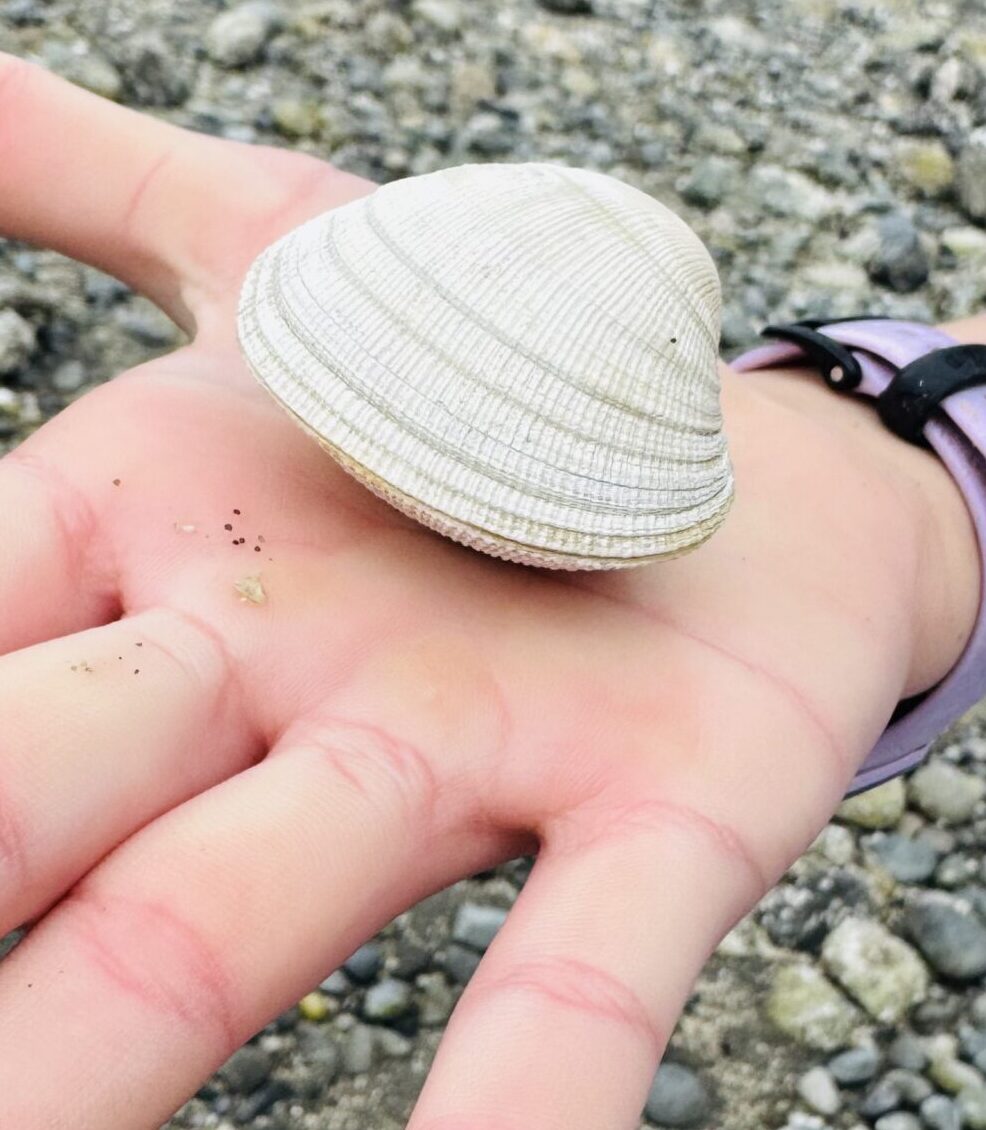
Clara shows off a butter clam. Photo by Tonya Strickland.
- Eastern softshell clams in thin, oval shells.
- Pacific oysters, perhaps the most recognizable in the bunch, have large shells rough in texture. Barnacles love to live on them.
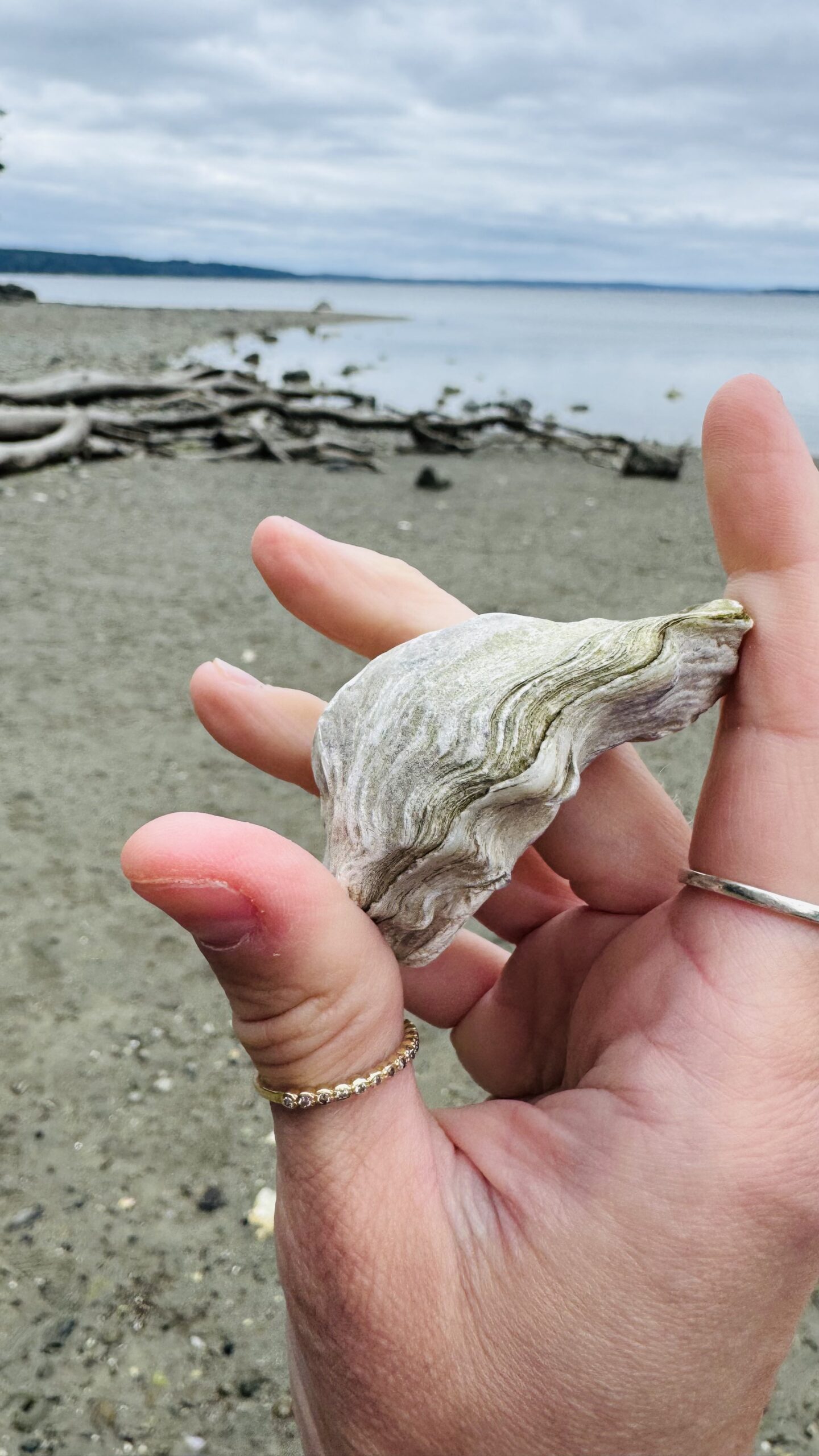
An oyster. Photo by Tonya Strickland.
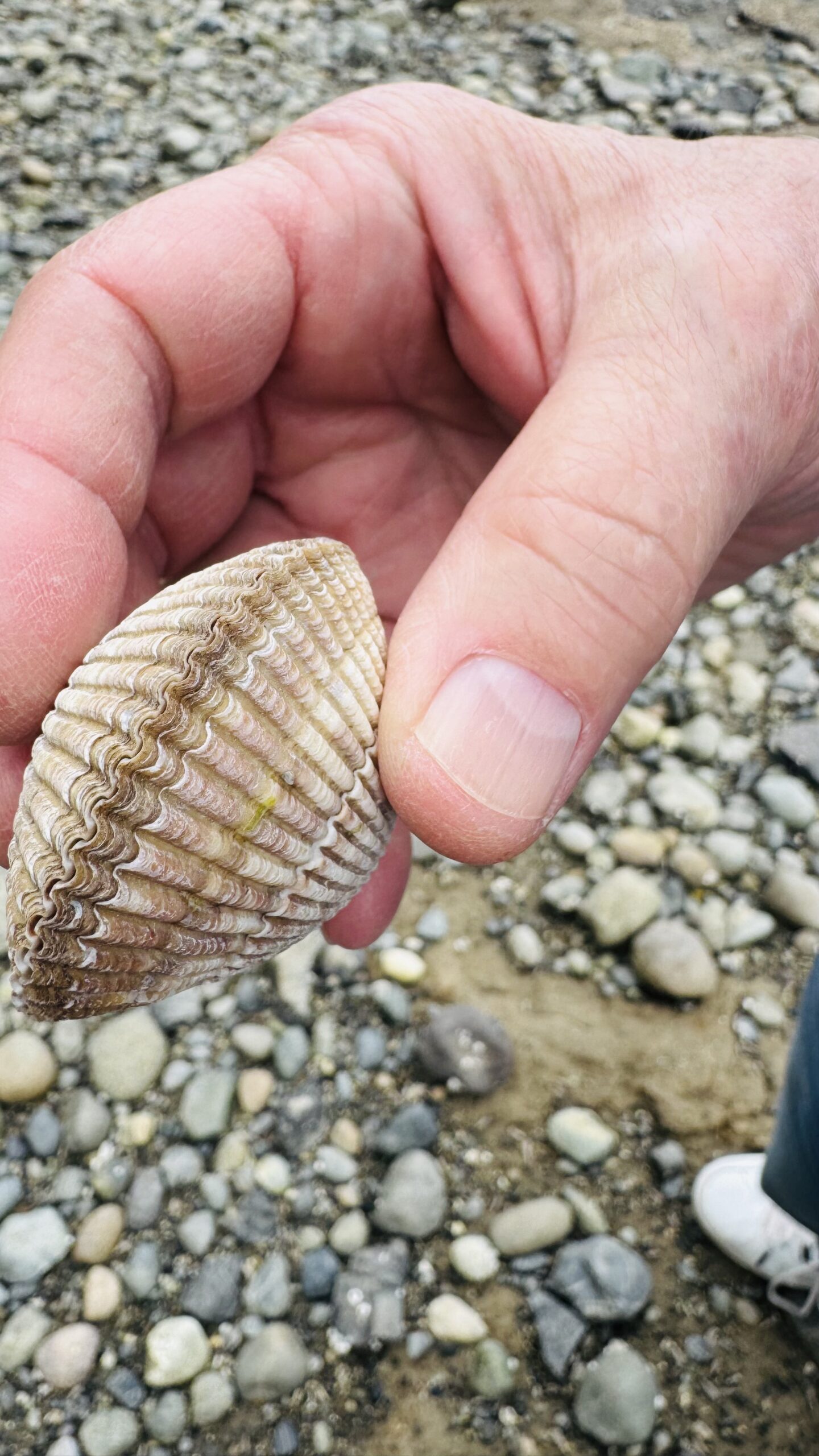
- Cockles, recognizable by their heart-shaped shells and bold radiating ribs.
- Bent-nose clams with delicate gray-brown shells and a distinctly bent siphon.
Outside of the sign’s list, we also spotted:
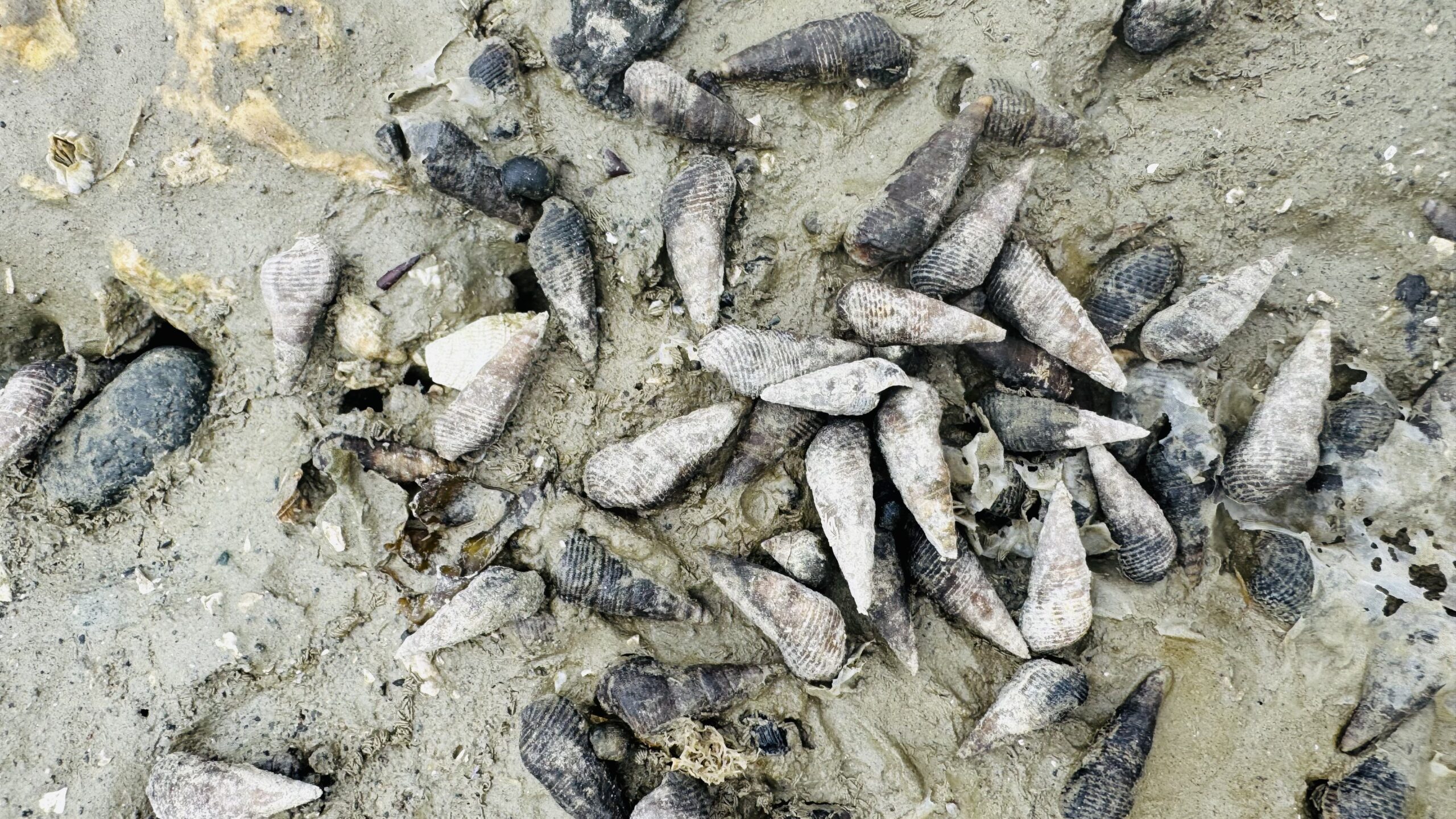
- At least a million hermit crabs, with most living in clusters. Hundreds of their discarded shells also littered the sand.
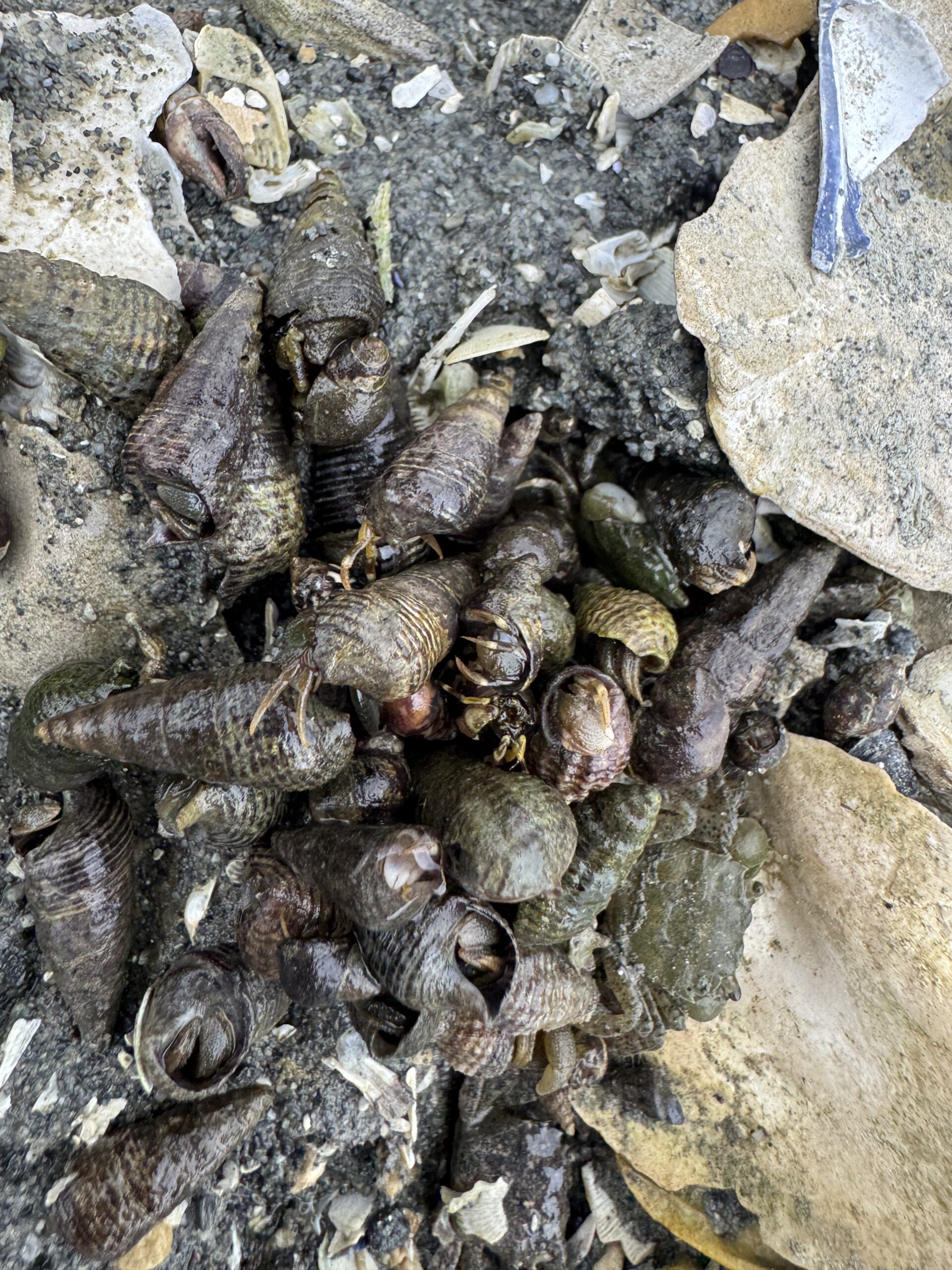
Hermit crab cluster. Photo by Tonya Strickland.
- Slippery strips of sea lettuce, a delightfully bright grass-green seaweed with ruffled edges.
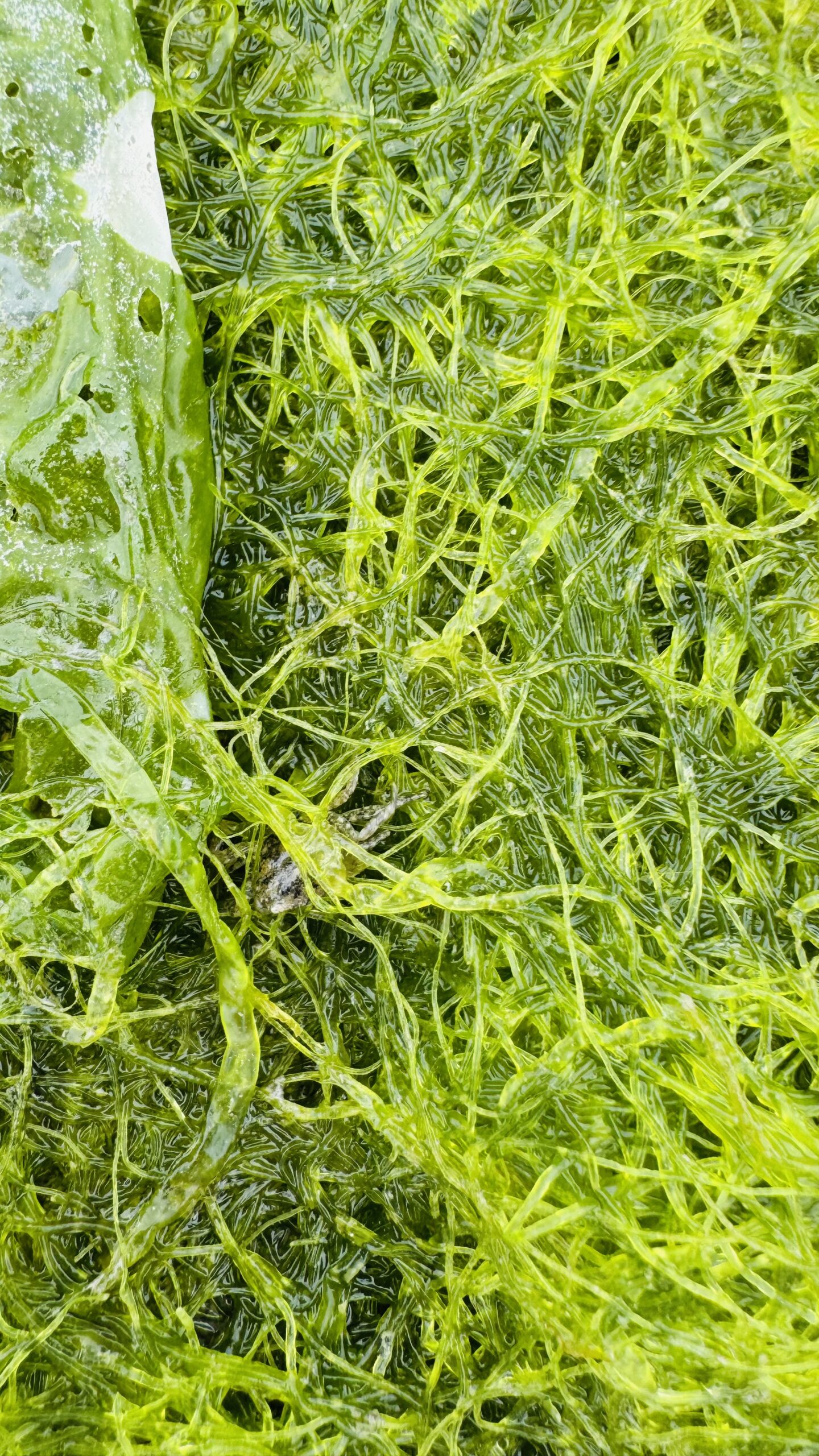
Sea lettuce. Photo by Tonya Strickland.
- Mussels with their signature blue-black oblong shells that are often pearlescent on the inside.
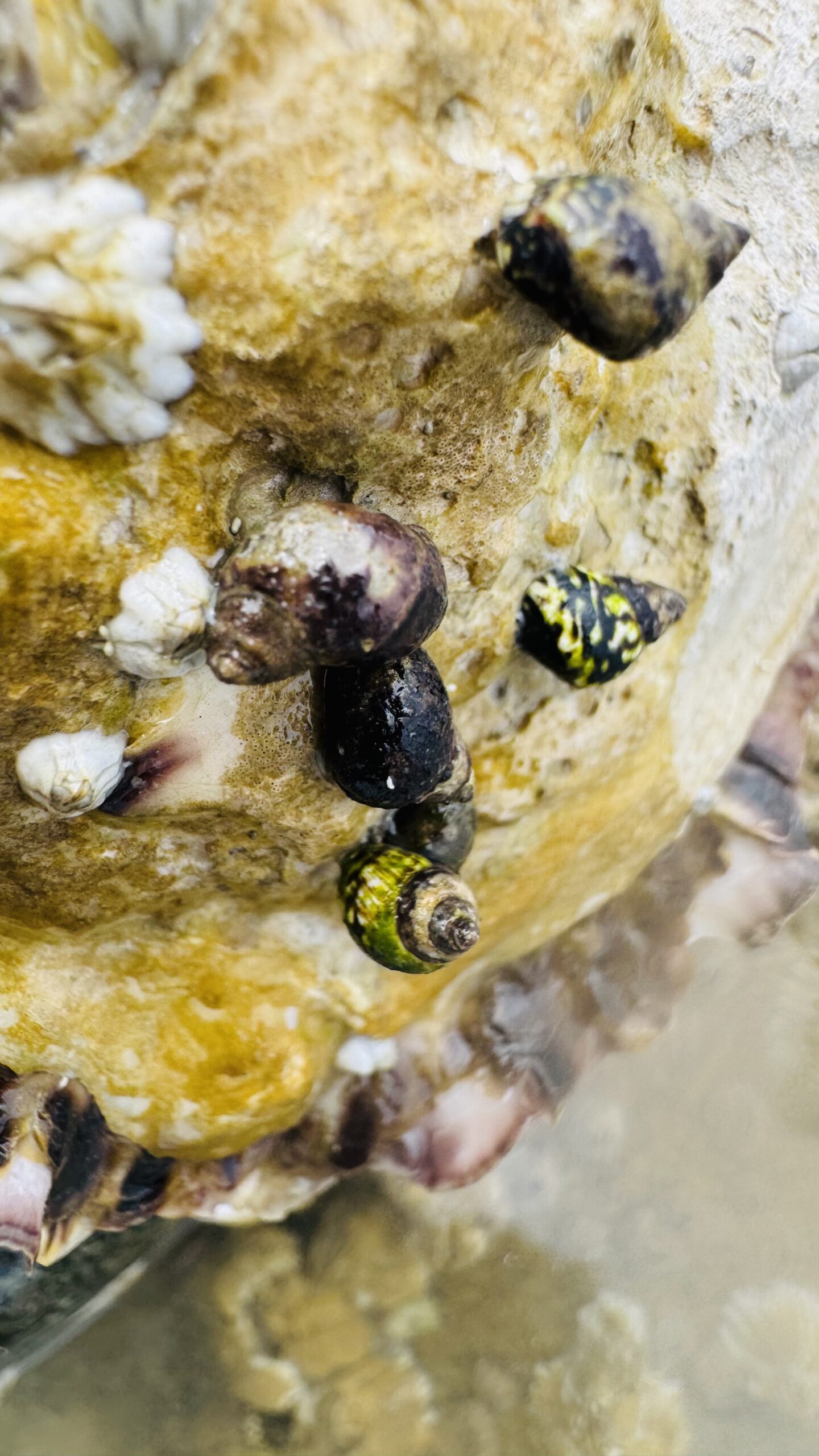
- Limpet sea snails, surprisingly cute critters complete with short antennae.
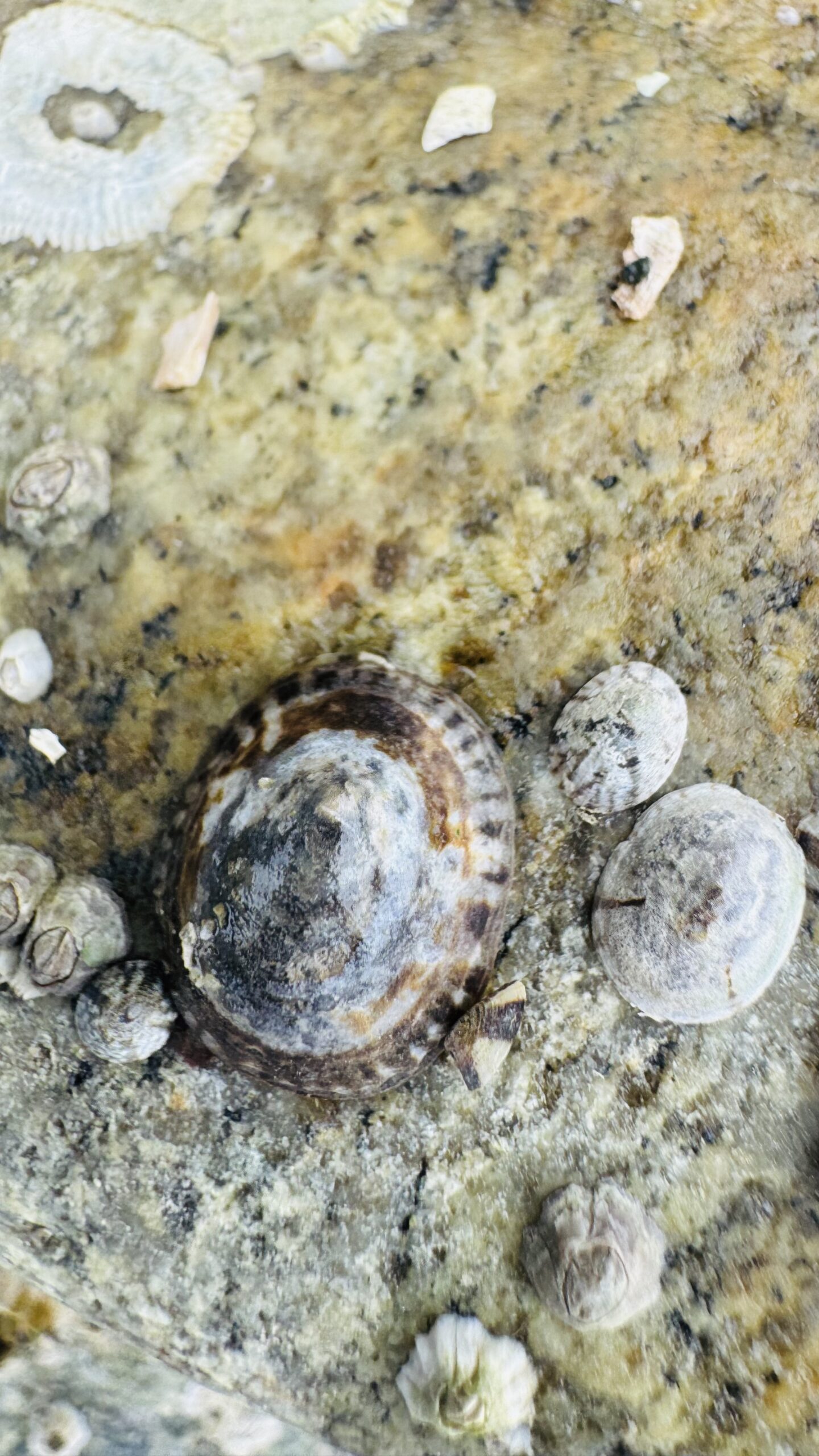
Limpet. Photo by Tonya Strickland.
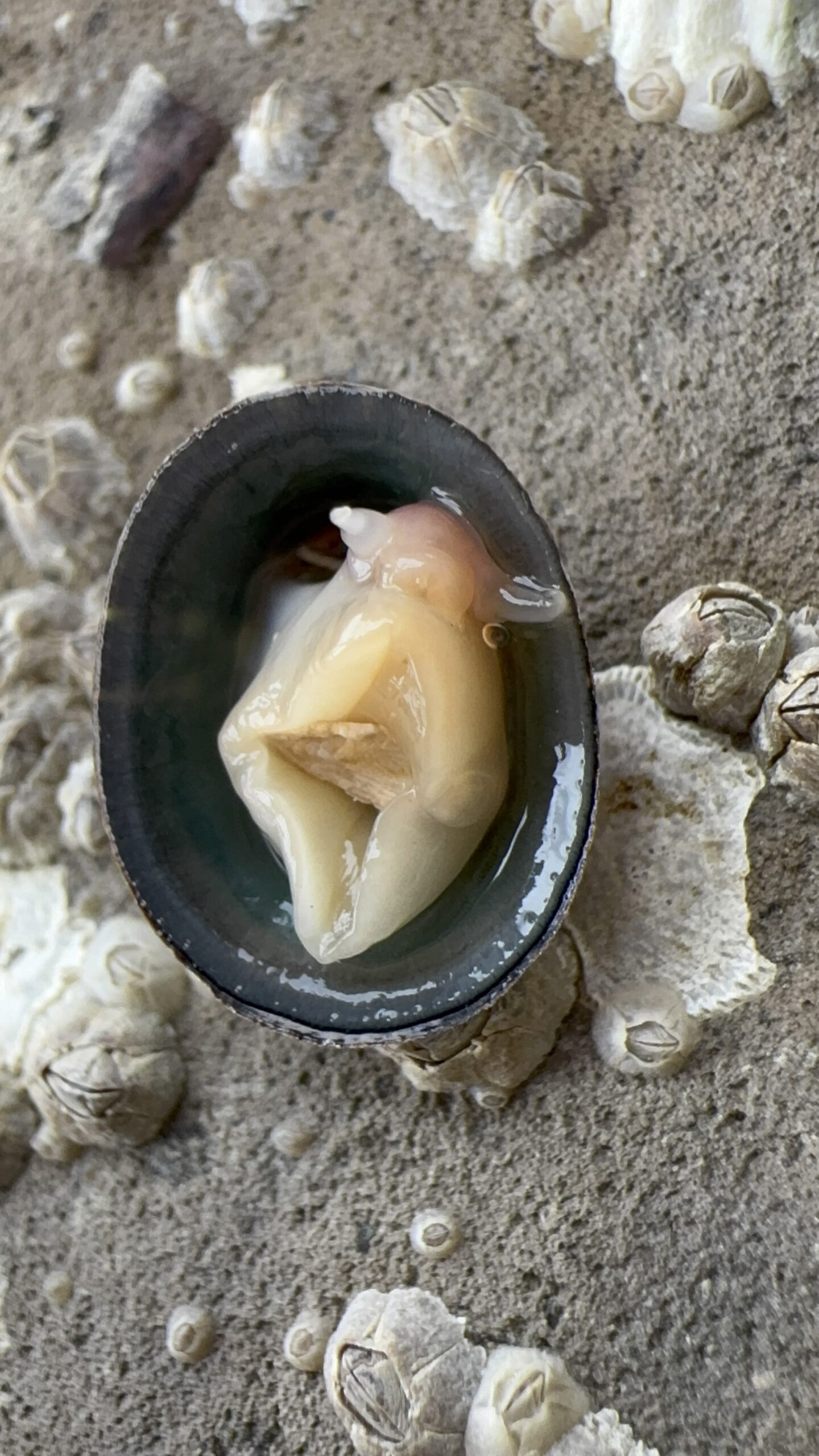
The underside of a limpet we found already turned over. Just look at that cute little invertebrate face. Photo by Tonya Strickland.
Visit logistics
Penrose Point State Park is open year-round from 8 a.m. to dusk, so late birds like us had plenty of time to see stuff in the afternoon even with the tide creeping in. And by “us,” of course I mean … me. And maybe Wyatt. Clara and Greg tend to prefer morning adventures so as to not “waste the day” waiting to get there. But since my morning hustle is powered by snooze buttons and half-written story drafts, I usually show up to adventures with the kids around 2 p.m. But it’s a casual timeframe that comes with perks, I tell you.
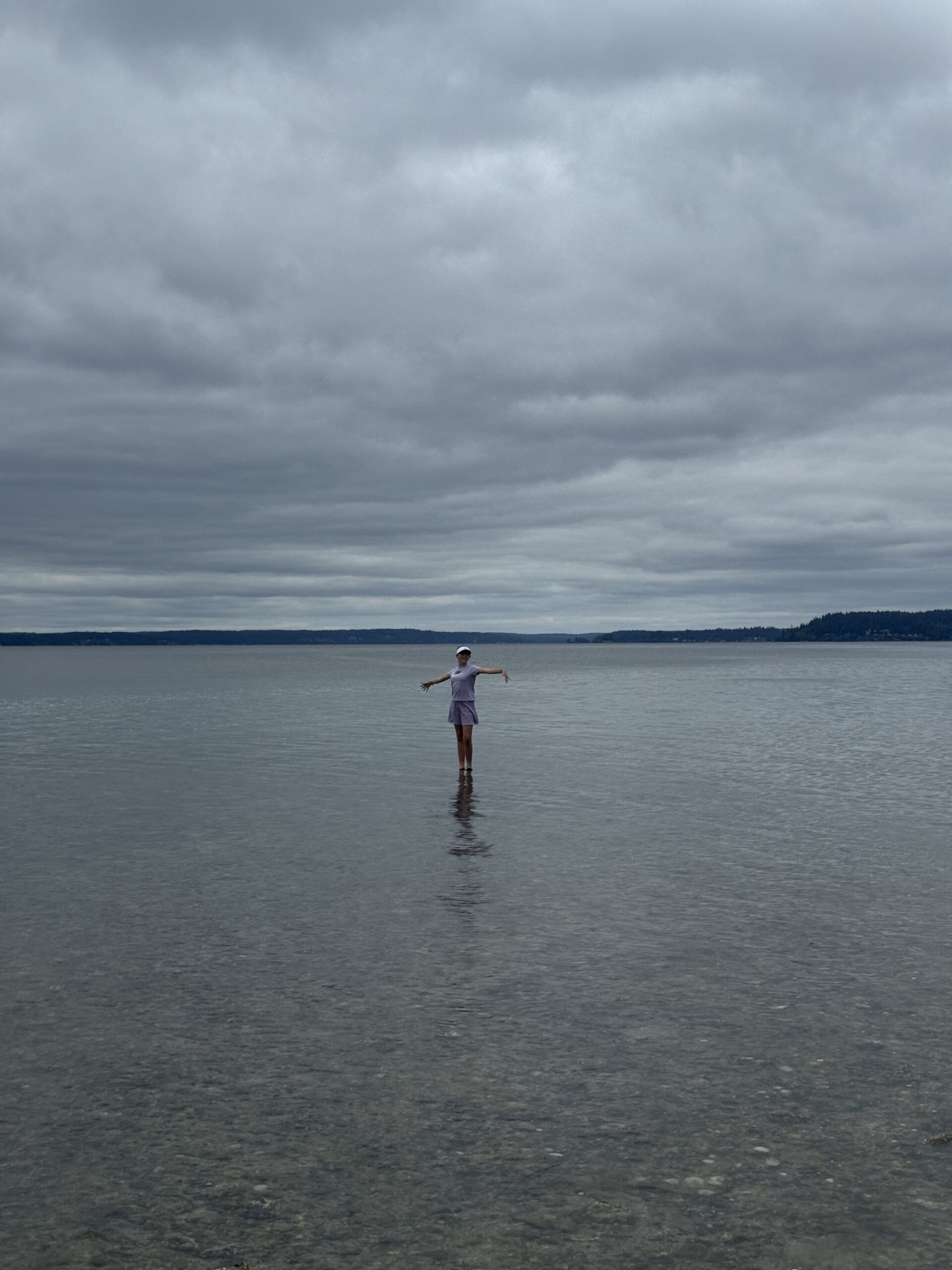
Look at that happy late bird with no one around for miles. Photo by Tonya Strickland
For example, most of the toddler-toting crowd had vanished by mid-afternoon in favor of afternoon naps. And, as a bonus: The majority of Type-A adventurers with no chill have already checked off their multi-point itineraries and gone home by the time we arrived. I prefer a calm late start over the wrath of early bird go-getters tapping their watches behind us and taking up all the good parking.
Parking and restrooms
Our annual Washington State Discover Pass covered the park’s parking fee. The pass is required at all state parks. It costs $45 for the year or $10 a day on site. You’ll see signs for where to pay, which could be a formal booth or something as simple as a drop-box in the parking lot.
Adjacent to the day use lot, there’s a restroom with flushing toilets and bonus sinks with running water. I don’t recall if soap was available. But, in the event of disastrous no-soap restroom situations, I keep little portable soap sheets in my bag. The thin squares turn to suds when rubbed between your hands with some water.
Park information board
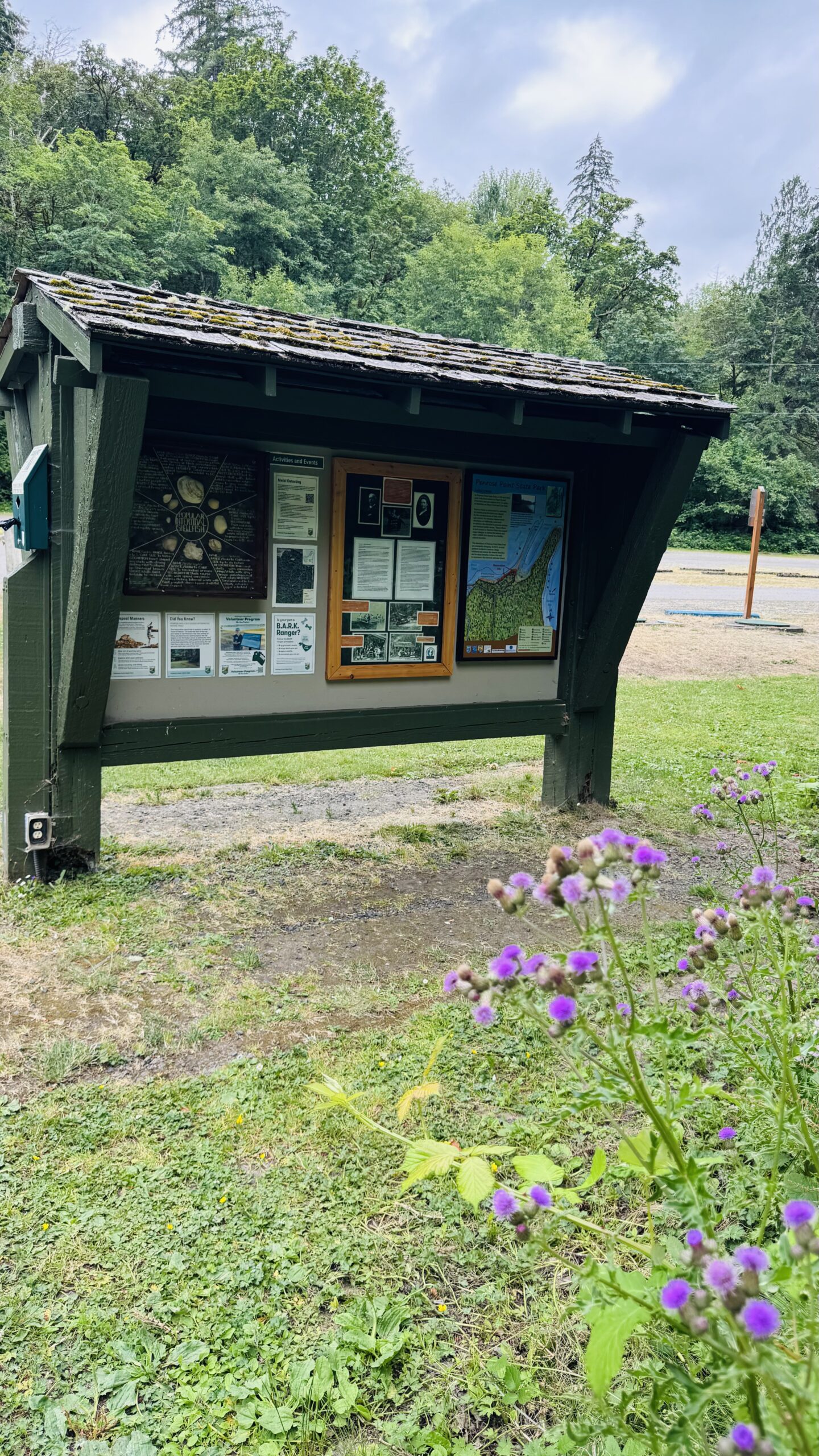
Park information board.
The park’s information board (the one with the shell display) also posts state park rules and seasonal updates. That was handy but I was officially captivated by the shell sign’s cool mid-century modern typography that suggested it was vintage. Sadly, I didn’t spot a date. But a small note in the lower left crediting the two agencies involved provides a clue. Because it credits the Washington Conservation Corps and the Washington Department of Fisheries, we know it predates 1994, when the Department of Fisheries merged into today’s Washington Department of Fish and Wildlife. So it’s at least about three decades old. Another interesting fact is the exhibit doesn’t appear to be one of a kind. A string of not-so-quick 1 a.m. Google searches told me there are other copies of the groovy shell display elsewhere in the state, with one spotted in an online photo of the Spruce Nature Trail in Olympic National Park and another blue-framed version somewhere along the Hood Canal.
State park history display
Next to the shell display is a printed history and photographs of the state park site provided by the Key Peninsula Historical Society. If you’re planning to leisurely review a local history lesson with young kids by your side, you may want to think again. Between sleeve-tugging, a rapid-fire barrage of at least 327 questions and their inevitable mad dash toward the open water, you likely won’t get the chance.
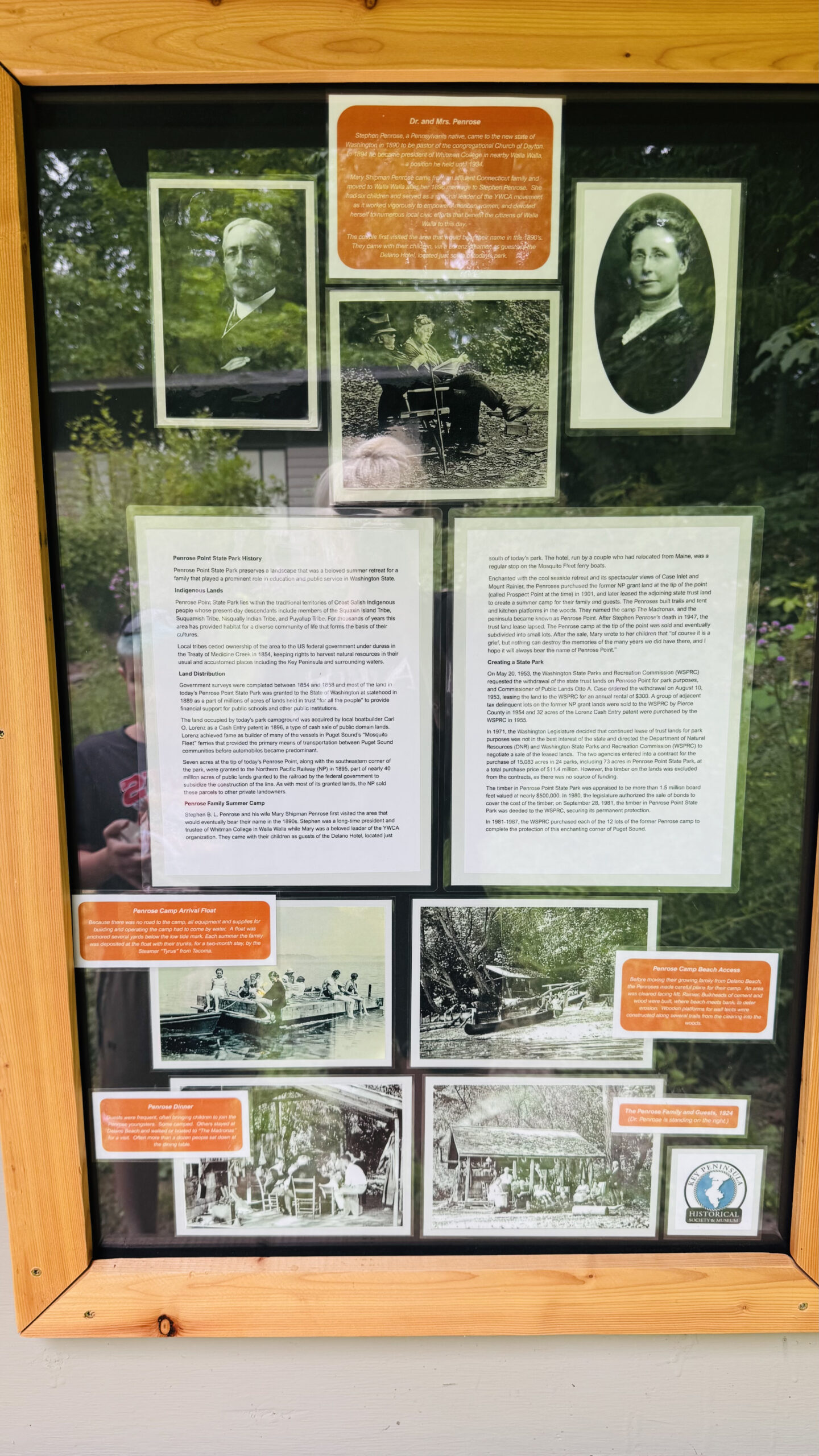
History display of Penrose Point State Park posted in the day use area. Photo by Tonya Strickland.
But don’t worry, what appears to be a copy of the exact same historical narrative is also posted here on the state parks website. I also found some great related park history in the 2019 Key Peninsula News article, “Fair Delano on the Sound: The Story of the Delano Beach Resort,” by talented local history writer Joseph Pentheroudakis.
I encourage you to read the above histories, but a short summary of these works say Penrose Point State Park got its name from the family of Stephen Penrose, a college president in southeastern Washington. Starting at the turn of the century, he and his wife Mary (Shipman) Penrose visited Puget Sound and bought land for a summer home on the tip of the peninsula they soon called Penrose Point. In the forest surrounding them, Stephen and Mary with their many children built trails and outdoor tent sites for visitor camping. Maintaining their getaway for several decades, various accounts of local history say the family celebrated the benefits of raising kids around nature in the years before the land became a state park.
And what a lasting sentiment that is.
See ya out there!
P.S.: Here are more pics from our trip: